A few weeks after a doctor visit, a dense document arrives from your insurer stamped, often in small print, "This is not a bill." Many people glance at the scary numbers, panic, and file it away. That is a mistake. The Explanation of Benefits, or EOB, is one of the most useful financial documents you receive — and reading it carefully is how you catch the medical billing errors that quietly overcharge millions of people every year.
The first thing to internalize: an EOB is a summary, not a demand for payment. It explains how your insurer processed a claim. The actual bill comes separately from the provider, and the two should agree. When they do not, the EOB is your evidence.
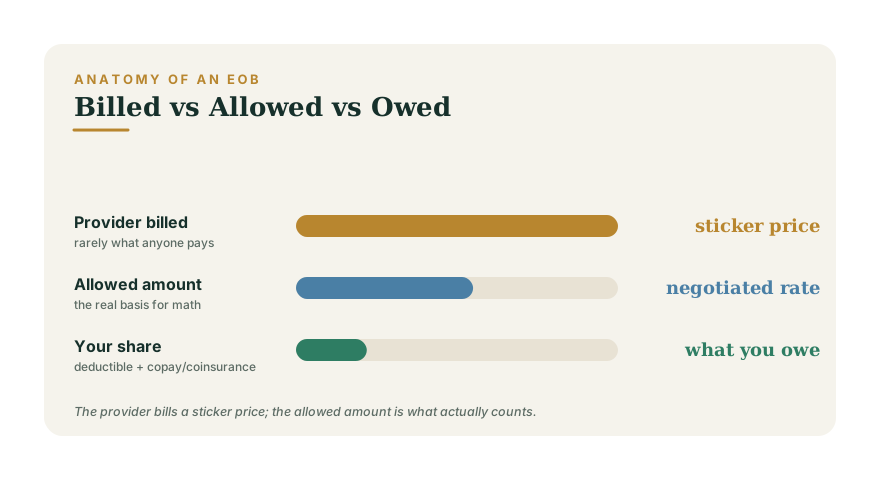
The key numbers, decoded
Every EOB lists a few core figures for each service. Learn these four and the rest falls into place:
- Billed amount (provider charge) — the full sticker price the provider listed. This number is almost theatrical; in-network, nobody actually pays it.
- Allowed amount — the discounted rate your insurer has negotiated with an in-network provider. This is the number that everything else is calculated from, and it is usually far below the billed amount.
- Plan paid / insurance paid — what your insurer contributed.
- Your responsibility (patient owes) — your share, made up of deductible, copay, and coinsurance.
Allowed amount vs billed amount
The gap between billed and allowed is the heart of how health pricing works. A clinic might bill $400 for a visit, but if the allowed amount under your plan is $180, that $180 is the real price — and your share is calculated from it, not the $400. For in-network care, the provider must write off the difference; you should never be charged it. If your provider's bill is chasing you for the full $400 on an in-network claim, that is a billing problem, not your debt.
This is exactly why staying in-network matters so much, and why plan choice drives your costs — a theme covered in HDHP vs PPO: Choosing a Health Plan That Fits.
How your share is built
Your portion of the allowed amount is assembled from three pieces:
- Deductible — what you pay out of pocket before the plan starts sharing costs.
- Copay — a flat fee for certain services, like a doctor visit.
- Coinsurance — a percentage of the allowed amount you owe after meeting the deductible (say, 20%).
Out-of-pocket spending counts toward your annual maximum, after which the plan covers 100%. If you have a high-deductible plan, every dollar here is also a candidate for tax-free HSA money — see The HSA: The Most Powerful Tax-Advantaged Account You're Ignoring.
Spotting billing errors and overcharges
Medical billing error rates are notoriously high, and the system assumes you will not check. Make a habit of comparing the EOB line by line against the provider's bill and your own memory of the visit. Red flags to hunt for:
- Services you never received — a test or procedure that did not happen.
- Duplicate charges — the same service billed twice.
- Wrong codes — a routine visit upcoded to a complex one inflates the price.
- Balance billing — being charged the difference between billed and allowed on an in-network claim, which you generally should not owe.
- Bill exceeds the EOB — the provider asks for more than the "patient owes" figure.
- A claim denied for a fixable reason — a coding or paperwork error you can appeal.
What to do when something is wrong
Do not just pay the bigger number to make it go away. Call the provider's billing office with the EOB in hand and ask them to match it. If the issue is on the insurer's side — an improperly denied claim, for instance — you have the right to appeal, and appeals succeed more often than people expect. Insurers deny plenty of valid claims, sometimes by default; the playbook for pushing back is in How Insurers Deny Your Claims. Keep every EOB until its matching bill is settled.
Reading your EOBs is a small habit with a real payoff: fewer overcharges, faster appeals, and a clear picture of where your healthcare dollars go. Fold those costs into your wider safety-net picture with the Financial Resilience Assessment, and make sure your coverage choices are sized to your real needs at the planning hub.