A large, unexpected medical bill is one of the most stressful pieces of mail a household can get. But here is the crucial mindset shift: a medical bill is rarely a fixed, final number. It is closer to an opening offer — riddled with errors more often than you would think, frequently negotiable, and often eligible for assistance you were never told about. Before you put it on a credit card or panic, work through your options in order. Doing so can cut what you owe dramatically.
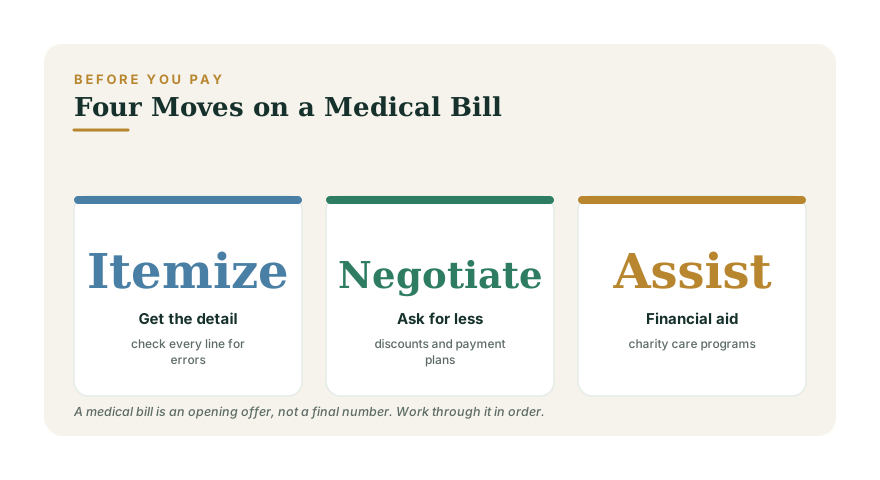
Step 1: Get an itemized bill and check it for errors
The summary bill you receive often shows only a lump sum. Request a fully itemized bill that lists every charge — every test, supply, and service line by line. You have a right to this, and it is where the leverage starts, because medical billing errors are common. Look for:
- Duplicate charges — the same service or supply billed twice.
- Services you never received — a procedure or test that did not happen, or a charge for a longer stay than you had.
- Coding errors — the wrong billing code can inflate a charge or cause your insurer to deny it.
- Insurance not applied correctly — verify your insurer actually processed the claim and applied your benefits before you owe anything.
Cross-check the itemized bill against your insurer's Explanation of Benefits (EOB), which shows what was billed, what insurance covered, and what you actually owe. If they do not match, that is your first conversation. Disputing a single miscoded line can wipe out a large chunk of a bill.
Step 2: Make sure insurance did its job
If you have insurance, confirm the claim was filed and processed correctly before assuming the balance is yours. Claims get denied for fixable reasons all the time — a missing referral, an out-of-network technicality, a paperwork error. You can appeal a denial, and many denials are overturned. The broader pattern of how insurers deny claims, and how to push back, is covered in How Insurers Deny Your Claims (and How to Fight Back). Do not pay a balance that insurance should have covered.
Step 3: Negotiate the amount
Once you have a clean, verified bill, negotiate it. This feels uncomfortable, but billing departments expect it, and the listed price is often far above what insurers or cash-paying patients actually pay. A few approaches that work:
- Ask for the cash or prompt-pay discount. Many providers will reduce a bill meaningfully if you can pay a lump sum, or even a portion, quickly.
- Ask them to match a fair price. Reference what insurers typically reimburse for the same service; the listed charge is frequently inflated.
- Request an interest-free payment plan. Most hospitals will spread a balance over months at no interest. A manageable monthly payment to the provider is almost always better than moving the debt onto a high-interest credit card.
That last point matters: do not reflexively put medical debt on a credit card. You would trade a no-interest, more-flexible debt for an expensive one. If credit card debt is already in the picture, prioritize it using How to Actually Pay Off Credit Card Debt.
Step 4: Apply for financial assistance
Nonprofit hospitals are generally required to offer financial assistance — sometimes called charity care — and many for-profit providers have programs too. Depending on your income, these can reduce a bill substantially or even eliminate it. The catch is that hospitals rarely advertise them, so you have to ask directly for the financial-assistance application and submit the income documentation they request. It is one of the most underused tools in all of personal finance. Always ask, even if you think you earn too much — the income thresholds are often higher than people assume.
How medical debt is treated on your credit report
Medical debt has received special treatment compared with other debts in recent years, and the rules have been evolving — so verify the current standards rather than assuming. Historically, the credit bureaus have given medical debt protections that other debt does not get, such as grace periods before it can appear on a report and the removal of paid medical collections. The direction of travel has generally been toward reducing or limiting the impact of medical debt on credit scores.
The practical takeaways: do not panic-pay a disputed medical bill purely out of fear for your credit, give yourself time to verify and negotiate the bill, and never ignore a bill entirely — unaddressed debt can still be sent to collections. For how collections and other factors feed into your score, see How Credit Scores Are Actually Calculated.
The best defense, and where to start
Working through these steps can turn a frightening number into a manageable one. The longer-term protection is a cash cushion so a medical surprise does not become a debt at all — build one with the Emergency Fund Guide, and size it with the Emergency Fund Calculator. A bill you can pay from savings is a problem you have already solved.