Few money shocks land harder than a medical bill you never saw coming — often after a trip to the emergency room or a procedure you thought was covered. The instinct is to assume the number is correct and to pay it. Resist that instinct. Many surprise bills are inflated, contain errors, or are now flatly illegal. Knowing your rights can save you hundreds or thousands of dollars.
The No Surprises Act
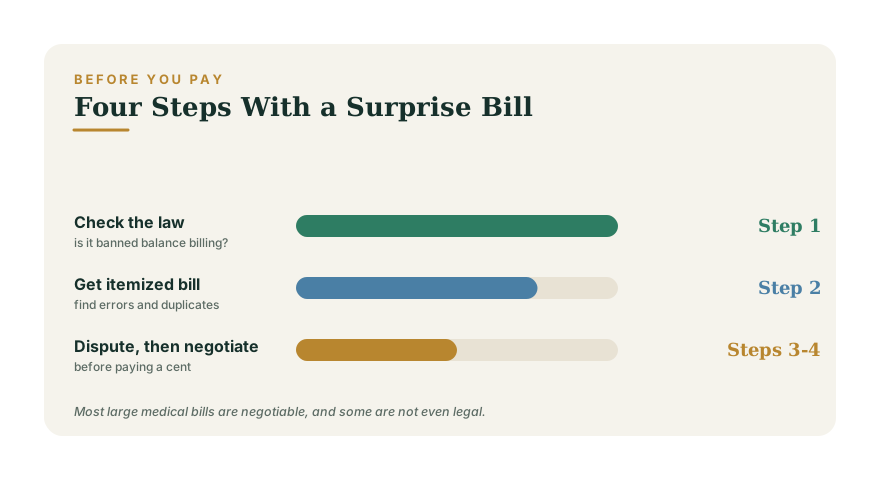
The federal No Surprises Act took effect to stop one of the most common billing abuses. It generally bans surprise out-of-network bills in situations where you had no real choice of provider. The main protections:
- Emergency care must be billed at in-network rates, even if the hospital or doctors are out of network. You cannot be balance-billed for the difference.
- Out-of-network providers at in-network facilities — for example, an out-of-network anesthesiologist or radiologist at your in-network hospital — generally cannot balance-bill you for non-emergency care without your advance written consent.
- Air ambulance services are also covered by the protections.
If you received care in one of these situations and got a bill charging you out-of-network rates, it may violate the law. That is your first thing to check.
What balance billing is
Balance billing happens when an out-of-network provider bills you for the gap between their full charge and what your insurance paid. Inside a network, providers agree to accept the insurer's negotiated rate as full payment. Out of network, there is no such agreement, so they may try to collect the balance from you. The No Surprises Act outlaws this in the protected situations above — but it does not cover everything, such as care you knowingly chose to receive out of network. Knowing the in-network vs out-of-network difference tells you which bucket your bill falls into.
Always request an itemized bill
The summary bill you receive usually shows only a lump sum. Before paying anything, request a fully itemized bill listing every charge with its billing code. Hospitals are required to provide it. Itemized bills are where errors hide, and they are common:
- Duplicate charges for the same service.
- Charges for services or medications you never received.
- "Upcoding" — billing a more expensive code than the care provided.
- Quantity errors, like being charged for far more supplies than were used.
Studies routinely find errors in a large share of medical bills, almost always in the hospital's favor. Reading the itemized list line by line, and looking up codes you do not recognize, is the highest-value hour you can spend.
Dispute what looks wrong
If you find an error or believe a charge violates the No Surprises Act, dispute it in writing. Contact the provider's billing department and your insurer, explain the specific problem, and ask for a corrected bill or a reprocessed claim. Keep a record of every call — date, name, and what was said. For balance-billing violations, you can also file a complaint with the federal No Surprises Help Desk or your state's regulator. Do not let the bill sit and slide toward collections while you dispute it; staying on top of it protects your credit, a key theme in Medical Debt: What to Do.
Negotiate before you pay
Even a correct bill is often negotiable. Providers expect insurers to pay far less than the list ("chargemaster") price, and they would rather collect something than send your account to collections. Tactics that work:
- Ask for the cash or self-pay rate. It is frequently far below the billed amount.
- Cite a fair price. Reference what Medicare or a fair-price database pays for the same service and ask them to match it.
- Request financial assistance. Nonprofit hospitals are required to have charity-care policies; you may qualify for a large discount or full forgiveness based on income.
- Ask for an interest-free payment plan. Many providers offer one rather than send you to a high-interest lender.
The detailed playbook is in How to Lower Your Medical Bills. The key mindset: the first number is rarely the final number, and silence is treated as agreement, so always engage before paying.
Protect yourself going forward
You cannot prevent every surprise, but you can reduce them: confirm provider and facility network status before planned care, ask for a good-faith estimate (which you are entitled to if you are uninsured or self-pay), and keep every bill and Explanation of Benefits. When a surprise does arrive, slow down — check the law, get the itemized bill, dispute errors, and negotiate before paying. To keep an unexpected bill from derailing the rest of your finances, build a cushion with the Emergency Fund Calculator and review your overall footing with a Financial Wellness check.