A large medical bill can feel like a fixed, non-negotiable demand. It usually is not. Medical billing is famously error-prone, hospital prices are inconsistent, and providers have far more flexibility than they advertise. Approaching a bill calmly and methodically can cut it dramatically — and protect your credit in the process.
Step one: get the itemized bill
The first bill you receive is often a summary — a single big number with no detail. Always request a fully itemized bill that lists every charge, service, and billing code. You cannot dispute what you cannot see, and the itemized version is where errors hide.
Common mistakes worth hunting for: duplicate charges, services you never received, a procedure billed at a higher level than what actually happened, or being charged for a full day when you were discharged in the morning. Errors are common enough that a careful read frequently finds money.
Step two: match the bill to your EOB
If you have insurance, your insurer sends an Explanation of Benefits (EOB) for each claim. This is not a bill — it shows what the provider charged, what the insurer paid, the negotiated rate, and what you actually owe. Lay the EOB next to the itemized bill and confirm they agree.
If the provider is billing you more than the EOB says you owe, that is a red flag — sometimes it is balance billing you should not be paying at all. Learning to read this document is one of the highest-value money skills around; see Understanding Your Explanation of Benefits. Surprise out-of-network charges deserve special scrutiny, covered in In-Network vs Out-of-Network: Why It Matters.
Step three: ask for a discount or charity care
Once you know the bill is accurate, ask for less. A few approaches that genuinely work:
- The cash or prompt-pay discount. If you can pay a lump sum, ask what discount applies. Providers often knock off a meaningful percentage to avoid the cost and delay of collections.
- Charity care / financial assistance. Nonprofit hospitals are required to have financial-assistance programs, and many for-profit ones do too. Depending on your income, these can reduce a bill substantially or even wipe it out. Ask specifically for the "financial assistance application" — it is rarely offered unprompted.
- Benchmark the price. If a charge looks far above typical rates for your area, point that out and ask them to match a fair price.
Be polite, persistent, and willing to ask for a supervisor or the hospital's billing/advocacy department. Get any agreement in writing before you pay.
Step four: set up a payment plan — before collections
If you cannot clear the balance at once, ask for an interest-free payment plan. Most hospitals will spread a bill over months at zero interest rather than send it to collections. The key is to act while the bill is still with the provider. Whatever you do, avoid putting a large medical bill on a credit card or a medical credit card that starts charging interest — that converts a flexible, negotiable debt into expensive, rigid debt.
Use an advocate or negotiator if the numbers are big
If a bill runs into the tens of thousands, you do not have to fight alone. Many hospitals employ patient advocates or financial counselors whose job is to connect you with assistance programs and payment options — ask for one by name. There are also independent medical billing advocates who review bills for errors and negotiate on your behalf, typically for a flat fee or a share of what they save you. For a large, complicated bill, that can pay for itself many times over.
Whatever route you take, keep a simple paper trail: the date of every call, the name of who you spoke with, what was agreed, and a reference number. Billing disputes can stretch over months and bounce between departments, and a clean record is what keeps a verbally promised discount from quietly disappearing.
If it has already gone to collections
Even then you have options. Medical debt is treated more leniently on credit reports than it used to be, and small balances and recently paid balances often do not appear at all. You can still negotiate the amount with the collector and request a written agreement before you pay a cent — and never pay a debt you have not first confirmed is actually yours and accurately stated. The full playbook is in Medical Debt: What to Do.
The order that saves the most
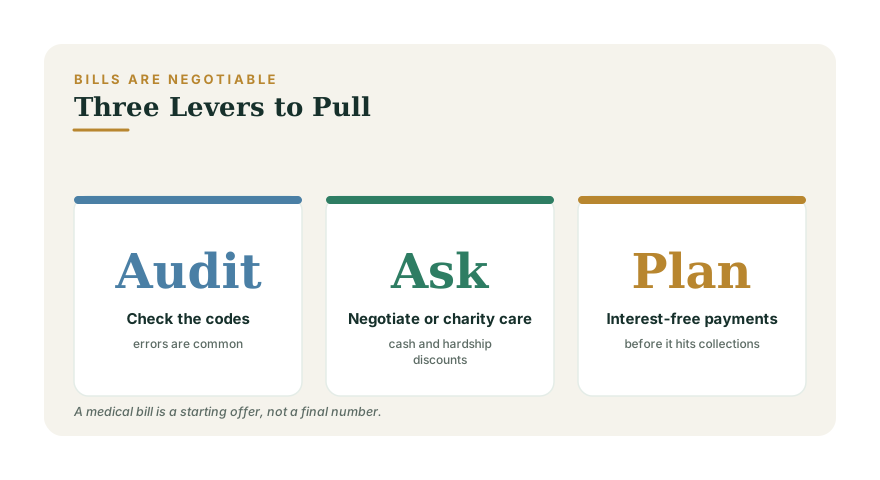
To recap: get the itemized bill, check it against your EOB for errors, dispute anything wrong, then ask for a cash discount or charity care, and only after that set up an interest-free plan for whatever remains. Working in that order routinely turns an intimidating number into a manageable one. To keep an unexpected bill from derailing the rest of your finances, make sure you have a cushion in place — start with the Emergency Fund Calculator.