For most of a century, real estate commissions worked in a way few buyers or sellers questioned. A seller paid a percentage of the sale price, typically split between their agent and the buyer's agent, and the numbers were remarkably consistent from deal to deal. Recent rule changes have cracked that open, making the fee more visible and more negotiable than ever. Because commissions are one of the largest costs in the entire transaction, understanding them is worth real money.
Who pays, and how it has traditionally worked
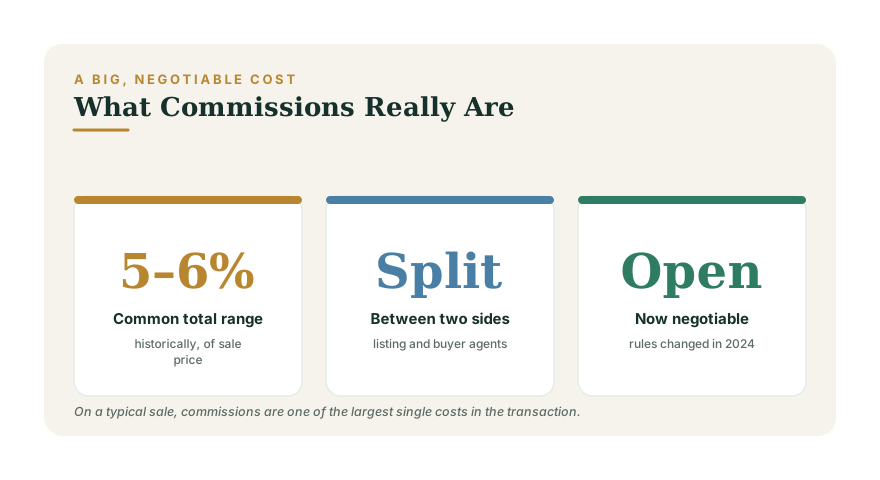
Historically, the seller paid the entire commission out of the sale proceeds — commonly in the range of 5% to 6% of the price. That pot was then split, usually evenly, between the seller's listing agent and the buyer's agent. The result was that buyers rarely thought about commissions at all, because they never wrote a check for them directly. But the cost was real: it was baked into the home's price, so in a sense buyers paid it through a higher purchase price.
What the recent commission rule changes did
In 2024, a major legal settlement involving the National Association of Realtors changed the structure. Two practical shifts matter most. First, sellers are no longer expected to advertise a set buyer-agent commission through the shared listing system the way they once did, which breaks the old default of automatic, uniform splits. Second, buyers must now sign a written agreement with their agent before touring homes, an agreement that states how that agent will be paid. The goal was more transparency and more competition on price — and in practice it means the fee is now something to discuss, not assume.
Buyer-agent agreements: read before you sign
Because a buyer now signs a representation agreement up front, it is worth reading carefully rather than treating it as a formality. Key things to check:
- The fee. How much is the agent's compensation, expressed as a percentage or flat amount, and is it negotiable.
- Who pays it. Sellers may still offer to cover the buyer's agent fee, but it is no longer guaranteed, so the agreement should say what happens if they do not — and whether you would owe the difference.
- Exclusivity and length. Whether you are committed to this one agent, and for how long. Shorter, non-exclusive terms give you more flexibility.
The point is not to distrust agents — a good one earns the fee — but to know what you are signing.
How to negotiate the fee
Commissions have always been negotiable; the new rules simply make that obvious. If you are selling, you can ask your listing agent for a lower rate, especially on a higher-priced home where the dollar amount is large, or in a fast-moving market where less marketing effort is required. If you are buying, you can negotiate your agent's fee directly and ask the seller to cover it as part of your offer. Some agents offer flat-fee or tiered pricing. The leverage you have depends on local conditions, but the conversation is now expected rather than awkward.
What you get for the money
A capable agent provides real value: pricing expertise, marketing reach, negotiation on your behalf, and management of a paperwork-heavy process with firm deadlines. The question is not whether agents are worthless — most are not — but whether the specific fee matches the specific service in your situation. For a straightforward, in-demand home, some sellers conclude the math favors doing it themselves; that trade-off is the whole subject of Selling Your Home Without an Agent (FSBO).
Where commissions fit in your total costs
For a seller, commission is usually the single biggest line item in the costs of selling, which is why it deserves attention. See how it fits with the rest in Selling Your Home: The Financial Side, and remember that buyers face their own set of fees, laid out in Closing Costs, Explained.
Commissions are no longer a fixed cost you simply accept. Treat the fee as negotiable, read your agreement before signing, and weigh the service against the price. To pressure-test whether a sale or purchase pencils out at all, run the numbers through the Home Affordability calculator and the planning hub at /plan.