An exchange-traded fund looks deceptively simple: it holds a basket of stocks or bonds, and you buy and sell it on an exchange like a single stock. But the reason ETFs can trade all day, stay close to fair value, and hand investors surprisingly small tax bills comes down to an ingenious piece of plumbing most people never see. Understanding it explains why ETFs behave the way they do.
Two layers: the market you see and the market you don't
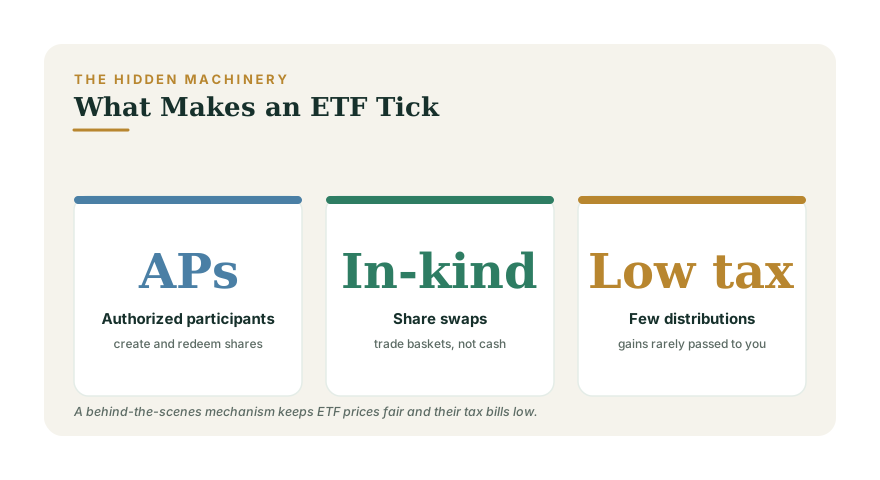
ETF trading happens on two levels. On the secondary market — the one you use — you buy and sell existing ETF shares from other investors, just like trading a stock. But there is a hidden primary market where the actual supply of ETF shares is created and destroyed. That primary market is run by a small group of large financial firms called authorized participants (APs), and it is the secret to how ETFs work. If you are still weighing the ETF-versus-mutual-fund choice generally, pair this with Index Funds vs ETFs.
The creation and redemption mechanism
Here is the core idea. When demand for an ETF is high and its price drifts above the value of its holdings, an AP can create new shares: it buys the underlying basket of stocks the ETF tracks, hands that basket to the fund company, and receives newly minted ETF shares in return, which it then sells into the market. That extra supply nudges the price back down toward fair value.
When the reverse happens and the ETF trades below the value of its holdings, an AP does the opposite — it redeems shares: it buys cheap ETF shares on the market, returns them to the fund company, and receives the underlying basket of stocks in exchange, which it can sell. This shrinks supply and pushes the price back up.
Because APs profit from these small gaps, they do this constantly, which is what keeps an ETF's market price tightly tethered to the real value of what it owns.
Premiums and discounts
That tethering is not perfect. The value of the ETF's underlying holdings is called its net asset value (NAV). When the ETF's market price sits above NAV, it trades at a premium; below NAV, at a discount. For big, liquid ETFs holding U.S. stocks, premiums and discounts are tiny and fleeting because APs arbitrage them away almost instantly. They can widen for ETFs holding hard-to-trade assets — thinly traded bonds, foreign stocks in closed time zones, or during market stress. The practical lesson: favor large, liquid ETFs, and use limit orders so you never overpay during a brief dislocation.
Why ETFs are so tax-efficient
The creation-redemption machinery delivers a quieter benefit: tax efficiency. The key is that redemptions happen in kind — the fund pays the AP with actual shares of stock, not cash. This lets the fund hand off its lowest-cost-basis shares (the ones with the biggest embedded gains) to the AP without ever selling them itself. Because the fund is not selling, it does not realize a capital gain, and so it has little or nothing to pass on to you.
Contrast that with a traditional mutual fund. When investors pull money out, the fund often has to sell holdings for cash, realizing capital gains that get distributed to everyone still in the fund — even people who did nothing and may owe tax on gains they never chose to take. This is the painful surprise explained in Capital Gains Distributions Explained. ETFs largely sidestep it, which is why they rarely make taxable distributions and are especially attractive in a regular taxable brokerage account.
What this means for you as an investor
You will never call an authorized participant or touch the primary market — but the design shapes everything you experience:
- Fair pricing — arbitrage keeps an ETF's price close to the value of its holdings, so you generally buy and sell near fair value.
- Intraday trading — you can trade ETFs anytime the market is open, unlike mutual funds priced once a day.
- Lower tax drag — fewer forced distributions mean more of your return compounds instead of leaking to taxes each year.
The takeaway
An ETF is a fund wearing a stock's clothing, and the creation-redemption mechanism is the tailoring that makes the costume work — keeping prices honest and tax bills small. For most investors building a low-cost portfolio, broad-market ETFs are an excellent core holding. You can assemble one and compare options in the Model Portfolios tool.