For a long time, a single share's price was a real barrier to investing. If a share cost several hundred dollars, you needed at least that much to own even one, and any leftover cash sat idle. Fractional shares quietly removed that wall. Today you can buy a slice of a stock or fund for as little as a few dollars, and that small change makes a big difference for new investors.
How fractional investing works
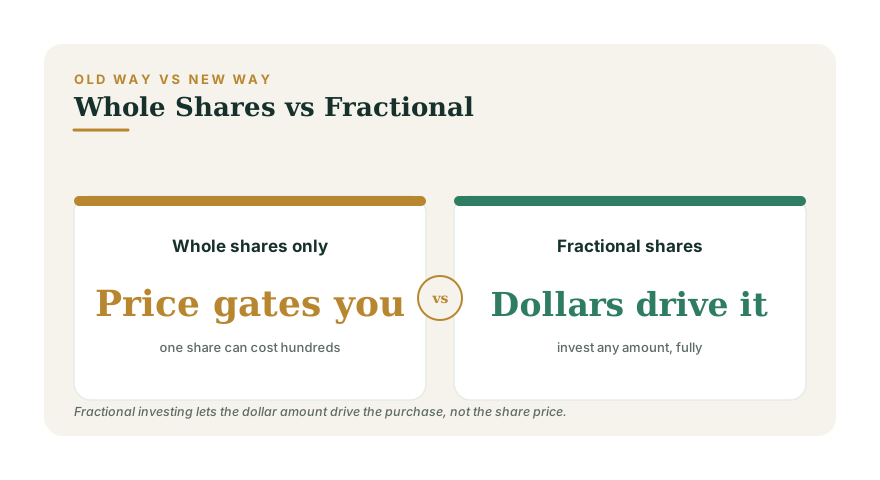
A fractional share is exactly what it sounds like: a portion of a single share. Instead of telling your brokerage "buy two shares," you tell it "invest $50," and the brokerage buys whatever fraction of a share that amount covers — perhaps 0.18 of a share. You own that slice and are entitled to a proportional share of the dividends and price movement, just as if you held a whole share, only smaller.
Mechanically, the brokerage buys whole shares for its pool of customers and parcels out the pieces internally. From your side it is seamless: you specify a dollar amount, and every dollar gets put to work. Nothing sits on the sidelines because you were short of a full share.
Why it lowers the barrier to start
The biggest benefit is psychological and practical at once: you can start with whatever you have. Someone with $25 a week can begin building a diversified position immediately rather than waiting months to afford a single pricey share. This dovetails perfectly with automatic investing — you set a fixed dollar amount to invest each payday, and fractional shares make sure that exact amount goes in, every time, fully invested.
It also makes diversification easier on a small budget. Rather than buying one whole share of one company, you can spread the same money across several positions or, better for most people, into a broad index fund. If you are not sure where to begin, the principles in how to start investing apply just as well to fractional amounts.
Dividend reinvestment becomes automatic
Fractional shares pair naturally with dividend reinvestment. When an investment pays a dividend, that cash is often too small to buy a whole new share — historically it would just sit as idle cash. With fractional support, the brokerage can automatically reinvest the dividend by buying a tiny additional slice, so your money keeps compounding without any leftover crumbs. Over years, that small automation meaningfully boosts growth, since reinvested dividends are a large part of long-run returns.
The caveats worth knowing
Fractional shares are a genuine improvement, but a few details deserve attention:
- Availability varies by brokerage. Not every broker offers fractional trading, and those that do may limit it to certain stocks and ETFs or only to their own funds. If this feature matters to you, weigh it when you choose where to invest — see how to choose a brokerage.
- Fractional shares may be less portable. If you transfer your account to another brokerage, fractional positions sometimes have to be sold rather than moved, which can create a small taxable event in a regular account.
- Voting and timing. Fractional positions may not carry shareholder voting rights, and some brokers batch fractional orders rather than executing them instantly. For a long-term investor these rarely matter, but they are worth knowing.
- The temptation to over-trade. Easy, tiny purchases can tempt some people into frequent buying and selling of individual stocks. The feature is most powerful when used for steady, boring, automatic investing in diversified funds — not for chasing the stock of the week.
Use it for what it's best at
Fractional investing shines as a tool for consistency: it lets you commit a fixed dollar amount on a schedule and have all of it go to work, with dividends reinvesting automatically. That is exactly the kind of low-effort, low-drama approach that builds wealth over time. To see how steady small contributions can compound, try the Wealth Simulator and watch what even modest, regular amounts become over the years.