The hardest part of investing is not picking funds — it is doing it consistently, month after month, when life is busy and markets are scary. The most effective solution is to remove the decision entirely. When investing happens automatically, you no longer have to feel motivated, remember a date, or work up the nerve. You just let the system run.
Automatic investing is not a fancy strategy. It is a plumbing setup that turns a good intention into a habit you cannot forget. Here is how to build it.
Step one: pay yourself first, into the market
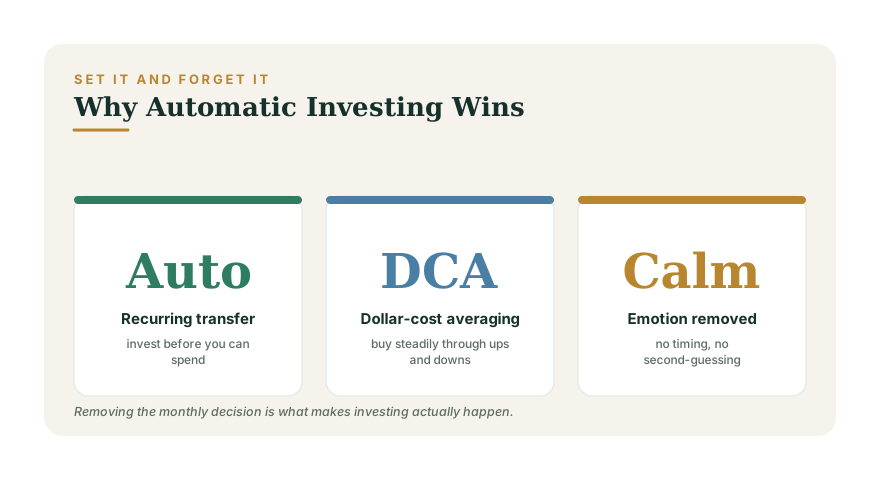
The core idea is paying yourself first: you move money toward your future the moment you get paid, before it can leak into everyday spending. Applied to investing, that means scheduling a contribution to your investment account for payday — or the day after — so the money is invested before you ever see it as "spendable." The logic and the wider habit are covered in pay yourself first, and investing is simply the highest-leverage place to point it.
Start with an amount you will not miss, even a small one. Consistency matters far more than size at the beginning; you can raise the amount over time, ideally each time you get a raise, before lifestyle creep absorbs it.
Step two: set up the recurring contribution
There are two common ways to automate, and the best plans use both:
- Through your employer (the 401(k)). This is the easiest automation of all — contributions come straight out of your paycheck before it hits your bank account, and many employers add a match. If you have a workplace plan, capturing the full match automatically should be the first thing set up.
- Through your brokerage (IRA or taxable account). Most brokerages let you schedule a recurring transfer from your bank and even automatically invest it into a chosen fund. Set the transfer to land on or just after payday, and pair it with fractional shares so the exact dollar amount goes in fully.
The goal is a complete loop with no manual steps: money leaves your bank, arrives at the brokerage, and buys your fund — all on a schedule. For the broader picture of wiring your whole financial life this way, see automating your finances.
Dollar-cost averaging in practice
When you invest the same dollar amount on a regular schedule, you are practicing dollar-cost averaging (DCA). Because the price of your fund moves around, a fixed dollar amount automatically buys more shares when prices are low and fewer when prices are high. You never have to guess the right moment — the schedule handles it.
DCA's real value is behavioral. It guarantees you keep investing during downturns, which is exactly when fear tells most people to stop. Buying steadily through a falling market is uncomfortable, but it is often when the best long-run purchases are made. If you happen to have a lump sum to invest, the trade-offs between investing it all at once versus spreading it out are worth understanding — see dollar-cost averaging vs lump sum — but for money you earn each month, steady automatic investing is simply the natural fit.
Removing emotion from the equation
The biggest enemy of investment returns is not fees or fund choice — it is the investor's own behavior. People tend to buy when markets are euphoric and sell when they are terrified, locking in the worst of both. Automation is a direct defense. When contributions happen on autopilot, you are not making an emotional decision every month, so there is nothing to second-guess and no headline that can scare you out of your plan.
To strengthen that defense, do two things: choose a simple, diversified destination for the money — a broad index fund or target-date fund you can hold for decades — and then stop checking it constantly. Frequent monitoring just gives anxiety more chances to override your plan. Set it, fund it, and let it run.
Review once a year, not once a week
Automatic does not mean abandoned. Once a year, glance at whether your contribution amount still fits your income and goals, and bump it up if you can. That annual touch is plenty; the rest of the year, the system works without you. To set a sensible recurring amount and see how it grows over time, run it through the Lifetime Wealth Simulator and let the automation do the rest.