Plenty of immigrants and dual citizens own a home, an apartment, or inherited land in another country. A common assumption is that because the property sits abroad, the US tax system has nothing to say about it. That is not how citizenship- and residence-based taxation works. If you are a US person, your foreign real estate can generate US reporting both while you hold it and when you sell it.
Rental income while you hold it
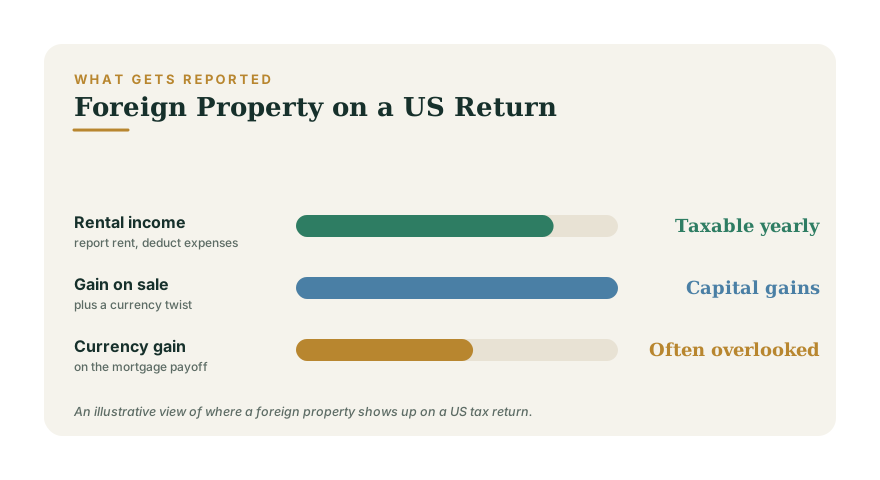
If you rent out a foreign property, that rent is taxable income on your US return, reported in US dollars just like a domestic rental. The friendly part is that you also deduct the usual rental expenses — property taxes, insurance, repairs, management fees, mortgage interest — and you must take depreciation on the building, though foreign property uses a longer depreciation schedule than US property. The general economics of being a landlord, which apply abroad too, are in Is a Rental Property Worth It?. The key reminder: the rent is reportable even if you never bring a dollar of it back to the US.
Reporting the sale
When you sell, the US taxes your capital gain — the sale price minus your cost basis and improvements — generally at long-term rates if you held it long enough. Two wrinkles catch people off guard. First, the home-sale exclusion that shelters gain on a US primary residence can apply to a foreign primary residence too, but only if you actually lived in it long enough to meet the tests. Second, the gain is computed in US dollars, which leads directly to the surprise below.
The currency-gain surprise
This is the trap almost no one expects. The US calculates your gain in dollars, so exchange-rate movements between when you bought and when you sold can create taxable gain even if the property's local-currency value barely moved. The most jarring version involves a foreign mortgage: if your local currency weakened against the dollar between taking the loan and paying it off, the US can treat the cheaper dollar cost of discharging that debt as a separate taxable currency gain — entirely apart from the property itself. People have owed US tax on a sale that, in local terms, was a loss. Keep meticulous records of exchange rates on your purchase, sale, and any mortgage payoff dates.
The forms involved
Owning the property itself usually does not require a special form, but the money around it often does:
- Schedule E reports rental income and expenses each year.
- Schedule D and Form 8949 report the gain when you sell.
- FBAR and Form 8938 can be triggered not by the property but by the foreign bank accounts that collect the rent or hold the sale proceeds — see FBAR and FATCA, Explained.
- If you hold the property through a foreign company or trust, additional and far more complex forms apply, and you should get professional help.
Double-tax relief
The country where the property sits will usually tax the rental income and the sale too, which raises the obvious fear of being taxed twice. The Foreign Tax Credit is the main fix: the income tax you pay to the other country generally credits against your US tax on the same income. A relevant tax treaty can adjust which country gets first claim and how the credit works — the broader mechanics are in Tax Treaties and Foreign Income. For dual citizens, this sits inside the larger compliance picture described in Dual Citizenship and US Taxes.
Plan before you sell
Foreign property is perfectly fine to own, but the US reporting rewards good records and punishes surprises — especially the currency-gain twist. Track exchange rates, keep every receipt for improvements, claim your foreign tax credits, and talk to a cross-border preparer well before a sale rather than after. To weigh how a property fits your overall finances and run the gain scenarios, use the Capital Gains Estimator and review the Tax Health assessment.