Few topics cause more quiet anxiety among immigrants than the alphabet soup of foreign account reporting. You moved to the US, but you still have a bank account, some savings, or a retirement fund back home. Suddenly you hear acronyms like FBAR and FATCA and worry you have unknowingly broken the law. Take a breath. These rules are mostly about disclosure, and with a clear understanding they become a manageable annual task.
The key idea: the US generally requires its taxpayers, including green card holders and most resident immigrants, to report foreign financial accounts even when no tax is owed. Reporting is not the same as taxation. You are telling the government what exists, not necessarily paying anything extra.
FBAR: The FinCEN 114 Form
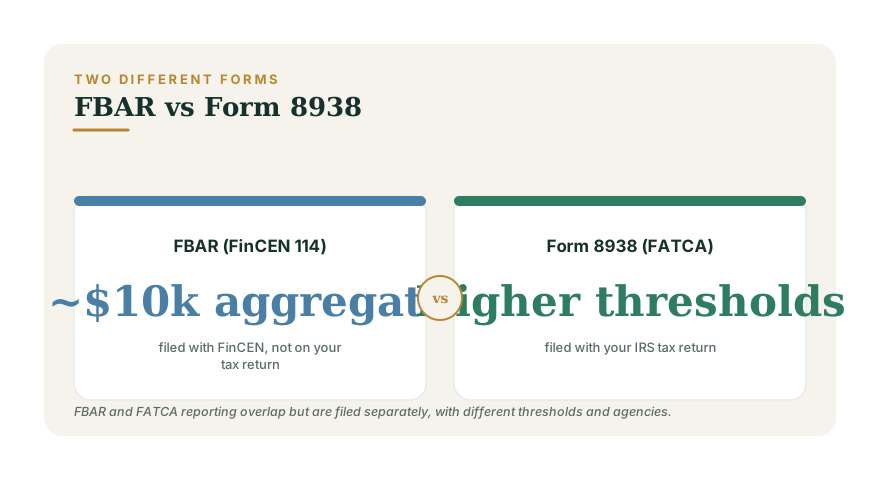
The FBAR (Report of Foreign Bank and Financial Accounts), officially FinCEN Form 114, applies if the combined value of your foreign financial accounts exceeds roughly 10,000 dollars at any point during the year. That threshold is an aggregate across all accounts, not per account. So three accounts holding about 4,000 dollars each would cross the line together even though none does alone.
FBAR is filed electronically with the Financial Crimes Enforcement Network (FinCEN), separate from your tax return. The deadline tracks the tax filing date in April, with an automatic extension to October. Importantly, you report the highest balance during the year, converted to US dollars, not just the year-end balance.
FATCA: Form 8938
FATCA (the Foreign Account Tax Compliance Act) requires some taxpayers to file Form 8938 with their IRS tax return. The reporting thresholds are higher than FBAR's and vary based on whether you are single or married and whether you live in the US or abroad. Form 8938 also covers some assets FBAR does not, such as certain foreign investments held outside an account.
The two rules overlap heavily, which trips people up. Many immigrants must file both for the same accounts, on different forms, to different parts of the government. Filing one does not satisfy the other.
Why This Matters for Immigrants
If you came to the US with savings at home, you very likely have reportable accounts. Common examples include:
- Checking and savings accounts in your home country.
- Fixed deposits or term deposits.
- Foreign retirement or provident fund accounts in many cases.
- Brokerage or mutual fund accounts held abroad.
Because foreign banks now share account information with US authorities under FATCA, non-reporting is far more visible than it used to be.
Penalties: Willful vs Non-Willful
This is where the fear comes from, but context matters. The law distinguishes between non-willful violations (you did not know or made an honest mistake) and willful violations (you knew and chose to hide accounts). Penalties for willful violations can be severe. Non-willful penalties are far lower, and there are streamlined procedures designed for people who simply did not realize they had to file. If you have missed past filings, you usually have a path to come into compliance.
When to Bring in a Professional
Foreign account reporting is one area where the stakes justify expert help. If your situation involves multiple accounts, foreign investment funds, past missed filings, or large balances, work with a cross-border tax professional rather than guessing. The cost of good advice is small compared with the cost of a willful penalty. Learn how these rules connect to your broader tax picture in our library and check your overall plan with our free tools.