The first paycheck from a first job comes with a small shock: the amount that lands in your account is noticeably less than your salary divided by the number of pay periods. Nothing is wrong — the gap is taxes and deductions, and once you can read a pay stub, the mystery disappears.
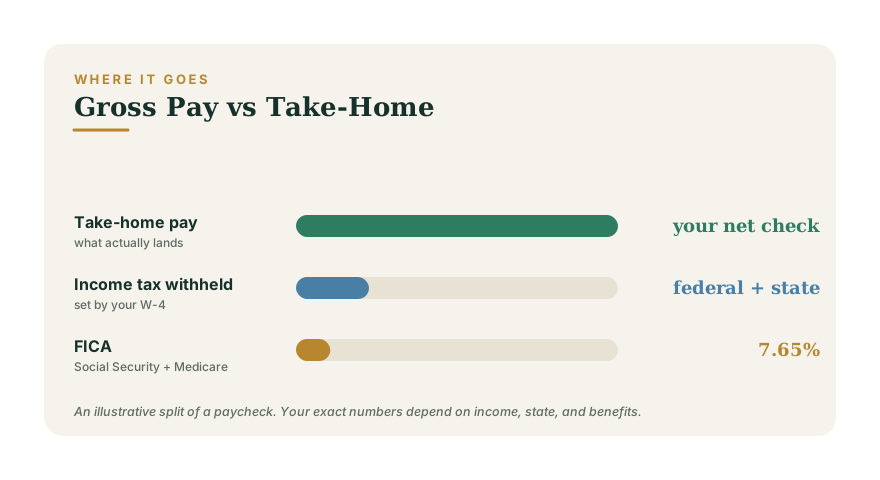
Gross pay vs net pay
Gross pay is what you earn before anything is taken out. Net pay — your "take-home" — is what actually reaches your bank account after taxes and deductions. When you budget, always plan around net pay, because that is the money you can actually spend.
The W-4 sets your withholding
When you start a job, you fill out a Form W-4. It tells your employer how much federal income tax to hold back from each check and send to the government on your behalf. Withhold too little and you owe at tax time; withhold too much and you get a refund. The W-4 is adjustable — if your situation changes, you can update it.
What each deduction is
- Federal income tax — withheld based on your W-4 and your pay. It funds the federal government and is settled up when you file your annual return.
- FICA (Social Security + Medicare) — a flat 7.65% of your pay (6.2% Social Security up to an annual cap, plus 1.45% Medicare). Your employer pays a matching amount you never see.
- State (and sometimes local) income tax — varies by where you live; a few states have none.
- Pre-tax benefits — things like your 401(k) contribution and health-insurance premium come out before tax is calculated, which lowers your taxable income.
Why your tax bracket is not your tax rate
A common worry — "if a raise pushes me into a higher bracket, do I take home less?" — is a myth. Tax brackets are marginal: only the dollars inside a higher bracket are taxed at that higher rate, so a raise always leaves you with more. The full explanation is in How Tax Brackets Really Work.
A big refund is not a win
A large tax refund feels like a bonus, but it is really your own money that the government held, interest-free, all year. If you consistently get a big refund, you can adjust your W-4 to withhold less and keep more in each paycheck — money you could be saving or investing during the year instead.
What to do with the take-home number
Once you know your net pay, give every dollar a job. Set up automatic saving first, then build a simple spending plan with How to Build a Budget That Actually Works, and start capturing any employer retirement match — see How to Start Investing.