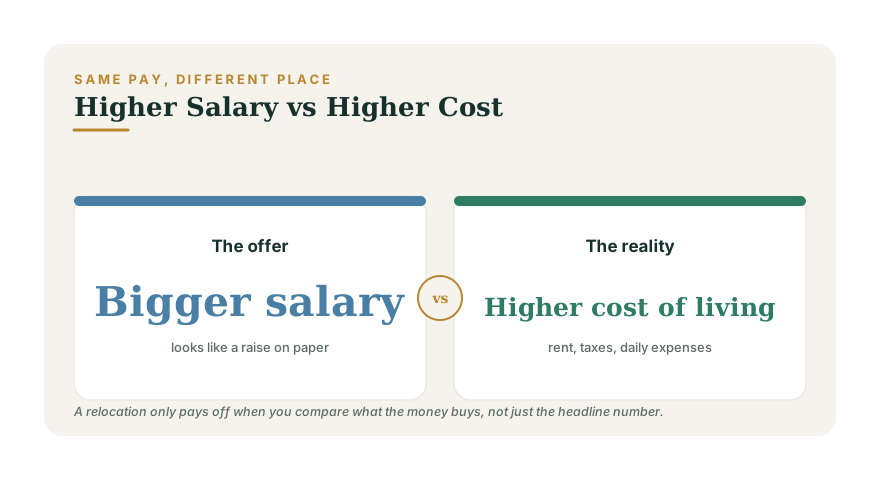
A job offer in a new city often arrives with a number that looks like a clear win. Before you celebrate, remember that a salary only means something relative to what it costs to live where you will spend it. A 20% raise that lands you in a city 40% more expensive is a pay cut in disguise. Relocation is one of the few financial decisions where the headline figure and the real outcome can point in opposite directions.
Start with a real cost-of-living comparison
The first task is to translate the new salary into your current city's terms, or vice versa. Cost-of-living differences show up most in housing, but also in groceries, transportation, childcare, and taxes. A practical approach is to rebuild your actual monthly budget at new-city prices: look up real rents or home prices in the neighborhoods you would consider, adjust your other line items, and compare the leftover at the end of the month — not the gross salary. Two offers with the same take-home can leave wildly different amounts to save once the local cost of living is in the picture.
Understand the relocation package and how it is taxed
Many employers offer a relocation package, which can range from a flat lump sum to direct payment of movers, temporary housing, and travel. The important and often-misunderstood point: employer-paid moving expenses are generally taxable income to you under current federal rules. A $15,000 relocation benefit is not $15,000 in your pocket — it can be added to your wages and taxed. Some employers "gross up" the benefit to cover that tax; many do not. When you evaluate a package, ask explicitly whether it is grossed up, and treat any amount that is not as worth meaningfully less than its face value. This is a legitimate thing to clarify and negotiate, the same way you would with the rest of an offer — see negotiating a job offer.
Selling, buying, or breaking a lease
Your current housing situation can add real one-time costs to a move:
- Renting now — breaking a lease early may cost one to two months of rent or a defined penalty. Read the lease, and ask whether your employer will cover it.
- Selling a home — selling costs (agent commissions, closing costs, repairs) often run a significant share of the sale price, and the timing rarely lines up perfectly with your start date. The full picture is in the financial side of selling your home.
- Buying in the new city — resist rushing into a purchase before you know the area. Renting first for a year lets you learn neighborhoods and avoid an expensive mistake while you are still adjusting to a new job.
Bridge costs — temporary housing, two sets of rent or a mortgage during overlap, and the move itself — are easy to underestimate, so budget a cushion for the transition months.
State taxes can change everything
Where you move changes which government taxes your income, and the swing is larger than most people realize. A handful of states levy no income tax at all, while others take a meaningful slice; a move between two such states can be worth thousands a year on the same salary. There are also one-time wrinkles in the year you move — you may need to file a part-year return in both your old and new states. The mechanics are laid out in state taxes when you move, and you should fold the difference into your offer comparison rather than treating taxes as an afterthought.
Run the numbers before you say yes
A relocation is genuinely good for your finances when the new take-home, after local cost of living and state taxes, leaves you with more to save and a life you want — not merely a bigger gross number. Treat it as a structured comparison, the same way you would any major career change: rebuild the budget at the destination, value the relocation package after tax, account for housing transition costs, and adjust for state taxes. Use the Budget Analyzer to model your new-city monthly numbers, and lean on your planning hub to see how the move changes your longer-term goals before you commit.