A career change can be one of the best long-term decisions you make, but in the short term it almost always costs money before it pays off. There is often a pay dip while you start over, a gap in employer benefits, and real expenses for retraining. The people who switch successfully are rarely the most fearless — they are the ones who built a financial runway first, so a temporary income dip never becomes a crisis.
Build the runway before you leap
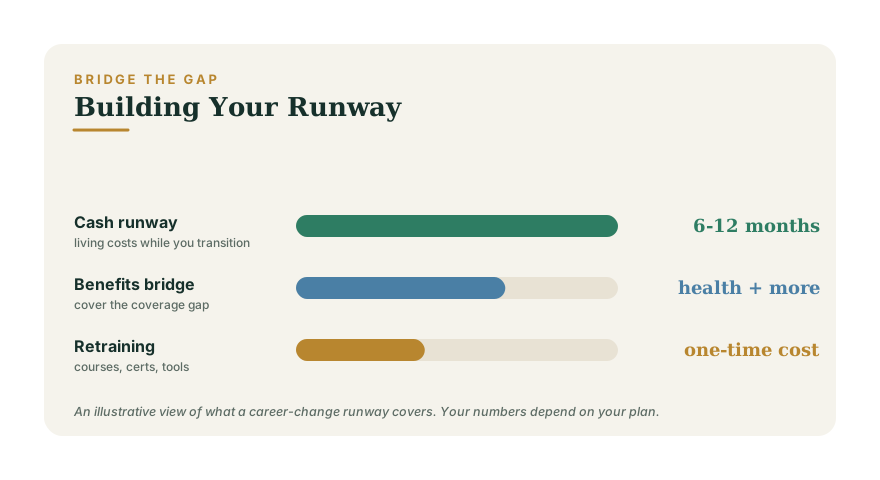
A career change usually demands a bigger cushion than a normal emergency fund. While a standard buffer is three to six months of expenses, a planned transition often calls for six to twelve months of living costs in cash, depending on how long your new path may take to reach stable pay. This runway is what lets you take a junior role, finish a certification, or wait for the right opportunity without panic. If you can, build it up while still employed — it is far easier to save from a steady paycheck. The Emergency Fund Guide and the Emergency Fund Calculator help you size it for your situation.
Plan for the pay dip
Be honest about the income math. A new field may pay less at first, and even a lateral move can mean lost bonuses, commissions, or seniority. Before you switch, model your budget at the lower income and trim where you can in advance, so the cut feels like a plan rather than a shock. Pause or scale back discretionary goals temporarily — a paused vacation fund is recoverable; credit-card debt run up during a transition is far harder to undo.
Mind the benefits gap
Leaving a job means leaving its benefits, and the gaps can be expensive if you are caught off guard. The big one is health insurance: between jobs you may rely on COBRA continuation, a marketplace plan, or a spouse's coverage — line this up before your old coverage ends, because a lapse is risky. Also account for what you lose: disability and life coverage, an HSA or FSA, and any unvested equity or pending bonuses you would forfeit by leaving. Many of these moves overlap with the playbook in Money Moves After a Job Loss.
Protect your retirement contributions
It is tempting to stop all retirement saving during a transition, and a temporary pause can be reasonable if cash is genuinely tight. But two things matter. First, do not cash out an old 401(k) when you leave — that triggers taxes and penalties and erases years of growth; roll it into an IRA or your new employer's plan instead. Second, resume contributions as soon as your new income stabilizes, and capture any new employer match right away, since that is free money. Treat the pause as short and deliberate, not open-ended. The reasoning behind keeping retirement on track is in Financial Planning in Your 30s.
Budget for retraining as an investment
Courses, certifications, licensing exams, new equipment, and networking all cost money, and they are best treated as a planned investment in your future earnings rather than an afterthought. Estimate these costs up front and fold them into your runway. Look for lower-cost paths first — employer tuition help before you leave, community college, or free and low-cost certifications — and weigh the expense against the realistic pay bump the new career offers. Spending wisely here protects the rest of your plan.
Keep the long view
A career change is a short-term financial setback in service of a long-term gain. The way to come out ahead is to prepare the money side as carefully as the career side: a real runway, a budget that survives the pay dip, no gap in essential insurance, and retirement contributions paused only briefly and then restored. Sketch the whole transition — runway, benefits, and goals — in one place at the planning hub, and take the Financial Resilience assessment to confirm you are ready before you make the move.