When you get your first mortgage statement, the monthly payment is often larger than the principal-and-interest figure your lender quoted. The difference usually goes into an escrow account — sometimes called an impound account — that your lender uses to collect and pay your property taxes and homeowners insurance on your behalf. It is one of the more confusing parts of owning a home, mostly because the payment can change from year to year. Here is how it works and why.
What an escrow account does
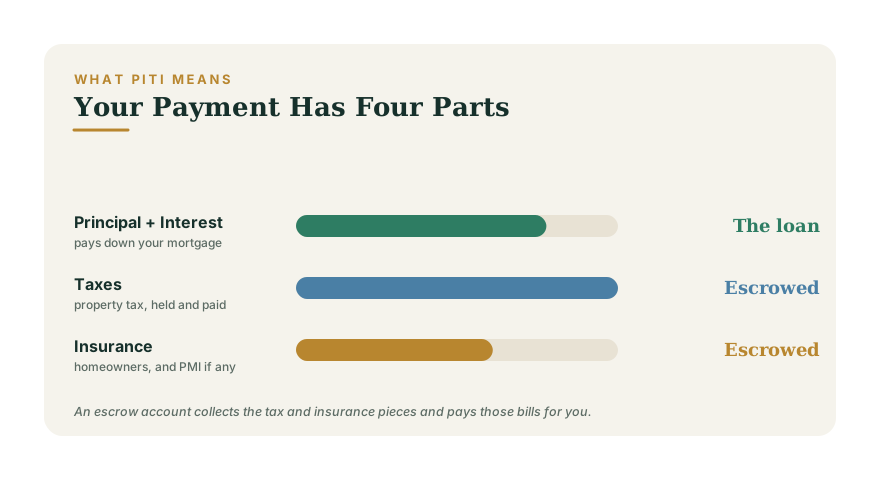
Property taxes and homeowners insurance are large bills that come due once or twice a year. Rather than trust borrowers to save for them and pay on time, most lenders bundle a portion into your monthly mortgage payment. Each month a slice goes into the escrow account, and when the tax or insurance bill comes due, the lender pays it from that account. So your monthly "mortgage" payment is really four things: Principal, Interest, Taxes, and Insurance — often abbreviated PITI. If you pay private mortgage insurance, that is usually collected through escrow too.
Why lenders require it
The lender's collateral is the home, so it has a strong interest in making sure taxes and insurance are paid. Unpaid property taxes can lead to a tax lien that jumps ahead of the mortgage; a lapsed insurance policy leaves the property unprotected against fire or storm. Escrow removes both risks by taking the bills out of the homeowner's hands. For most loans with smaller down payments, an escrow account is mandatory. Some borrowers with larger equity can request to waive escrow and pay the bills themselves, but then the discipline is on you.
The annual escrow analysis
Once a year, your lender performs an escrow analysis. It looks at what your taxes and insurance actually cost over the past year, projects what they will cost in the coming year, and recalculates how much it needs to collect each month. Because tax bills and insurance premiums change — usually upward — your escrow portion changes with them. This is the most common reason a fixed-rate mortgage payment goes up even though your interest rate never moved: the loan part is fixed, but the tax and insurance parts are not. Property taxes in particular can climb as your home's assessed value rises; the mechanics are in Property Taxes, Explained.
Shortages and surpluses
Because escrow is based on estimates, the account rarely lands exactly on target, so the annual analysis produces one of two outcomes:
- A shortage happens when your bills came in higher than projected, so the account did not hold enough. The lender will raise your monthly escrow payment to refill it, and may also ask you to make up the gap. You can usually choose to pay the shortage in a lump sum to keep your monthly payment lower, or spread it over the next twelve months.
- A surplus happens when your bills came in lower than projected, leaving extra in the account. If the surplus is above a small threshold, the lender typically refunds it to you by check, and your monthly escrow portion may drop.
Lenders are also allowed to keep a modest cushion in the account to absorb timing differences, which is why a small balance always remains.
How to keep escrow surprises small
You cannot stop taxes and insurance from rising, but you can avoid being blindsided:
- Read the annual escrow statement when it arrives instead of ignoring it; it explains exactly why your payment changed.
- Shop your homeowners insurance periodically — a lower premium lowers your escrow, and the savings flow straight to your payment.
- Watch your property assessment, and appeal it if it looks too high, since taxes are the biggest escrow driver.
- Budget for a rising payment. Assume your PITI creeps up over time, and do not stretch to a payment that only works if it stays flat.
Escrow and the true cost of owning
The escrow line is a useful reminder that a home costs more than its mortgage. Taxes, insurance, and PMI are recurring costs that rise over time, and they belong in any honest budget for homeownership. See the full picture in The True Cost of Homeownership before you assume the monthly number on a loan estimate is the number you will pay forever.
Escrow is mostly a convenience that protects both you and your lender, but it is not static — the annual analysis keeps your payment aligned with your real tax and insurance costs. Read the yearly statement, plan for gradual increases, and fold the full PITI into your budget with the Home Affordability calculator and the planning hub at /plan.