Equity is central to how startups recruit. The pitch is exciting — own a piece of the next big company — but startup equity behaves very differently from the stock comp at a public employer. The shares may be worth a fortune someday, nothing at all, or something in between, and you often cannot tell which for years. Understanding the mechanics before you accept an offer or quit a job can save you from expensive, irreversible mistakes.
Options vs RSUs at a private company
Most early-stage startups grant stock options rather than RSUs, because options carry a low strike price when the company is young, giving employees more upside for less. As a company matures toward an IPO, many switch to RSUs, which are simpler and do not require employees to pay to exercise. The same words apply as at public companies — grant, vesting, strike, exercise — but the missing ingredient changes everything: there is usually no market where you can sell the shares. (For the public-company versions, see stock options explained and how RSUs are taxed.)
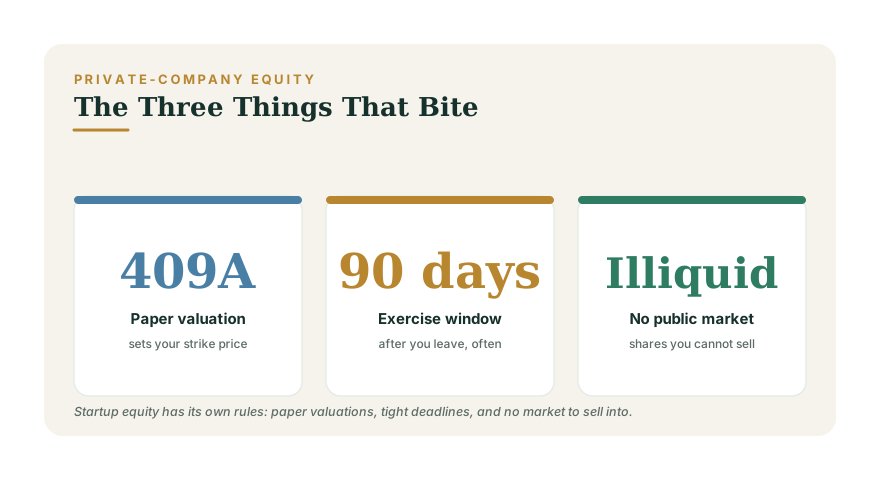
The 409A valuation sets your strike
A private company has no public share price, so how is your option's strike price set? Through a 409A valuation — an independent appraisal of what a share is worth, refreshed periodically (often annually, or after a funding round). The 409A becomes the strike price on new option grants, and it is deliberately conservative, typically well below the headline "preferred" price investors pay. That gap is part of why early options can be valuable: you might exercise at the low 409A price while investors value the company far higher. But the 409A is also just an estimate of a private, illiquid asset — not a price anyone will actually pay you today.
The 90-day exercise window
This is the rule that traps people, and most do not learn it until they are leaving. With traditional options, when you quit or are let go, you typically have only 90 days to exercise your vested options or forfeit them entirely. Exercising means coming up with real cash — the strike price times your shares — plus a possible tax bill, all to buy stock you still cannot sell.
Imagine vested options worth a meaningful sum on paper. To keep them after leaving, you must write a large check within three months, with no way to sell shares to fund it, betting that an exit eventually happens. For incentive options, exercising can also trigger the Alternative Minimum Tax on the paper spread — owing real cash tax on gains you cannot access. Some companies offer extended exercise windows; if yours does not, the 90-day clock is a genuine financial decision, not a formality. Ask about this before you accept, and factor it into any decision to leave.
Illiquidity changes the whole calculation
The deepest difference is liquidity. Public-company shares can be sold any trading day. Startup shares generally cannot be sold at all until a "liquidity event" — an acquisition or IPO — which may be years away or may never come. Until then your equity is worth exactly zero in your bank account, no matter what the 409A says.
That illiquidity carries real risk. Most startups do not produce a large exit; many fail outright, and even in a success, later investors often have terms (liquidation preferences) that get paid before common shareholders like you. Treat startup equity as a high-variance bonus that might pay off, not as money you can count on. Do not exercise more than you can afford to lose, and never let the dream of an exit talk you into stretching your finances thin.
How to weigh a startup offer
- Anchor on the cash salary first — equity is a maybe; rent is a certainty. Negotiate the base before romancing the options. See how to negotiate a job offer.
- Ask the unglamorous questions: how many total shares are outstanding (so you know your real percentage), the latest 409A, the exercise window, and whether there is a liquidation preference stack.
- Plan the cash and tax cost of exercising before you would ever need to, especially if you might leave.
- Keep your everyday financial life sturdy and diversified so that the equity is upside, not a bet your stability depends on.
Startup equity can be life-changing, but it is a lottery ticket with a tax bill and a deadline attached. Understand the mechanics, size the bet sensibly, and build the rest of your plan as if the equity were worth nothing — anything it returns is then a bonus. Map it all out with the planning hub.