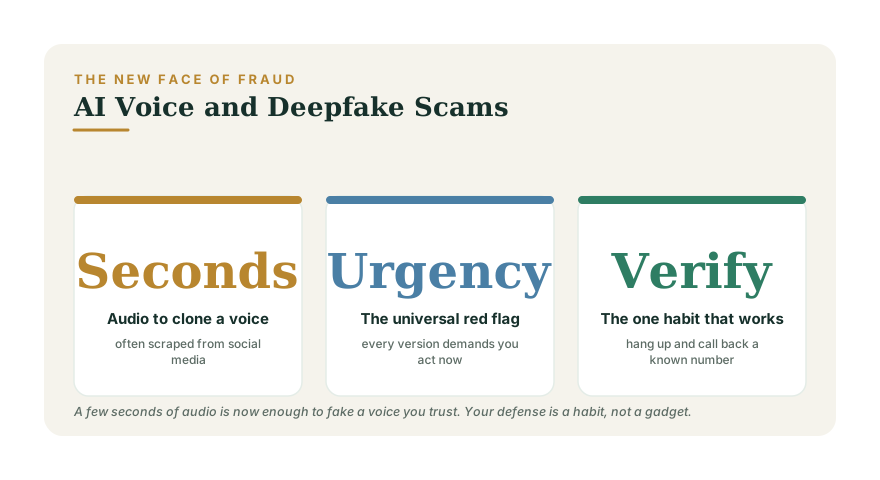
The scam that used to be clumsy is now terrifyingly convincing. In 2026, criminals can clone a person's voice from a few seconds of audio scraped off social media, and generate a live video call that looks like your bank's fraud department or even your own CEO. The old advice — "watch for bad grammar and a foreign accent" — is obsolete. When the voice on the phone is unmistakably your daughter's, or the face on the video is your boss's, your instinct to trust it is exactly what the technology is built to exploit. The good news: the defenses are simple, and they do not require any technology at all.
How these scams actually work
- The voice-clone emergency. You get a call in a loved one's exact voice — crying, panicked — claiming they have been in an accident, arrested, or kidnapped, and need money wired immediately. The FTC has warned specifically about these AI voice-cloning "family emergency" scams.
- The deepfake "bank" or "official" call. A video or voice call impersonates your bank's fraud team, the IRS, or Social Security, using a cloned representative to pressure you into "verifying" details or moving money to a "safe account."
- The CEO or executive fraud. Aimed at employees, a deepfaked executive on a video call orders an urgent wire transfer. Companies have lost large sums this way.
- Romance and investment cons. Deepfaked video calls make a fake online partner or "advisor" feel real, building trust before the ask — the classic pattern in Common Financial Scams to Avoid.
The three signals that survive the AI era
Deepfakes defeat your eyes and ears, so stop relying on them. Focus instead on the structure of the con, which has not changed:
- Manufactured urgency. Every version demands you act right now, before you can think or verify. Urgency is the single most reliable red flag.
- An untraceable payment method. Wire transfers, gift cards, crypto, or payment apps to a stranger are the scammer's signature. No real bank or agency asks for these — the same tell covered in Check Fraud and Payment App Scams.
- Secrecy. "Don't tell anyone" or "don't hang up" exists to stop you from getting a second opinion that would break the spell.
The one habit that defeats a voice clone
If you take away nothing else: hang up and call back on a number you already trust. A cloned voice cannot survive contact with reality. If "your daughter" calls in a panic, hang up and call her actual phone. If "your bank" calls, hang up and dial the number on the back of your card. A real emergency will still be there in two minutes; a scam collapses the moment you verify independently. This is the same principle at the heart of Phishing and Account-Takeover Defense.
Set up a family code word
Agree on a private word or question with close family that only you would know — not something posted online. If a distressed "relative" calls asking for money, ask for the code word. A scammer with a perfect voice clone will not have it. It costs nothing and is one of the most effective defenses against the emergency scam.
Shrink your audio and video footprint
Voice clones need source material. The more of your voice and face is public — long video posts, voicemail greetings, open social profiles — the easier the target. Lock down privacy settings, be thoughtful about what you post publicly, and talk to older relatives, who are disproportionately targeted, about these tactics. The full playbook for helping them is in Protecting Elderly Parents From Fraud.
If you have been hit
Act fast: contact your bank to try to reverse or stop the transfer, change compromised passwords and enable two-factor authentication, and report the fraud to the FTC and your local police. Consider freezing your credit to prevent new-account fraud, and review your identity-theft recovery steps. Money sent by wire or gift card is hard to recover, which is precisely why prevention matters most.
The bottom line
AI has made scammers sound and look real, but it has not changed what they want: urgency, an untraceable payment, and secrecy. Stop trusting your ears and start trusting a process — verify independently, use a family code word, and never move money under pressure. Make sure your broader protections are in place: run the Financial Resilience assessment to find weak spots, size your safety net with the Emergency Fund Calculator, and review your defenses at the planning hub.