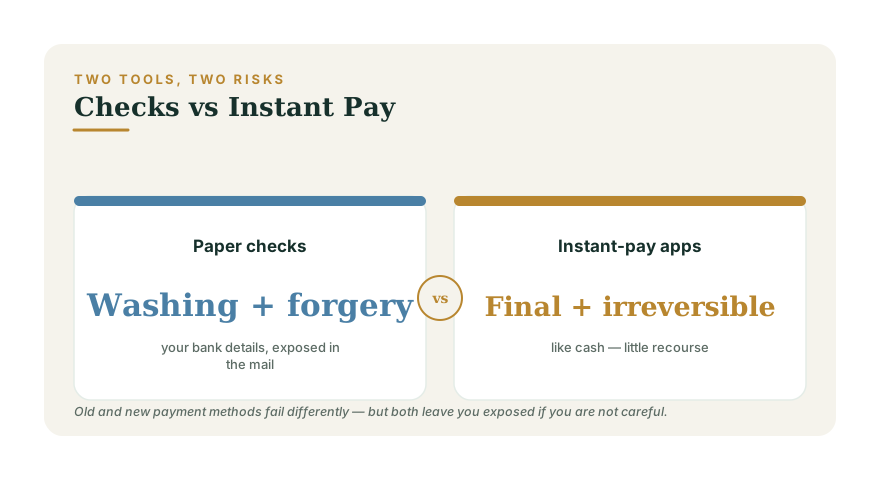
Payment fraud clusters at two opposite ends of the technology spectrum. Paper checks, the oldest tool, are easy to steal and alter. Instant-pay apps, the newest, move money so fast and so finally that a mistake or a con can't be undone. Both are heavily exploited, and the protections you assume exist often don't. Understanding how each is attacked is the best defense.
Check washing and mail-theft fraud
A check hands a stranger your bank's routing number, your account number, and your signature. Check washing is exactly what it sounds like: thieves steal mailed checks, use chemicals to erase the ink, and rewrite the payee and amount. Outgoing mail with a check inside — especially left in a home mailbox with the flag up — is a prime target. To reduce the risk:
- Mail checks from inside a post office or a secure collection box, not your home mailbox.
- Use a gel pen or permanent ink that resists washing.
- Pay electronically when you can; an online bill payment exposes none of your check details.
- Monitor your account and report any check that clears for the wrong amount or payee promptly — there are deadlines to dispute.
The fake-overpayment scam
This one targets sellers, freelancers, and landlords. A "buyer" sends you a check for more than the agreed amount and asks you to refund the difference — or to forward part of it to a "shipper." The original check looks like it cleared, so you send the refund. Days later, the check bounces as a forgery, the bank claws back the full amount, and the money you "refunded" is gone for good. The rule that defeats it: never send money back from a check that was sent to you, and never accept an overpayment. A check appearing to clear is not the same as the funds being truly final.
Why instant-pay apps offer little recourse
Apps like Zelle, Venmo, and Cash App move money person-to-person in seconds. That speed is the point — and the problem. When you authorize a payment, even if you were tricked into it, it generally behaves like handing over cash: there is usually no chargeback and no easy reversal. This is fundamentally different from a credit card, where you have strong dispute rights. The protections that do exist mostly cover unauthorized transactions (someone got into your account), not payments you were deceived into making yourself.
Common payment-app cons
- The "accidental payment" con. A stranger sends you money "by mistake" and politely asks you to send it back. The original payment was funded with a stolen card or account; it later reverses, but the money you "returned" came from your real balance — so you are out the full amount. Don't return it; report it to the app and let them sort it out.
- Marketplace and deposit scams. A buyer or "landlord" insists on an instant-pay app for a deposit on an item or apartment, then vanishes. Because the payment is final, you have little recourse.
- The fake "fraud department" call. A scammer posing as your bank says there's fraud and walks you through "reversing" it — which actually sends your money to them via the app. This blends phishing with payment fraud; the defenses are in Phishing and Account Takeover: How to Defend Yourself.
Safer habits for instant payments
Treat instant-pay apps like cash: only send money to people you actually know and trust, double-check the recipient before confirming, and never use them to pay a stranger for goods sight unseen. For purchases from people you don't know, a credit card's dispute rights are worth far more than the convenience of an instant transfer. These cons all share the urgency-and-irreversible-payment pattern described in The Most Common Financial Scams.
Watch the money, not just the message
Both kinds of fraud are caught early by simply paying attention to your accounts — turn on alerts, read statements, and reconcile regularly. While you're at it, audit what your bank charges you, too, in The Bank Fees Quietly Draining Your Checking Account. To make sure your payment habits and overall defenses can absorb a hit, take the Financial Resilience Assessment.