When someone dies, their property does not move to their heirs automatically. Someone has to validate the will, pay the final debts and taxes, and legally transfer what remains. That court-supervised process is called probate, and for many families it is the slow, expensive surprise they never planned for.
The good news is that with a little planning, most of your assets can skip probate altogether. To do that, you first need to understand what probate actually involves.
What Probate Is
Probate is the legal process of settling a deceased person's estate under court supervision. The basic steps look similar in most states:
- Validate the will and appoint the executor (or an administrator if there is no will).
- Inventory the assets that pass through the estate.
- Notify creditors and pay valid debts, expenses, and taxes.
- Distribute what remains to the heirs and close the estate.
The Real Costs of Probate
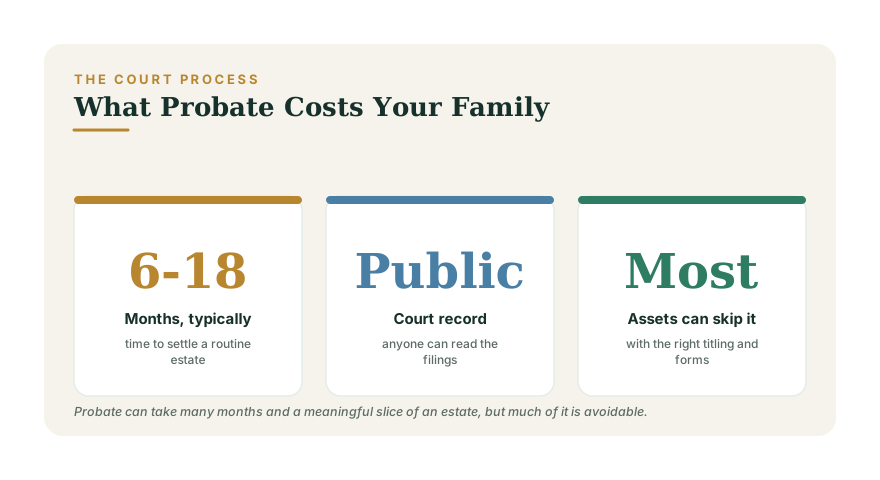
Probate is not always a nightmare, but it carries three reliable downsides. It is slow, often taking roughly six to eighteen months for a routine estate and longer if anyone contests the will. It costs money in court fees, attorney fees, and executor compensation, which can consume a meaningful percentage of the estate. And it is public — anyone can walk into the courthouse and read what you owned, what you owed, and who inherited it.
For families already grieving, the delay and exposure are the parts that sting most. Assets can be frozen for months while bills keep arriving.
What Passes Outside Probate
Here is the key insight: probate only governs assets that have no other built-in transfer mechanism. Plenty of common assets bypass it automatically when titled correctly.
- Beneficiary designations. Retirement accounts and life insurance pay named beneficiaries directly.
- Joint ownership with right of survivorship. Property passes to the surviving owner outside probate.
- Transfer-on-death and payable-on-death accounts. Bank and brokerage accounts can name a TOD or POD beneficiary.
- Living trusts. Assets titled in a trust pass to beneficiaries under the trustee, no court needed.
Practical Tools to Avoid Probate
You do not need an elaborate plan to cut probate dramatically. A few simple moves cover most people:
- Add TOD/POD designations. Most banks and brokerages let you name a beneficiary on a regular account for free.
- Use transfer-on-death deeds where available. Many states now allow real estate to pass by a TOD deed.
- Title accounts jointly with a spouse where appropriate, understanding the trade-offs of shared ownership.
- Keep beneficiary forms current. The cheapest, most powerful probate-avoidance tool you have.
- Consider a living trust if you own real estate or want a fuller solution.
Small-Estate Shortcuts
If an estate is small enough, many states offer simplified procedures — a small-estate affidavit or summary administration — that let heirs claim assets without full probate. The dollar thresholds vary widely by state, so check your local limit. For modest estates, this can make formal probate avoidance planning unnecessary.
A Word of Caution
Probate avoidance is a worthy goal, but do not chase it blindly. Adding a joint owner can expose your assets to that person's creditors and create gift-tax wrinkles. Naming the wrong beneficiary can override your will in ways you did not intend. The aim is a coordinated plan where your will, beneficiary forms, titling, and any trust all point the same direction.
Take an afternoon to map how each of your accounts and properties is titled, then close the gaps with TOD forms and updated beneficiaries. See how it all fits your broader plan with our wealth simulator, and keep reading in our article library.