Subscriptions are engineered to slip past your attention. Each one is small, automatic, and easy to forget, and that is exactly the point — a charge you never notice is a charge you never cancel. Add a streaming service here, an app there, a free trial that quietly converted, and most households are paying for several things they no longer use. This slow accumulation is subscription creep, and the fix is a simple audit you do once a year.
It is the rare money task with a guaranteed payoff: the audit almost always finds more than it costs in time.
Find every recurring charge
You cannot cancel what you cannot see, so the first step is a complete list. Three places to look:
- Your bank and credit card statements. Scan the last two or three months for anything that repeats. Recurring charges hit on a regular cycle, which makes them easy to spot once you look.
- App store subscriptions. Both major phone platforms keep a single screen listing every subscription billed through them — often the messiest pile.
- Annual charges. The sneakiest ones bill once a year, so they do not appear in a single-month scan. Look back a full twelve months for memberships, domains, cloud storage, and warranty renewals.
Write each one down with its price and its billing frequency. The act of seeing them all in one place is itself revealing.
Annualize the cost — this is the key trick
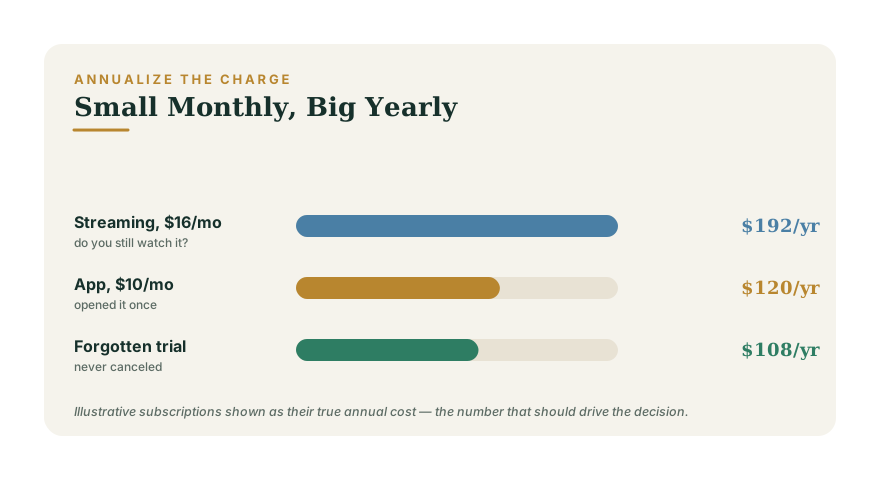
The reason subscriptions feel harmless is that they are priced monthly. "$16 a month" registers as nothing; "$192 a year" makes you stop and think. So convert every charge to its annual cost by multiplying the monthly price by twelve. Suddenly a few forgotten services are clearly a few hundred dollars a year, which reframes the decision entirely. You are no longer deciding whether to cut a $9 charge — you are deciding whether a service is worth $108 a year of real money.
Run the cancel-or-keep decision
For each subscription, ask three quick questions: Did I use this in the last month? Would I notice if it disappeared? Is it worth its annual price to me? Sort everything into three buckets:
- Cancel now. Anything you forgot you had, used once, or cannot remember the password to. These are pure leakage.
- Downgrade or rotate. Services you use sometimes. Drop to a cheaper tier, switch annual billing if it is discounted and you are sure, or rotate — keep one streaming service at a time and swap when you finish what you are watching.
- Keep. The ones that genuinely earn their annual cost. There is no virtue in canceling things you value; the goal is alignment, not deprivation.
Watch for the dark patterns
Companies make canceling deliberately annoying — buried buttons, "are you sure?" gauntlets, retention offers, and cancel flows that require a phone call. Expect the friction and push through it. Some will offer you a discount to stay; if the service is worth the lower price, fine, but do not let a coupon talk you into keeping something you decided to cut. Also watch free trials: set a reminder to cancel before they convert, because "I'll remember" is exactly how creep starts.
Make it an annual ritual
One audit is good; a recurring one is better, because subscriptions regrow. Put a once-a-year sweep on your calendar — pairing it with another annual task like tax filing makes it easy to remember. A no-spend month is also a natural trigger; with discretionary spending paused, your recurring charges stand out clearly, which is why the audit pairs so well with a no-spend month. While you are reviewing statements, check for sneaky bank charges too, covered in the bank fees draining your account.
Bank the win
The savings from an audit are recurring, which makes them powerful: cut $40 a month and that is nearly $500 a year, every year, for a single afternoon's work. Do not let it melt back into general spending — redirect it to a goal automatically. For more painless trims in the same spirit, see cutting expenses without misery, and fold the freed-up money into your plan with the Budget Analyzer.