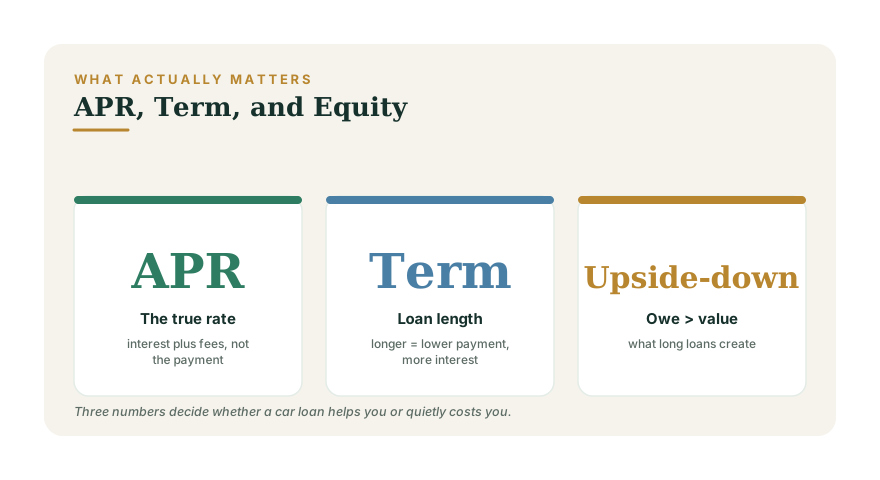
Most car buyers walk into a dealership thinking about one number: the monthly payment. Dealers know this, and the entire financing conversation is built around it. But the monthly payment is the least useful number in the room. The numbers that decide whether a loan helps or hurts you are the APR and the loan term — and getting those wrong is how people end up owing more than their car is worth.
The monthly-payment trap
"What monthly payment are you comfortable with?" sounds helpful. It is actually the setup for a sale. Once you name a payment, the dealer can hit it almost any way they like — by stretching the loan longer, raising the price, or rolling extras in — and you will never see the moving parts. Two cars with the same monthly payment can differ by thousands in total cost. Always negotiate the out-the-door price first, and only then talk financing.
APR is the number that matters
The APR (annual percentage rate) is the real cost of borrowing — the interest rate plus most fees, expressed as a yearly percentage. A lower APR means you pay less to borrow the same money. APR depends heavily on your credit, so it is worth improving your score before you shop; see How to Improve Your Credit Score. The difference between a good rate and a bad one, across a multi-year loan, is easily worth thousands of dollars in interest.
Loan term: longer is not cheaper
Stretching a loan from four years to six or seven lowers the monthly payment, which is exactly why dealers offer it. But a longer term means you pay interest for longer and pay more total interest, even at the same rate. Worse, a long loan means you build equity slowly while the car depreciates quickly — a dangerous combination. As a rule of thumb, if you cannot comfortably afford a car on a loan of about four years or less, the car is too expensive for you, not the loan too short. That guideline is the heart of How Much Car Can You Actually Afford?
Being upside-down (and why it is dangerous)
You are upside-down (or "underwater") when you owe more on the loan than the car is worth. Long loans and small down payments are the main causes: the car loses value faster than you pay the balance down. This matters because:
- If the car is totaled or stolen, insurance pays only its market value — you still owe the gap out of pocket.
- If you want to sell or trade in, you have to cover the difference in cash.
- Rolling negative equity into your next car loan stacks the problem and compounds it.
The defenses are simple: put real money down (enough that you are never deeply underwater), keep the term short, and buy a car that holds its value reasonably well. A used car past its steepest depreciation, as discussed in How to Buy a Used Car Without Overpaying, is upside-down far less often.
Dealer financing vs the credit union
Dealer financing is convenient, but convenience is rarely the cheapest option. Dealers often mark up the rate they get from a lender and keep the spread, so the rate you are offered may not be the best you qualify for. The smarter sequence is to get pre-approved at a bank or credit union first. Credit unions, being member-owned, frequently offer the lowest auto rates around. Walk in with that pre-approval in hand; if the dealer can beat it, great — let them compete. If they cannot, you already have your loan. The exception is a genuine manufacturer promotion such as 0% financing, which can beat any outside loan — just confirm it is truly 0% and not bundled with a higher price.
Borrow within a plan, not a payment
A car loan is fine when it is a small, short, low-rate piece of a healthy budget — and a problem when it is a long loan chosen to make an unaffordable car feel affordable. Keep your total debt load in check by understanding your debt-to-income ratio, and model the real payment against your income with the Debt Payoff tool before you sign anything.