Ask most people how much car they can afford and they will answer with a monthly payment they think they can swing. That is the wrong anchor, and it is the single most expensive mistake car buyers make. A payment you can technically cover can still wreck your budget once insurance, fuel, and repairs pile on — and once you focus on the payment, a dealer can quietly make the car cost more. Here is a more honest way to find your real number.
Why the monthly payment is the wrong anchor
The monthly payment hides almost everything that matters. It says nothing about the total price, the interest you will pay, how long you will be paying, or what the car costs to own beyond the loan. Worse, anchoring on a payment hands the dealer the lever they want: they can hit your number by stretching the loan to six or seven years, leaving you paying more interest and underwater on the loan. The fix is to anchor on the things the payment conceals — the price, the term, and the all-in cost of ownership.
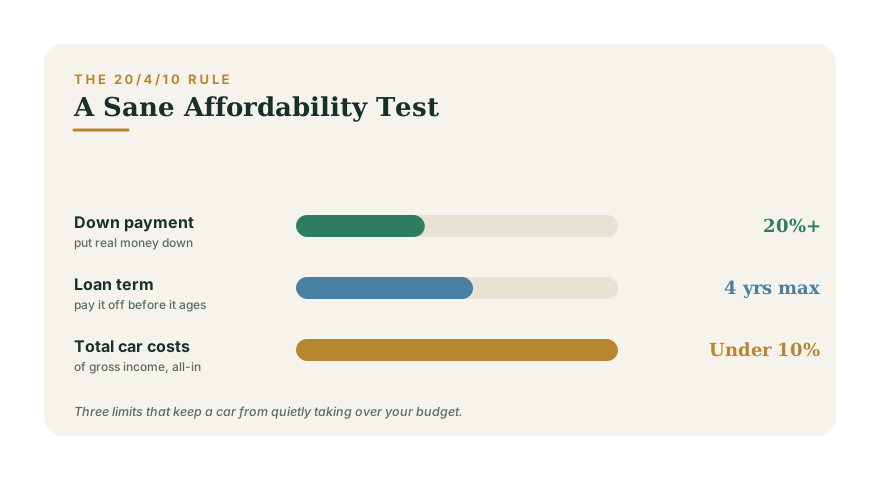
The 20/4/10 guideline
A simple, time-tested rule keeps a car from taking over your finances:
- 20% down. Put at least 20% down. A solid down payment keeps you from being upside-down — owing more than the car is worth — and signals the car is genuinely within reach.
- 4-year loan, max. Finance for no more than four years. If you need five, six, or seven years to make the payment work, the car is too expensive for you. Long loans are a sign, not a solution.
- 10% of gross income. Keep your total car spending — loan payment plus insurance, fuel, and maintenance — under 10% of your gross monthly income.
That third rule is the one most people miss, because they budget for the payment and forget everything else. The 4-year limit ties directly to avoiding the long-loan traps in Car Loans and Financing, Explained.
Total cost of ownership, not the sticker
The loan payment is only one line in a much longer bill. Real affordability means the whole package fits: depreciation, insurance, fuel, maintenance, repairs, registration, and taxes. A "cheap" car with high insurance and poor fuel economy can cost more to run than a pricier, more efficient one. We break the full per-mile picture down in The True Cost of Owning a Car. When you run the 10% test, run it on the all-in cost, not just the financing.
A worked example
Suppose you earn $5,000 a month gross. The 10% rule caps total car spending at about $500 a month. If insurance, gas, and a maintenance set-aside run roughly $250, that leaves about $250 for the loan payment. With at least 20% down and a four-year term, that payment supports a moderately priced car — likely a sensible used vehicle rather than a new luxury model. The numbers are clarifying: they often point toward a good used car bought a few years into its depreciation, where the value is best.
When the math says "less car"
If the guideline points to a cheaper car than you hoped, that is the system working, not failing. A car is a depreciating expense, not an investment; every extra dollar you sink into it is a dollar not building your emergency fund, retirement, or other goals. Spending less on transportation is one of the highest-leverage moves in a budget, precisely because the costs are large and recurring. Many people find that buying modestly and driving the car for a decade frees up enormous room for the things that actually build wealth.
Find your number
Treat 20/4/10 as a ceiling, not a target — coming in under it is even better. Before you shop, work out exactly what fits by running your income and obligations through the Budget Analyzer, and pressure-test the loan itself with the Debt Payoff tool. Decide your number at home, in your own budget — long before a salesperson asks what payment feels comfortable.