Recessions, layoffs, and cost-of-living spikes are not predictable, but they are recurring. You cannot forecast when the next one arrives, so the only real defense is a budget built to absorb a shock before the shock shows up. A recession-resistant budget is not about permanent frugality — it is about structuring your spending so that if your income falls or prices jump, you can cut fast without derailing your life.
Know your bare-bones number
The foundation of resilience is knowing the absolute minimum it costs to keep your household running — housing, utilities, food, insurance, minimum debt payments, and transportation to work. This "bare-bones" figure is the floor your income cannot fall below without real trouble, and it is usually far smaller than what you actually spend in a normal month. Knowing it in advance means that if a paycheck disappears, you already know exactly what to protect and what to cut. Building this stripped-down version is covered in How to Build a Bare-Bones Budget.
Separate needs from flexible spending
A resilient budget is organized so the parts you can pause are obvious and easy to reach:
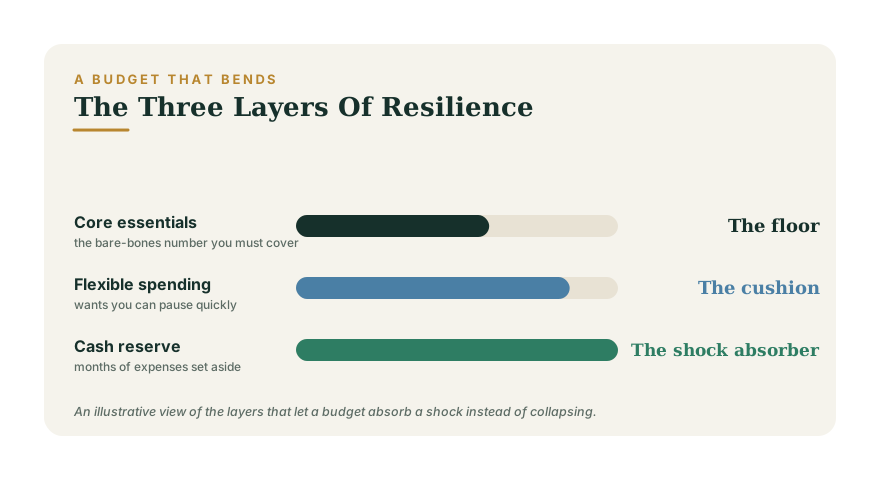
- Core essentials. The bare-bones items above. These are non-negotiable and should be as lean and low-fixed as reasonable, because fixed costs are the hardest to cut in a hurry.
- Flexible spending. Dining out, subscriptions, discretionary shopping, upgrades. This is your cushion — the money you can throttle back quickly without a crisis. The bigger and more clearly labeled this layer is, the more room you have to adjust.
- Savings and goals. Contributions you can temporarily reduce in a genuine emergency, then restore when the storm passes.
The goal is to keep fixed costs low and flexible spending clearly identified, so you are never guessing what to trim under pressure.
Build the cash reserve first
The single most powerful shock absorber is an emergency fund. During downturns, unemployment can run higher and last longer, and the Bureau of Labor Statistics tracks these labor-market conditions — a reminder that a job search can take months, not weeks. A cash reserve covering several months of your bare-bones expenses turns a job loss from a catastrophe into an inconvenience. If you have no cushion, that is the first priority before anything else. Size the target with the Emergency Fund Calculator, and keep it somewhere safe and accessible rather than idle, as described in Protecting Your Savings From Inflation.
Reduce fixed costs and fragile debt
The lower your fixed obligations, the more resilient you are, because fixed costs cannot be cut quickly when trouble hits. Before a downturn, look hard at the big recurring commitments: housing that stretches your budget, car payments larger than you need, and high-interest debt whose payments consume cash you might need for essentials. Paying down or refinancing expensive debt while your income is stable frees up breathing room later. Trimming waste without wrecking your quality of life is the art described in Cut Expenses Without Misery.
Diversify and protect your income
A budget is only as resilient as the income behind it. Relying on a single paycheck is the biggest hidden risk, so anything that adds a second stream — a side income, freelance skills, or a partner's earnings — makes your whole plan sturdier. The case for not depending on one source is made in Building Multiple Income Streams. Keeping your skills current and your professional network warm is part of income defense too, even when you are not job-hunting.
Write the downturn plan before the downturn
The final piece is having a pre-written plan for what you would cut, in what order, if income dropped. Decide now which subscriptions go first, which discretionary spending pauses, and which savings contributions you would temporarily reduce. Making these decisions calmly in advance beats making them in a panic. Sketch the plan with the Budget Analyzer, map it against your goals at the planning hub, and measure how well you would weather a shock today with the Financial Resilience assessment.