There are moments when a normal budget no longer applies — a job loss, a medical crisis, a sudden drop in income — and the only question that matters is: what is the smallest amount of money I need to survive this month? A bare-bones survival budget answers that. It is not how you want to live forever. It is the floor you can stand on while you stabilize, and knowing that floor turns blind panic into a plan.
The principle behind it is old and simple: in a crisis, you fund the four walls first — food, shelter, utilities, and transportation — and everything else waits its turn.
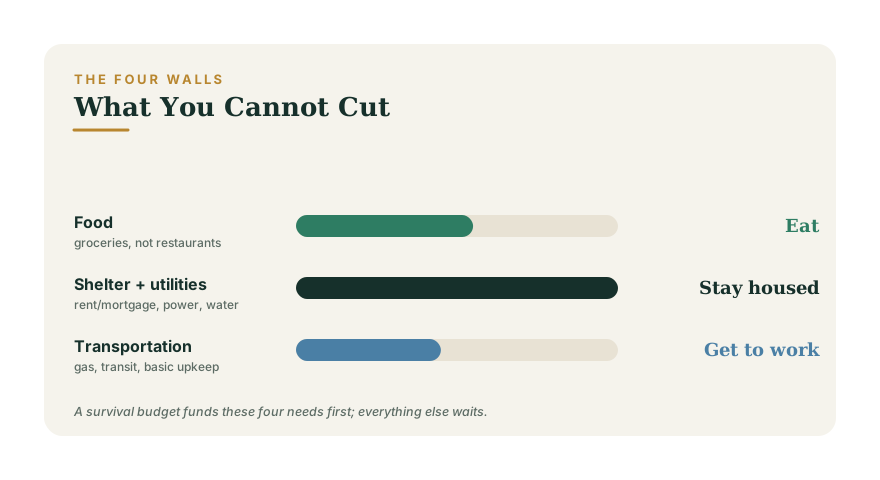
The four walls, in priority order
When cash is scarce, these four needs come before every other bill — yes, even before credit cards and unsecured loans:
- Food — groceries to feed yourself and your family. This means cooking at home, not dining out. It is a need, but the cheapest version of it.
- Shelter — the rent or mortgage payment that keeps a roof overhead.
- Utilities — the power, water, heat, and basic phone or internet that keep the home functional and let you job-hunt.
- Transportation — whatever gets you to work or to interviews: gas, transit fare, or keeping one car running.
Fund these first and in full. A missed credit card payment is a setback; losing your housing or your ability to get to work is a catastrophe that is far harder to recover from.
What to cut first — and how deep to go
Everything outside the four walls is a candidate for the chopping block, cut in roughly this order:
- First, all discretionary spending — dining out, subscriptions, entertainment, shopping, travel. In survival mode these go to zero, not "a little less."
- Next, pause savings and extra debt payments. Temporarily stop retirement contributions and any payments above the minimum. Keep minimums going where you can to protect your credit, but survival comes before getting ahead.
- Then, shrink the four walls themselves. Switch to the cheapest groceries, drop the thermostat, cancel anything but the most basic phone plan. Cutting expenses without making yourself miserable still applies — but the threshold for "miserable" moves in a true crisis.
Find your minimum survival number
The goal of the exercise is a single figure: the total of your four walls plus any minimums you must keep, with everything else stripped out. That number is enormously useful. It tells you how long your savings will last, exactly how much income you need to scrape together, and what your emergency fund actually has to cover. It is almost always lower than people fear — which is, oddly, reassuring. Knowing you can survive on this much makes the situation feel finite.
This minimum is also the right basis for sizing your safety net in the first place. An emergency fund built to cover your bare-bones number stretches much further than one sized to your comfortable lifestyle.
Call your creditors and look for help
A survival budget is not just about cutting — it is also about finding flexibility and support. Call lenders about hardship programs before you miss payments. Contact your utility company about budget-billing or assistance programs. Look into unemployment benefits, local food assistance, and community resources without shame; they exist for exactly this situation. Every dollar of relief or deferral is a dollar your bare-bones budget does not have to find.
Treat it as temporary — and plan the exit
A survival budget is a tourniquet, not a lifestyle. Living this lean is sustainable for weeks or a few months, not indefinitely, so pair it with an active plan to restore income or resolve the crisis. The moment your situation stabilizes, the order reverses: first rebuild a small emergency cushion, then restart minimum-plus debt payments and savings, then slowly add back the comforts you cut. A useful companion here is How to Budget After a Pay Cut, which covers the gentler version of this same triage when the squeeze is real but not an emergency.
Run your bare-bones number through the Budget Analyzer to see exactly how long your resources last at the floor, and check where you stand with the Financial Resilience assessment. Knowing your survival number does not make a crisis pleasant — but it replaces fear of the unknown with a number you can actually plan around.