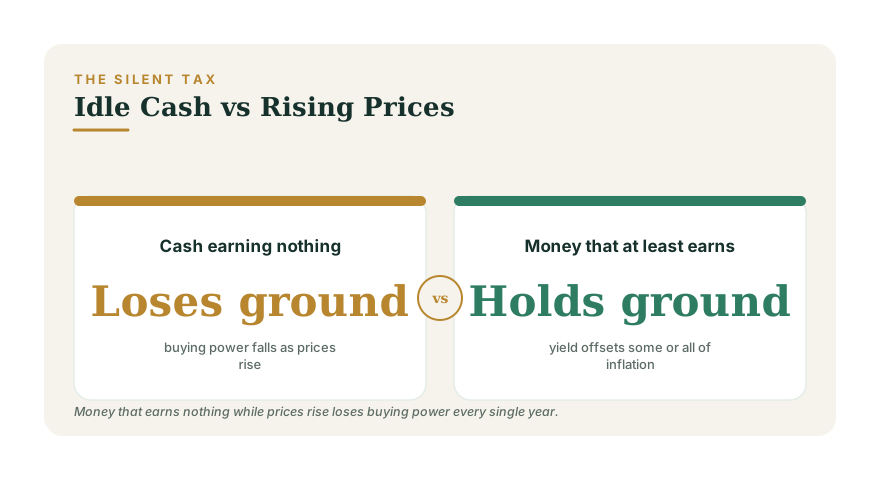
Inflation is the quiet force that erodes savings without ever showing up as a withdrawal. If prices rise a few percent in a year and your cash earns nothing, you did not lose any dollars — but each of those dollars now buys less. Over a decade, that gap compounds into a serious loss of buying power. Protecting your savings from inflation is not about chasing exotic bets; it is about not letting money sit idle while its value quietly leaks away.
What inflation actually does to cash
The Bureau of Labor Statistics tracks inflation through the Consumer Price Index, which measures how the price of a typical basket of goods and services changes over time. When people say inflation was a certain amount last year, that CPI figure is usually what they mean. The practical takeaway is simple: if your savings earn less than the rate prices are rising, you are losing purchasing power in real terms, even as your account balance stays flat or ticks up slightly. A checking account paying nothing is the most common place this happens.
First, match the money to its time horizon
The right protection depends entirely on when you will need the money. Trying to beat inflation with cash you need next month is a mistake, and so is leaving decades-away money in cash. Sort your savings by horizon:
- Money you need soon (emergency fund, near-term goals). Safety and access matter more than return. The goal here is to lose as little to inflation as possible while keeping the money liquid and guaranteed.
- Money for medium-term goals (a few years out). You can accept a little less liquidity for a better yield.
- Money for the long term (retirement, goals a decade or more away). This is where growth investments, not cash, do the heavy lifting against inflation.
Where to keep short-term cash
For money you need to stay safe and available, the defense is earning a competitive yield rather than accepting zero:
- High-yield savings accounts. These pay meaningfully more than a typical big-bank account, are federally insured up to the standard limit per the FDIC, and let you move money freely.
- CDs and CD ladders. Locking money for a set term can earn more, and laddering several maturities keeps part of your cash accessible while the rest earns. The mechanics are in High-Yield Savings and CD Ladders.
- Money market funds and Treasury bills. Very short government-backed options that often track prevailing rates closely.
The point is not to get rich on your cash — it is to stop handing free purchasing power to inflation.
Inflation-linked options for the cautious
Two government-issued instruments are built specifically to track inflation. I bonds and TIPS (Treasury Inflation-Protected Securities) adjust their value or interest with the price level, so their return rises when inflation does. They are not a substitute for a growth portfolio, but for savers who want a low-risk piece that keeps pace with prices by design, they fill a real gap — the details, limits, and trade-offs are laid out in I Bonds and TIPS, Explained.
The long-term answer is ownership
Cash and cash-like instruments can hold ground against inflation, but they rarely beat it by much after tax. Over long horizons, owning productive assets — a diversified portfolio of stocks through low-cost index funds, and often real estate — has historically outpaced inflation because the underlying businesses raise their own prices and grow. That is why money you will not touch for years generally does not belong in cash at all. If you are just getting started, How to Start Investing walks through the basics. You can see the corrosive effect of inflation over time, and how growth counters it, with the Lifetime Wealth Calculator.
Put the layers together
Protecting savings from inflation is really about layering: keep near-term cash in a high-yield, insured account so it loses as little as possible, hold medium-term money in CDs or inflation-linked bonds, and let long-term money grow in a diversified portfolio. No single product does it all. Size your safe cash cushion with the Emergency Fund Calculator, build the growth side around your goals at the planning hub, and check whether your savings could withstand a rough stretch with the Financial Resilience assessment.