An accessory dwelling unit — an ADU — is a small, self-contained second home on a lot that already has a primary residence. It might be a converted garage, a basement apartment, or a freestanding cottage in the backyard. ADUs have surged in popularity as cities loosen zoning to add housing, and they hold real appeal: a way to generate rental income, house an aging parent or adult child, or add long-term value to a property you already own. They are also a bigger financial undertaking than the glossy "backyard cottage" articles suggest.
What counts as an ADU
The common thread is that an ADU is secondary to a main home and has its own kitchen, bathroom, and entrance. The main types are detached (a separate structure), attached (built onto the house), and conversion ADUs (an existing garage, basement, or attic reworked into a living space). Conversions are usually the cheapest because the shell already exists; detached new builds are the most expensive but often command the highest rent and add the most flexibility.
Build costs and financing
Building an ADU is a construction project, and costs range widely depending on size, location, and whether you are converting existing space or building new. Beyond the structure itself, budget for design, permits, utility connections, and the inevitable overruns. Because the sums are large, most owners finance an ADU rather than pay cash. Common routes:
- A home equity loan or HELOC, tapping the equity in your existing home — the trade-offs are laid out in Home Equity Loans vs HELOCs.
- A cash-out refinance, replacing your mortgage with a larger one and taking the difference.
- A renovation or construction loan sized to the project, sometimes underwritten partly on the future rental income.
Whatever the route, run the math the way you would for any rental: total cost in, realistic rent out, and the years to break even. The framework in Is a Rental Property Worth It? applies directly.
Rental income and the tax angle
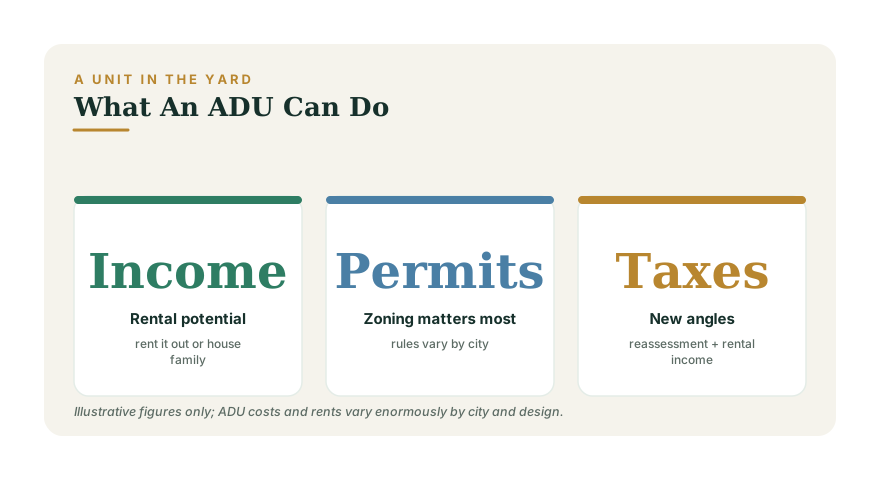
If you rent the ADU out, that income is taxable, but you also get to deduct the operating expenses tied to it — a portion of utilities and insurance, repairs, and depreciation on the structure. Depreciation is a meaningful non-cash deduction that can shelter much of the rental income in the early years, though it is recaptured when you eventually sell. Renting to a family member at below-market rates changes the tax treatment, so keep that in mind if the unit is for a relative. Because an ADU mixes personal and rental use of one property, the bookkeeping is more involved than a standalone rental; track everything and consider professional help at tax time.
Insurance and property taxes
Two costs people forget. First, your insurance needs to change — a standard homeowners policy may not cover a rental unit or a tenant's liability, so you will likely need a landlord or rental endorsement. Second, adding an ADU usually triggers a property-tax reassessment on the new construction, raising your annual tax bill. Neither is a dealbreaker, but both eat into the rental income, so include them in your projections rather than discovering them after the fact.
Zoning is the make-or-break step
Before you fall for a floor plan, confirm that your locality even allows an ADU on your lot, and under what conditions. Rules vary enormously: setbacks, maximum size, parking requirements, owner-occupancy mandates, and limits on short-term renting all differ by city and even by neighborhood. Some places have streamlined ADU approval to encourage housing; others make it slow and expensive. A quick conversation with your local planning department early can save you from designing a unit you can never legally build.
Does an ADU make sense for you?
An ADU shines when you have usable space, a market that supports solid rent, and zoning on your side — it can be a form of house hacking that turns your own lot into an income stream. It disappoints when build costs run high, rents are soft, or local rules add cost and delay. Treat it as the real estate investment it is, not a weekend project. Model the full picture — build cost, financing, rent, taxes, and insurance — and sketch how it fits your broader plan at the planning hub before you break ground.