Few financial fears are as exaggerated as the fear of a tax audit. The word conjures agents at your door combing through shoeboxes of receipts. The reality for the vast majority of taxpayers is far less dramatic: audit rates are low and have trended lower for years, and most "audits" are just a letter asking you to verify one line item. Understanding the real odds — and the handful of things that genuinely raise them — lets you file confidently instead of fearfully.
The real (low) odds
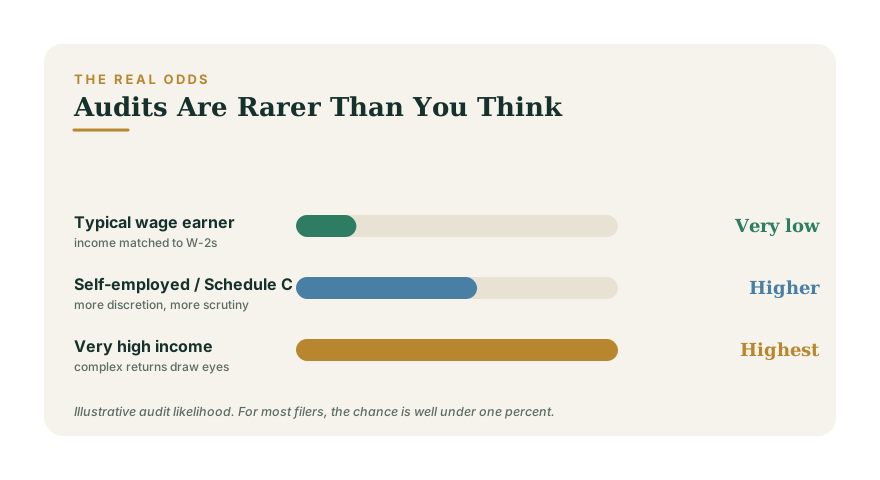
For an ordinary wage earner with a W-2 and a standard deduction, the chance of being audited in any given year is a small fraction of one percent. Most audits are correspondence audits handled entirely by mail — the IRS asks for documentation on a single item, you send it, and the matter closes. The in-person, comb-through-everything audit is rare and concentrated among high incomes and complex returns. The takeaway is not to be reckless, but to right-size your anxiety: filing an honest, well-documented return makes a serious audit very unlikely.
What genuinely raises your chances
The IRS uses computer scoring and automated matching to flag returns. The things that move the needle are mostly statistical outliers and mismatches:
- Unreported income. This is the big one. Every W-2 and 1099 is also sent to the IRS, and a computer matches them to your return. Leaving income off is the fastest way to draw a notice — usually a CP2000, explained in How to Handle an IRS Notice or Letter.
- Deductions that are large relative to your income. A charitable deduction or home-office claim that is wildly out of proportion to what people at your income level typically claim can flag the return.
- Self-employment and Schedule C. Business income involves more judgment and cash, so it draws more scrutiny — especially big vehicle, meal, or home-office write-offs. Claim what you are entitled to, document it, and read Self-Employed Tax Deductions to keep it legitimate.
- Very high income. Audit rates climb sharply at the top because the dollars at stake are larger.
- Round numbers everywhere. A return full of suspiciously clean figures — exactly $5,000 of this, exactly $2,000 of that — suggests estimates rather than records.
- Refundable credits with errors. Credits like the Earned Income Tax Credit have higher error rates and so see more verification.
What does NOT trigger an audit (the myths)
Plenty of common worries are overblown. Filing an extension does not raise your odds. Claiming a legitimate, documented home-office or business deduction does not "wave a red flag" — the flag is for amounts that are disproportionate or undocumented, not for the deduction itself. Filing early or late within the rules does not matter. And amending a return to fix an honest error does not paint a target on you. Do not let audit fear scare you out of deductions you genuinely earned; that is leaving money on the table out of superstition.
How to be audit-ready (with almost no effort)
The secret is that being audit-ready and being organized are the same thing. You do not prepare for an audit; you simply keep good records as a habit, and then an audit — in the unlikely event one comes — is a non-event.
- Report all income. Match every form you receive. If you got a 1099, assume the IRS did too.
- Keep documentation for deductions. Receipts, mileage logs, and donation acknowledgments. The standard is roughly three years of records, matching the usual audit lookback.
- Be honest and reasonable. Claim real expenses at real amounts. Aggressive estimates are what invite trouble.
- Use real numbers, not round ones. Precise figures signal you are working from records.
- Avoid the careless mistakes that draw attention in the first place — see Common Tax Filing Mistakes.
If you ever do get a letter
Most "audits" are a polite request to verify one thing. Respond by the deadline with copies of your documentation, keep your tone factual, and bring in a tax professional only if the matter is large or genuinely complex. The whole experience is far closer to answering an email than facing an interrogation.
File with confidence
The honest filer with organized records has very little to fear. Run a quick self-check with the Tax Health assessment to confirm your return is solid and your records are in order — then file, and let the audit anxiety go where it belongs: out the window.