Discovering you owe the IRS more than you can comfortably pay is a stressful moment, but it is one of the more solvable problems in personal finance. The IRS is not a loan shark; it has formal, published programs for people who owe money, and it would rather collect over time than not at all. The worst thing you can do is freeze and ignore it. The best thing you can do is act calmly and follow the order of operations below.
File even if you cannot pay
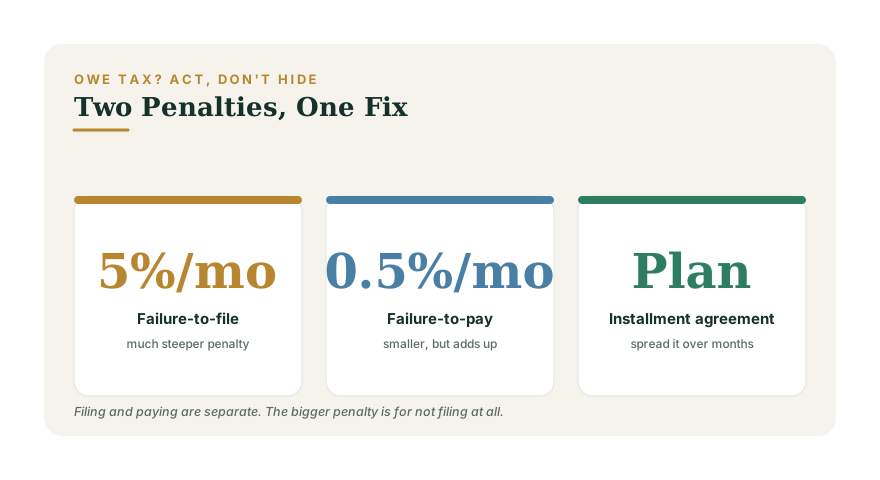
This is the single most important rule, and it surprises people: filing and paying are two separate obligations with two separate penalties. The failure-to-file penalty is far larger than the failure-to-pay penalty — roughly ten times steeper per month. So even if you do not have a dollar to send, file your return on time anyway. Filing stops the big penalty clock and shows the IRS you are engaging in good faith. Skipping the return to avoid a bill you cannot pay is the costliest mistake there is.
Pay what you can, when you can
Interest and the failure-to-pay penalty both accrue on the unpaid balance, so anything you pay shrinks both. Send whatever you can with the return, then keep chipping at the balance. Even partial payments slow the meter. If you can borrow from a lower-cost source for a short time, compare that cost against IRS interest before doing so — but be cautious about trading tax debt for high-interest credit card debt, which is usually worse.
Set up an installment agreement
If you cannot pay in full, the most common solution is an installment agreement — a monthly payment plan. Most individuals who owe under a certain threshold can apply online in minutes and get approved almost automatically. There is a setup fee (lower if you apply online and pay by direct debit), and interest and a reduced penalty keep accruing, but you are now in good standing rather than in collections. Think of it like negotiating a structured payoff with any creditor; the same calm, documented approach in How to Negotiate With Creditors applies here.
When you truly cannot pay: offer in compromise and hardship status
For a smaller group of people, two other doors exist. An offer in compromise lets you settle the debt for less than the full amount, but it is reserved for cases where the IRS agrees you genuinely cannot pay the full balance within a reasonable time; approval is far from guaranteed, and the application is rigorous. Be deeply skeptical of late-night ads promising to settle your tax debt for "pennies on the dollar" — many are expensive operations that overpromise. Separately, if paying anything would prevent you from covering basic living expenses, the IRS can temporarily mark your account currently not collectible, pausing collection while interest still accrues.
Understand penalties and interest
Two charges stack on a balance: a penalty and interest. The failure-to-pay penalty is modest per month; interest is set quarterly and compounds daily. If you have a clean compliance history, you may qualify for first-time penalty abatement — a one-time waiver of penalties (not interest) that many people do not know to ask for. It never hurts to request it.
What to avoid
- ❌ Ignoring notices. The IRS escalates on a schedule. Engaging early keeps you out of liens and levies. Learn the system in How to Handle an IRS Notice or Letter.
- ❌ Paying a "tax resolution" firm a large upfront fee before you have explored the free options the IRS offers directly.
- ❌ Draining your retirement accounts to pay a tax bill you could spread over time — the early-withdrawal taxes and penalties can make the problem worse.
- ❌ Letting it happen again. If under-withholding caused this, fix it at the source with quarterly estimated taxes or an updated W-4.
Get ahead of it next year
Owing once is a wake-up call to right-size your withholding or estimated payments so it does not repeat. Run your numbers and stress-test your plan with the Tax Strategies tool, and take the Tax Health assessment to spot the gaps that led to a surprise bill. A balance due is a problem with a process — work the process, and it shrinks every month.