When a bill becomes unpayable, the instinct is to go quiet and hope it passes. It does not pass, and silence is the one move that helps you least. The thing most people never internalize is that a creditor would almost always rather recover something than write the whole balance off — which means a conversation you are dreading is often a negotiation you can win. Here is how to approach it without making things worse.
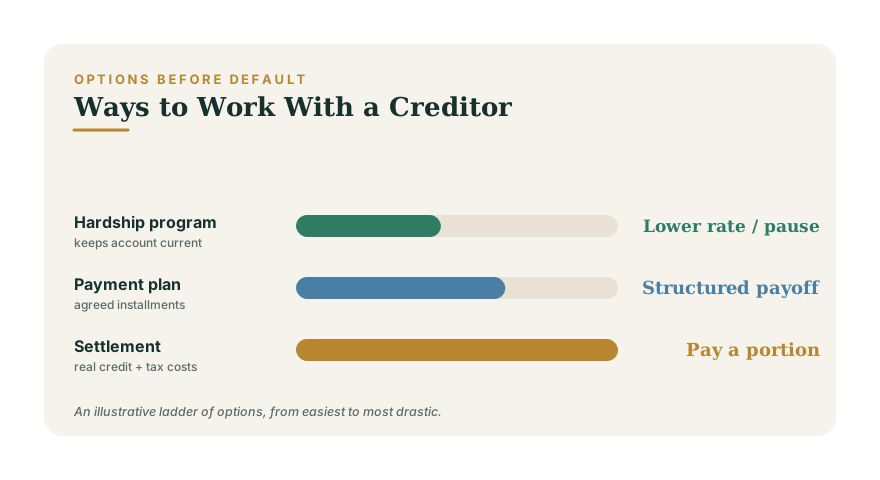
Start before you default — hardship programs
The best time to call is before you miss a payment, not after. Most major lenders run hardship programs for borrowers hit by job loss, medical bills, or other temporary setbacks. Depending on the lender these can include a lower interest rate, a few months of reduced or paused payments, waived fees, or a re-aged account that drops your past-due status. You usually have to ask for these by name and explain your situation honestly. They are designed to keep an account from going bad, so a lender is often genuinely willing to use one.
Call the number on your statement, ask specifically for "hardship" or "loss mitigation" options, and be ready to describe what changed and what you can realistically pay. Bring a number to the table — even a modest one shows good faith.
Negotiate a payment plan or a rate reduction
If you can pay the debt over time but not on the current terms, ask for a structured plan: a lower interest rate, a longer schedule, or both. Credit-card issuers in particular will sometimes drop your rate for a stretch if you ask and your history is decent. Frame it plainly: "Here is what I can afford each month — what can we set up so I can pay this off?" If the first representative says no, politely ask to speak with a supervisor or the retention department, where more flexibility usually lives.
Debt settlement: what it is and what it costs
Debt settlement means the creditor agrees to accept less than the full balance as payment in full — say, 50 cents on the dollar. It is most achievable on debts that are already seriously delinquent or have been sold to a collector, because by then the creditor has often given up on full repayment. It can genuinely reduce what you owe. But settlement is not free, and the costs are easy to overlook:
- Credit damage. A settled account is typically reported as "settled for less than the full amount," which is a negative mark that can linger for years. If you stopped paying to force the settlement, those missed payments hurt too.
- A tax bill. Forgiven debt of $600 or more is generally treated as taxable income — the creditor may send you a 1099-C, and the IRS expects you to report it. A "savings" of several thousand dollars can come with a real tax cost.
- No guarantee. A creditor is under no obligation to settle, and pushing an account into delinquency to qualify is a gamble that can backfire into the lawsuit territory described in What Actually Happens If You Stop Paying a Debt.
Be very careful with for-profit settlement companies
Companies that promise to settle your debts for "pennies on the dollar" often tell you to stop paying creditors and instead funnel money into an account they control while fees pile up. During that gap your credit craters, late fees and interest mount, and you can be sued before any deal is struck. Many of these outfits charge steep fees for something you can attempt yourself for free. The same warning applies to firms promising to erase debt or fix your credit — see Debt Consolidation Traps for the patterns to avoid.
Know who you are talking to — collectors vs original creditors
If a third-party debt collector has the account, you have specific legal protections under the federal Fair Debt Collection Practices Act: they cannot call at unreasonable hours, harass you, lie about what you owe, or threaten things they cannot legally do. You can request debt validation in writing, forcing them to prove the debt is yours and accurate before you pay a cent — collectors buy debts in bulk and records are sometimes wrong. Always confirm the debt is valid and within the statute of limitations before agreeing to anything.
Get every agreement in writing — before you pay
This is the rule that protects you from everything above. Never send money on a verbal promise. Get the full terms in writing first: the amount, that it settles the account in full, that the creditor will report it as agreed, and that they will not pursue or sell any remaining balance. Keep copies of everything and pay in a traceable way, never by handing over direct account access. A clean written agreement is the difference between resolving a debt and watching the "remaining" balance reappear later with a new collector.
Build the plan around it
Negotiation buys you breathing room, but it works best as part of a real payoff strategy rather than a one-off rescue. Map out which debts to tackle first and how the freed-up cash gets redeployed using the Debt Payoff Calculator, and pair it with the tactics in How to Pay Off Credit Card Debt. The goal is not just a lower balance today, but a path that does not loop you back to the same call next year.