Most insurance protects you against something that might happen in the future — a fire, a crash, an illness. Title insurance is different. It protects you against problems that already exist in the past history of the property you are buying, problems that a normal inspection would never reveal. It is also one of the only policies you pay for just once, at closing, with no ongoing premium.
What "title" actually means
The title to a property is the legal right to own it. When you buy a home, you are buying that right from the seller — and you are trusting that the seller actually holds it free and clear. Title insurance exists because that trust is sometimes misplaced. A previous owner may have had an unpaid tax bill, a contractor may have filed a lien for unpaid work, there may be an old mortgage that was never properly released, or a long-lost heir may have a claim to the property. Any of these "defects" can surface years after you move in.
What a title search uncovers
Before issuing a policy, a title company runs a title search — a review of public records to trace the property's chain of ownership and flag anything attached to it. A search commonly turns up:
- Liens — unpaid debts secured against the property, such as tax liens, mechanic's liens, or an old mortgage that was never cleared.
- Easements — rights that let someone else use part of your land, like a utility company or a neighbor's shared driveway.
- Errors in public records — a misspelled name, a wrong legal description, or a clerical mistake in a past deed.
- Boundary or ownership disputes — competing claims, forged documents, or undisclosed heirs.
If the search finds a problem, it is usually resolved before closing. Title insurance covers the things the search misses — the hidden defect nobody could reasonably have found.
Lender's policy vs owner's policy
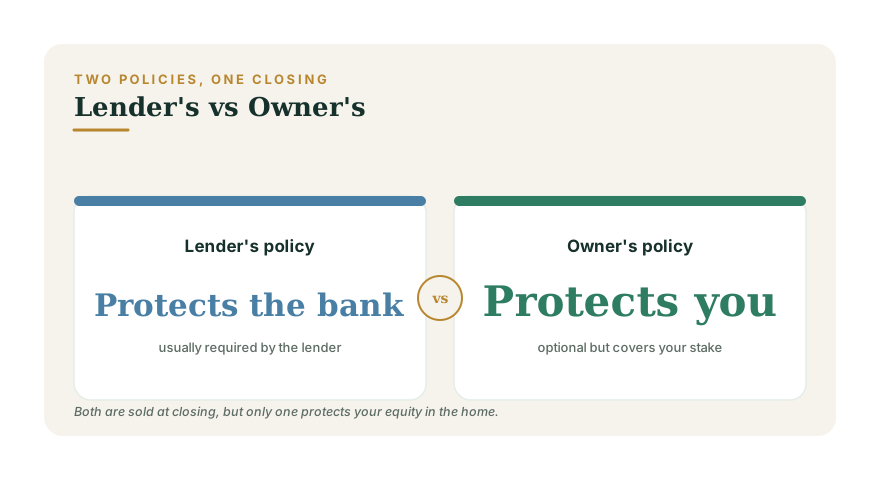
There are two separate policies, and it is worth understanding the difference because they protect two different parties. A lender's policy protects the bank that gives you the mortgage. If a title defect surfaces and wipes out the loan's security, the lender is covered. Because the bank is lending its own money, it almost always requires this policy, and you, the buyer, typically pay for it as part of your closing costs.
An owner's policy protects you. If a hidden claim threatens your ownership, this is the policy that defends you in court and reimburses you for a covered loss up to the purchase price of the home. It is technically optional, but it is the only one that protects the equity you are putting in. Skipping it to save a few hundred dollars can leave your entire stake exposed.
The one-time premium
Unlike your homeowners insurance, which you pay every year, title insurance is a single premium paid once at closing. There is no monthly bill and no renewal. The cost varies by state and home price but is generally a modest fraction of the purchase price. The owner's policy lasts for as long as you (or your heirs) own the home.
Why it is usually worth it
Title insurance is easy to dismiss as just another line item on a closing statement crowded with fees. But the downside it protects against is catastrophic and rare: losing part or all of your ownership in the single largest asset most families ever buy. A one-time premium to insure against that is, for most buyers, a sensible trade. It is one of the few insurance products where the "buy it and never think about it again" approach is exactly right.
A few practical notes
You can often shop around for the title company rather than simply accepting the one your lender or agent suggests — rates can differ. When you refinance, the lender will usually require a new lender's policy, since the old loan is being replaced, but your original owner's policy stays in force. If you are early in the process, the first-time homebuyer roadmap walks through where title insurance fits among the other steps.
Title insurance is a small, one-time cost that quietly protects the foundation of your homeownership. As you tally up what buying actually costs, fold it into the full picture with the home affordability calculator so there are no surprises at the closing table.