Homeowners insurance is required by your lender and bought by nearly every homeowner, yet most people could not tell you what their policy actually covers. That gap matters, because the time most owners learn what is and is not covered is the worst possible moment — right after a disaster. A little understanding now prevents an expensive surprise later.
The three things a policy actually covers
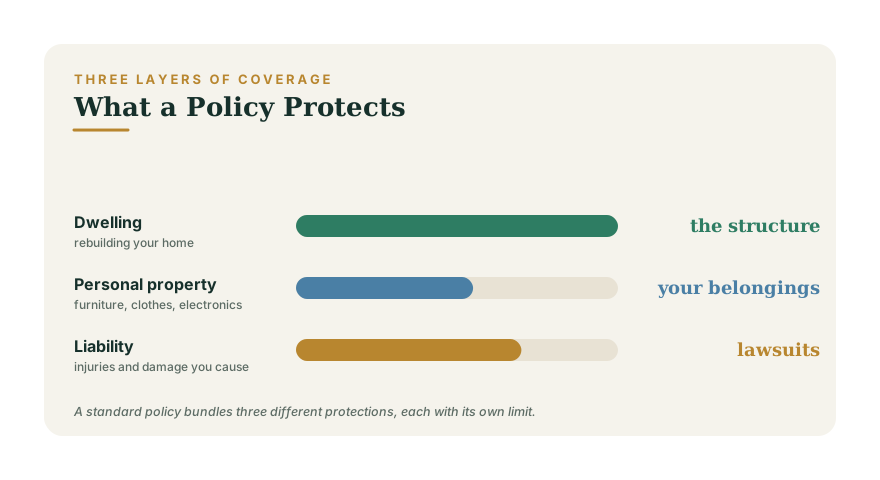
A standard homeowners policy is really a bundle of three separate protections, each with its own coverage limit:
- Dwelling coverage pays to repair or rebuild the physical structure of your home — walls, roof, built-in systems — after a covered event like a fire or windstorm. This is the largest and most important limit, and it should reflect the cost to rebuild, which is different from your home's market price.
- Personal property coverage pays for your belongings — furniture, clothing, electronics, appliances — if they are damaged, destroyed, or stolen. It is usually set as a percentage of your dwelling coverage.
- Liability coverage protects you if someone is injured on your property or you accidentally damage someone else's property, covering legal costs and judgments up to the limit.
Most policies also include loss of use, which pays for temporary housing if your home becomes uninhabitable while it is repaired.
Replacement cost vs actual cash value
This single distinction decides how much you actually receive after a claim, and it catches people off guard.
- Replacement cost pays what it costs to replace a damaged item with a new equivalent today, with no deduction for age or wear. A ten-year-old roof is replaced with a new roof.
- Actual cash value (ACV) pays replacement cost minus depreciation. That same ten-year-old roof is reimbursed at its depreciated, used value — often a small fraction of what a new roof costs.
Replacement cost coverage costs a bit more in premium but pays far more when you have a loss. Check which one applies to both your dwelling and your personal property; an ACV policy can leave you thousands short exactly when you need the money.
The exclusions that surprise people
A standard policy does not cover everything, and the gaps are significant:
- Flood damage is excluded from standard policies. Flooding from rising water, storm surge, or overflowing rivers requires separate flood insurance — and you do not have to live on the coast to flood.
- Earthquakes (and earth movement generally) are excluded and require a separate policy or endorsement, which matters far beyond the obvious fault-line states.
- Routine wear and neglect are never covered. Insurance is for sudden, accidental events, not for deferred maintenance or aging systems that finally fail.
- Sewer and drain backup is often excluded unless you add an endorsement.
- High-value items like jewelry, art, and collectibles are typically capped at a low limit unless you add a special rider, or "scheduled" coverage, for them.
Knowing these gaps lets you fill the ones that apply to you rather than discovering them after a loss.
How deductibles shape your premium
Your deductible is what you pay out of pocket before insurance contributes. A higher deductible lowers your premium but raises your exposure on a claim, while a lower deductible does the reverse. The right level depends on your emergency savings and how much risk you want to self-insure — a trade-off worked through in choosing a home insurance deductible. Some policies also carry separate, percentage-based deductibles for wind, hail, or hurricanes, which can be much larger than the standard one.
Coverage gaps and add-ons worth considering
Beyond filling exclusions, two upgrades are widely useful. Extended or guaranteed replacement cost on the dwelling protects you if rebuilding costs run over your limit after a widespread disaster spikes construction prices. And an umbrella policy adds liability protection above your home and auto limits for relatively little money — valuable if you have assets to protect. For investors, note that a rental needs a landlord policy rather than a standard homeowners policy; that cost belongs in the math when you assess whether a rental property is worth it.
Review your policy before you need it
Insurance is only useful if it is set up correctly before a loss. Once a year, confirm your dwelling limit still reflects current rebuilding costs, that you carry replacement-cost coverage, and that you have addressed the exclusions relevant to your area. Insurance premiums and property taxes are the two homeownership costs most likely to climb, so fold both into your planning — see how property taxes are calculated. Use the insurance calculator to size your coverage, and the emergency fund calculator to make sure you can comfortably cover your deductible when something goes wrong.