When people compare cars, they compare sticker prices. But the price you pay to buy a car is only one slice of what it costs to own one. The real figure includes depreciation, insurance, fuel, maintenance, repairs, registration, and taxes — and when you add it all up and divide by the miles you drive, the honest unit of cost is dollars per mile, not dollars per month.
Depreciation: the biggest cost you never see
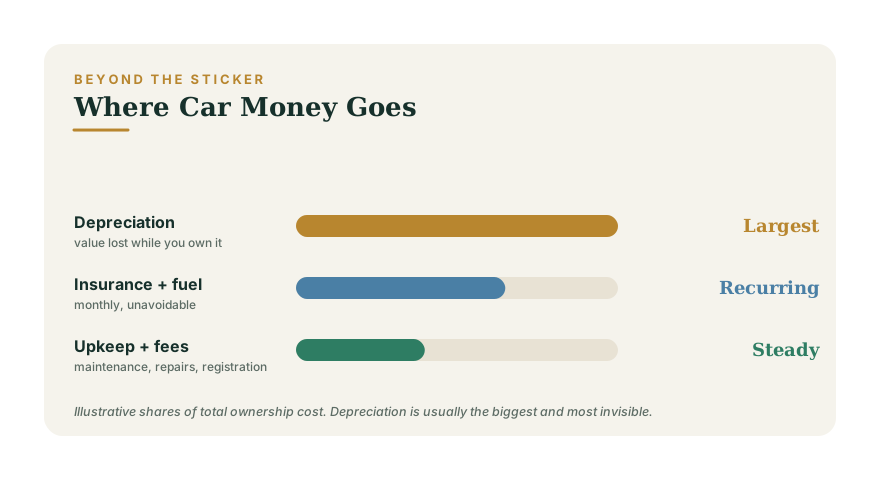
For most cars, depreciation — the value the car loses while you own it — is the single largest cost of ownership, and it is invisible because no one ever sends you a bill for it. A new car can lose roughly 20% of its value in the first year and a large share more over the next few. You only feel it when you sell or trade in and discover how little the car is now worth. This is the core reason buying a lightly used car is so efficient, as covered in How to Buy a Used Car Without Overpaying — and the core reason perpetual leasing is expensive, since a lease is essentially paying depreciation forever, explained in Buying vs Leasing a Car: The Real Math.
Insurance
Insurance is a steady monthly cost that varies widely by your car, your age and record, your location, and your coverage. Newer and more expensive cars cost more to insure, which is part of total cost of ownership that the sticker price hides. It pays to get a quote on a specific car before you buy it, because two cars at the same price can carry very different premiums.
Fuel and energy
Fuel is the cost most tied to how much you drive. A long commute in a thirsty vehicle can run thousands of dollars a year, while an efficient car or an EV charged at home can cost a fraction of that. Fuel economy is therefore not a green nicety but a real budget line — over years and tens of thousands of miles, the difference between 20 and 40 miles per gallon is enormous.
Maintenance and repairs
Every car needs upkeep — oil, tires, brakes, fluids, filters — and as a car ages, repairs grow more likely and more expensive. The reliable way to handle this is to budget for it rather than be ambushed by it:
- Set aside a monthly amount for routine maintenance, even in months you spend nothing.
- Keep a separate cushion for the inevitable larger repair — a sinking fund for the car is ideal.
- Choosing a reliable model up front lowers this cost for the entire life of the car.
Registration, taxes, and the rest
The smaller line items add up too: annual registration, license fees, property or excise taxes in some states, tolls, and parking. None is huge alone, but together they belong in your true-cost tally. Many of these scale with the car's value, so a more expensive car costs more here as well.
The per-mile reality
Add depreciation, insurance, fuel, maintenance, and fees together, then divide by the miles you drive in a year, and you get the number that actually matters: cost per mile. For many cars this lands somewhere around 50 to 70 cents a mile, all-in — far above the cost of gas alone that most people picture. Seeing this number reframes every driving decision and, more importantly, every buying decision. A cheaper, efficient, reliable car driven for many years has a dramatically lower per-mile cost than a pricey car traded in every few years.
Put it in your budget
Because these costs are large and recurring, transportation deserves its own honest line in your plan — not just the loan payment. Use the all-in number when you test affordability with the guideline in How Much Car Can You Actually Afford?, and fold the full cost into your spending plan with the Budget Analyzer. The sticker price gets you in the car; the true cost is what you live with for years.