The Tax Cuts and Jobs Act of 2017 reshaped the individual tax code — lower brackets, a much larger standard deduction, a higher estate-tax exemption, and more. But many of those individual provisions were written to be temporary, scheduled to expire and revert to prior rules unless Congress acts. That looming reversal is what people mean by the TCJA sunset, and it is worth understanding even amid the uncertainty of whether lawmakers extend or change it.
Because the outcome depends on future legislation, treat everything here as scenario planning, not prediction. The permanent, current rules always live on the IRS website; watch it for what actually takes effect.
What could change
If the individual provisions lapse without replacement, several familiar features would revert:
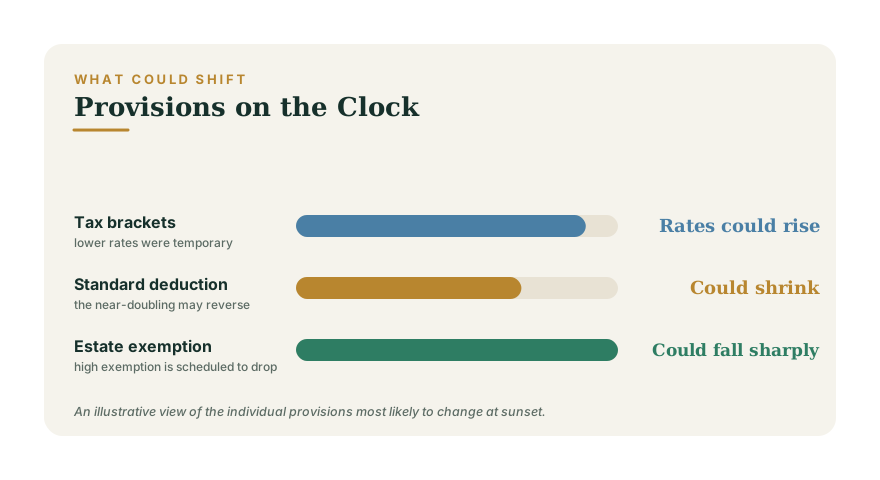
- Tax brackets. The current, lower marginal rates were temporary. At sunset, rates in several brackets could rise back toward pre-2018 levels, raising the tax on the same income. A refresher on how this hits you is in How Tax Brackets Really Work.
- The standard deduction. TCJA nearly doubled it, which is why most households stopped itemizing. If it shrinks back, more people would itemize again — see Standard vs Itemized Deductions.
- Personal exemptions and other items. Exemptions that were suspended could return, and various deductions and caps could shift, changing the math for many families.
- The estate-tax exemption. The exemption was roughly doubled and is scheduled to fall sharply, potentially exposing far more estates to tax.
Why the estate change gets the most attention
The estate-tax exemption is scheduled to drop significantly, which could pull families who never thought of themselves as wealthy into estate-tax territory. For those with substantial assets, the years before a sunset can be a window to use the higher exemption through gifting while it lasts. This is squarely a talk-to-a-professional situation; the basics are in Estate and Gift Tax Basics.
Moves worth considering now
You cannot control what Congress does, but you can position for either outcome. Sensible, no-regret moves include:
- Weigh accelerating income or Roth conversions. If rates might rise, recognizing income or doing a Roth conversion while today's lower brackets still apply can lock in the cheaper rate. Model it carefully — this only helps in the right circumstances.
- Revisit itemizing. If the standard deduction shrinks, deductions like mortgage interest and charitable giving regain value, which can change the timing of large deductible expenses.
- Review your estate plan. Anyone with a sizable estate should have their documents and gifting strategy reviewed before a potential exemption drop.
- Stay flexible. Avoid irreversible bets on a specific outcome. Build a plan that works whether or not the provisions are extended.
Do not panic or over-optimize
Sunsets have been extended before, and Congress may act again. The worst response is to make a large, hard-to-reverse decision based on a guess about legislation that has not passed. The best response is to know which provisions affect you, keep your plan adaptable, and be ready to act quickly once the rules are settled. Estimating scenarios with a tool beats reacting to headlines — try the Tax Strategies and Roth Conversion tools.
Prepare, then watch
The TCJA sunset is a reminder that tax law is not permanent and your plan should not assume it is. Understand your exposure, keep flexibility, and revisit as clarity emerges. Start by pressure-testing your situation with the Tax Health assessment, then build an adaptable strategy at the planning hub.