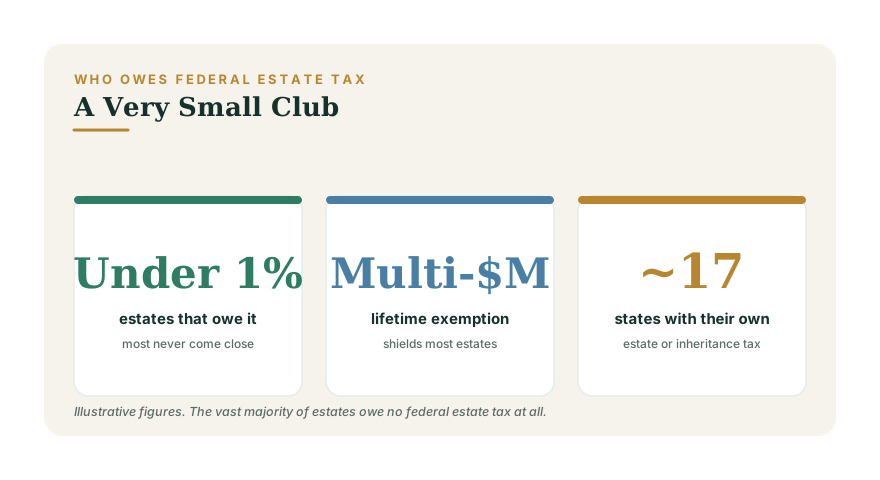
Few phrases cause more needless worry than "estate tax." People picture the government taking a huge slice of whatever they leave behind. For almost everyone, that fear is misplaced. The federal estate tax applies only to very large estates, and a set of rules — chiefly the lifetime exemption and spousal portability — means the overwhelming majority of families never owe a dollar of it.
That does not mean you can ignore the topic. A handful of states impose their own estate or inheritance taxes at far lower thresholds, and the gift tax rules quietly shape how you can give money away during life. Here is how the pieces fit together.
The lifetime exemption does the heavy lifting
The federal system gives every person a lifetime exemption — a running total of how much you can transfer, either as gifts during life or at death, before any tax applies. That exemption currently sits in the multi-million-dollar range per person, which is why so few estates owe anything. Only the amount above the exemption is taxed, and that top rate sits around 40%.
This is one unified system. Large gifts you make during life are subtracted from the same exemption that shelters your estate at death. So giving away a large sum now does not avoid the rule; it simply uses the exemption earlier. The exemption amount is set by law and has changed over the years, so treat any specific figure you read as a moving target.
The annual gift exclusion: the giving you never report
Separate from the lifetime exemption is the annual gift exclusion. You can give any number of people a modest amount each year — the figure is adjusted periodically — without it counting against your lifetime exemption or requiring a gift tax return at all. A married couple can combine their exclusions to give twice as much per recipient.
This is the workhorse of estate reduction for families who are near the taxable range. Steady annual gifting moves money out of an estate quietly and predictably. The mechanics of doing this well are covered in Gifting Strategies to Reduce Your Estate. Gifts above the annual figure simply require a gift tax return and chip away at your lifetime exemption — they rarely trigger an actual tax bill.
Portability: a married couple's second exemption
Here is a rule that surprises people. When one spouse dies, any unused portion of their lifetime exemption can be transferred to the surviving spouse. This is called portability, and it effectively doubles the amount a couple can shield.
The catch: portability is not automatic. The estate of the first spouse to die must file a federal estate tax return to elect it, even when no tax is owed. Families skip this filing all the time because the estate seems too small to bother with, and they unknowingly forfeit a large second exemption that could matter if the survivor's wealth later grows. If you are married and your combined assets are anywhere near the taxable range, filing to preserve portability is often worth the cost.
State estate and inheritance taxes catch more people
This is where the real surprises live. A number of states impose their own estate tax, and a few impose an inheritance tax — and several do so at thresholds far below the federal exemption. The two are different:
- A state estate tax is paid by the estate before assets are distributed, based on the total value.
- An inheritance tax is paid by the people who receive the money, often with rates that depend on how closely related they are to the deceased.
Because state thresholds can be a fraction of the federal one, a family that owes nothing federally can still face a meaningful state bill. Where you live — and where you move in retirement — matters. The broader topic of how relocating changes your tax picture is covered in Estate Planning Basics Everyone Needs.
The step-up in basis: the quieter, bigger benefit
For most families, the part of the tax code that actually affects their heirs is not the estate tax at all — it is the step-up in basis. When you die, most assets your heirs inherit have their cost basis reset to the value on the date of death. That means decades of unrealized capital gains can disappear for tax purposes. An heir who sells an inherited asset shortly after receiving it often owes little or no capital gains tax. This is one reason the conventional advice to gift highly appreciated assets during life deserves a second look — gifting often passes your low basis along, while inheriting resets it.
What this means for your plan
For the great majority of households, the practical takeaways are simple: you almost certainly will not owe federal estate tax, you should check your own state's rules, and married couples should understand portability before assuming a small estate needs no filing. If your wealth is approaching the taxable range, lifetime gifting and charitable strategies — see How to Leave Money to Charity in Your Estate — become genuinely useful levers.
To see where your own estate stands and what gaps your plan may have, run the Estate Readiness assessment. It will help you sort the worries that actually apply to you from the ones you can safely set aside.