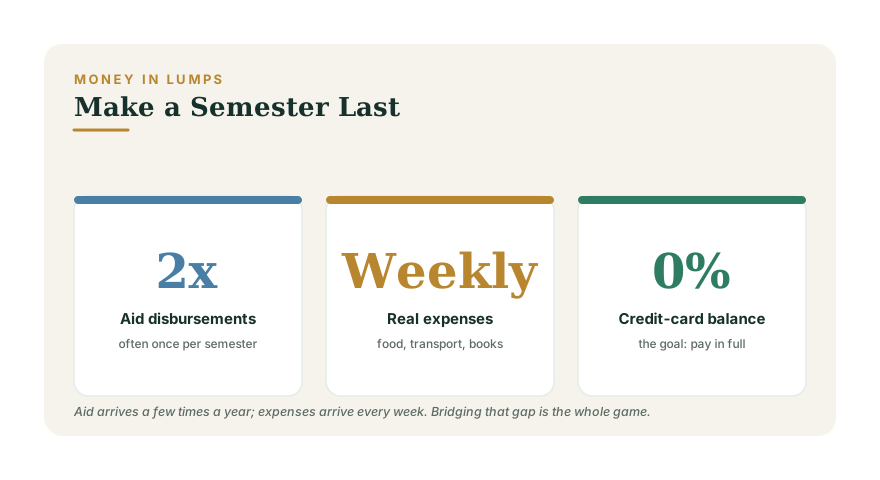
Budgeting as a college student is a different problem from budgeting with a steady paycheck. Your money tends to arrive in big, infrequent lumps — a financial aid refund at the start of a semester, maybe a part-time paycheck every couple of weeks — while your expenses show up steadily, week after week. The challenge is making a lump-sum survive until the next one without panic in week ten.
Turn a lump sum into a weekly allowance
When a financial aid refund lands, it can feel like a windfall — and that feeling is exactly how students end up broke by midterms. The fix is to convert the lump into a steady allowance. Add up your fixed costs for the semester (rent, phone, transportation), subtract them, then divide what is left by the number of weeks until your next disbursement. That weekly number is your real spending money. Park the rest in a separate savings account so it is not sitting in checking tempting you. This is the student version of any budget — if the basics are new to you, start with How to Build a Budget That Actually Works.
Know what your aid is actually for
A refund check is leftover aid after tuition and fees are paid — but it is meant to cover living costs for the whole term, not to be spent freely. Treating it as bonus money is the most common student budgeting mistake. If you are still figuring out which parts of your package are grants versus loans, remember that spending borrowed money on non-essentials means paying interest on pizza for years; Financial Aid and the FAFSA, Explained breaks down what each dollar really is.
The credit-card trap
Credit-card companies court students aggressively, and a card can be genuinely useful — but only on one condition: you pay the full balance every month. Used that way, a card builds your credit history and costs nothing. Carried as a balance, it charges punishing interest and quietly turns a $40 dinner into a $60 dinner. The rule is simple: treat the card like a debit card, never charge more than you have in the bank, and pay it in full. Done right, college is a great time to start building credit — see How to Build Credit From Scratch.
Watch for lifestyle traps
The fastest way a student budget unravels is matching your spending to your richest friends. Someone always has more help from home, and trying to keep up — the nicer apartment, constant takeout, every concert and trip — is a quiet path to debt. A few high-leverage habits:
- Cook more than you eat out; food delivery is the single biggest budget leak for most students.
- Audit subscriptions every semester and cancel what you forgot you had.
- Use the student discounts that are everywhere — software, transit, software, streaming, museums.
Cheap-living moves that actually matter
Small frugality is fine, but a few big decisions dwarf all the latte-skipping advice combined:
- Housing. Rent is the biggest line item. Roommates, on-campus deals, or living slightly further out can save more than every other cut combined.
- Textbooks. Rent, buy used, or find them online instead of buying new at the campus store. The savings per semester are real.
- Transportation. A car at college is expensive — insurance, parking, gas. Many students do better with transit, a bike, and the occasional rideshare.
- Food plan sizing. Match your meal plan to how you actually eat instead of buying the biggest one by default.
Build a tiny cushion
Even on a thin budget, a small emergency buffer — a few hundred dollars — prevents a flat tire or a surprise fee from becoming a credit-card balance. Save it slowly out of your weekly allowance and leave it alone.
The skills you build managing a tight student budget are the same ones that build wealth later. Put a number to your plan with the Budget Analyzer, and when you are ready to see how today's habits scale, the planning hub ties it all together.