Building credit when you have none is a chicken-and-egg problem. Lenders want to see a track record before they extend credit, but you cannot build a track record without credit. The good news is that several well-established tools exist specifically to break this loop, and most cost little or nothing.
If you are new to the country specifically, the path has a few extra wrinkles worth reading in Building US Credit as a Newcomer: A Step-by-Step Guide. This guide covers the general approach for anyone starting from zero.
Secured credit cards
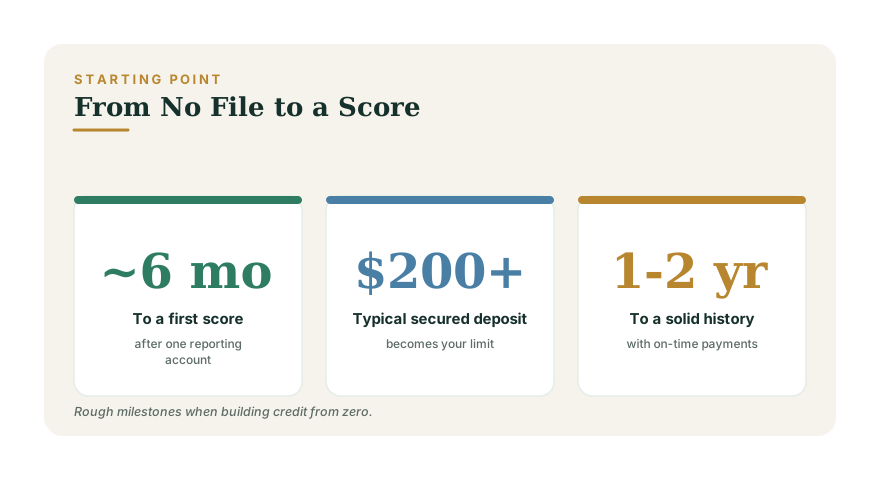
A secured card is the workhorse of credit building. You put down a refundable deposit, often a couple hundred dollars, and that deposit usually becomes your credit limit. The card then reports to the bureaus like any other card. Use it for a small recurring charge, pay it in full each month, and you are generating exactly the on-time payment history that drives most of your score.
Look for a secured card with no annual fee, that reports to all three bureaus, and ideally one that graduates you to an unsecured card and returns your deposit after a period of responsible use.
Becoming an authorized user
If someone you trust has a card with a long, clean history, they can add you as an authorized user. The account can then appear on your report, lending you the benefit of its age and payment record. A few caveats:
- The primary holder must use the card responsibly, because their late payments can hurt you too.
- Not all issuers report authorized users to the bureaus, so confirm first.
- You do not need to actually use the card or even hold the physical card for it to help.
Credit-builder loans
A credit-builder loan inverts the usual loan. Instead of receiving money up front, you make fixed monthly payments into a locked account, and you get the funds at the end. The lender reports each payment, building installment history, and you finish with both a credit record and a small pile of savings. Credit unions and community banks commonly offer these.
Reporting rent and other bills
Rent is often your largest monthly payment, yet it usually does not appear on credit reports by default. Several services will report your rent, and some will add utility or phone payments, to one or more bureaus. The effect varies by scoring model, but for someone with a thin file it can help establish a presence. Check whether your landlord already offers reporting before paying for a third-party service.
The realistic timeline
Patience is part of the method. Here is roughly what to expect:
- It typically takes about six months of activity on a reporting account before you have a usable FICO score.
- Within a year of consistent on-time payments, you should see a respectable score forming.
- After one to two years, with low utilization and no missed payments, you will likely qualify for better cards and loan rates.
Mistakes that slow you down
Carrying a balance does not build credit faster; it just costs you interest. Maxing out your limit hurts utilization. Applying for many products at once creates inquiries and signals risk. Keep it simple: one or two starter tools, tiny balances, paid in full, on time, every month. Then let time do the rest. Check your progress with the tools at /assessments.