The word "financial aid" gets used as if it were one thing, but an aid offer is really a bundle of very different parts — some you keep, some you work for, and some you pay back with interest. Understanding which is which is the single most important skill in paying for college, and it all starts with one form: the Free Application for Federal Student Aid, or FAFSA.
The three kinds of aid are not equal
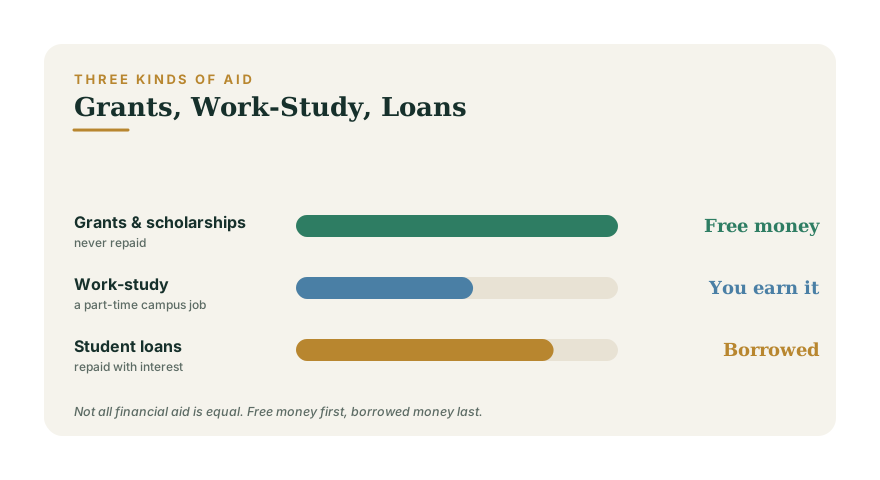
An award letter usually mixes three categories, and the difference between them is everything:
- Grants and scholarships are free money you never repay. Federal Pell Grants go to lower-income students; states and schools add their own. This is the best dollar in any award.
- Work-study is a subsidized part-time job, often on campus, that you earn paycheck by paycheck. It is real money but it is capped, and you only get it if you actually work the hours.
- Loans are borrowed money you repay with interest. Federal student loans come with protections and income-driven repayment options; private loans usually do not. A loan is not "aid" in the way a grant is — it just moves the cost into the future.
A tempting-looking award that is mostly loans is very different from a smaller one that is mostly grants. Always read the breakdown, not the total.
How the FAFSA and the SAI work
The FAFSA is the gateway to almost all aid — federal, state, and most school-based grants. You report income and asset information, and the formula produces a number called the Student Aid Index (SAI), which replaced the old "Expected Family Contribution." The SAI is not a bill. It is an estimate of what your family can contribute, and schools subtract it from their cost of attendance to size your need-based aid.
A lower SAI generally means more need-based aid. Notably, the formula treats retirement accounts and (in the current rules) the family home gently, while cash and taxable investments count more — one reason saving inside dedicated vehicles like 529 college savings plans can be efficient. The point is that the SAI is a calculated number, not your verdict, and many families with solid incomes still qualify for meaningful aid at expensive schools.
Why you should always file — even if you think you won't qualify
The most expensive mistake in college finance is skipping the FAFSA because you assume you make too much. Several reasons to file anyway:
- Eligibility for federal student loans — including the ones with the best terms and protections — requires a FAFSA, regardless of income.
- Many merit scholarships and state grant programs require a FAFSA on file even when they are not need-based.
- The formula has more moving parts than you can eyeball; families are routinely surprised by what they qualify for, especially with more than one child in college.
- It is free, and filing early matters because some aid is first-come, first-served until the money runs out.
Treat the FAFSA as a default annual chore, like filing taxes — you submit it every year you are enrolled.
Reading an award letter without getting fooled
Award letters are notoriously inconsistent. Some list loans next to grants with no labels, making the package look more generous than it is. Before comparing offers from different schools, rebuild each one into a simple grid: total cost of attendance, minus free money (grants and scholarships), equals what you actually have to cover — through savings, work, and borrowing. Only then are two schools comparable. A "cheaper" school that gives you mostly loans can cost more than a "pricier" one with a big grant.
You can appeal an aid offer
Few families realize the award is often negotiable. If your financial situation has changed — a job loss, a medical event, a death in the family, or a one-time income spike that the prior year's tax data overstates — you can file a professional judgment or special circumstances appeal with the financial aid office. Put it in writing, be specific, and attach documentation. Separately, if a comparable school offered you more, some colleges will review their package to stay competitive. The worst answer is no, and many appeals succeed.
How aid fits the bigger picture
Financial aid is one lever among several. The cost of a degree also depends on the school you choose, the loans you accept, and how long you take to finish. Before signing anything, weigh the full picture in Is College Worth It? Running the Numbers, and study the moves that shrink the bill in Strategies to Graduate With Less Debt.
When you are ready to put real numbers to it, the College Planner helps you map costs against savings and aid, and the College Readiness assessment shows where your plan is solid and where it has gaps.