You are at the register and the cashier offers 20% off today if you open the store card, or a TV "with no interest if paid in full in 24 months." It feels like free money. Sometimes it is a fine deal. Often it is a carefully designed trap that counts on you missing one detail. The difference lives entirely in the fine print, so this is one place it pays to slow down and read.
Deferred interest: the phrase to fear
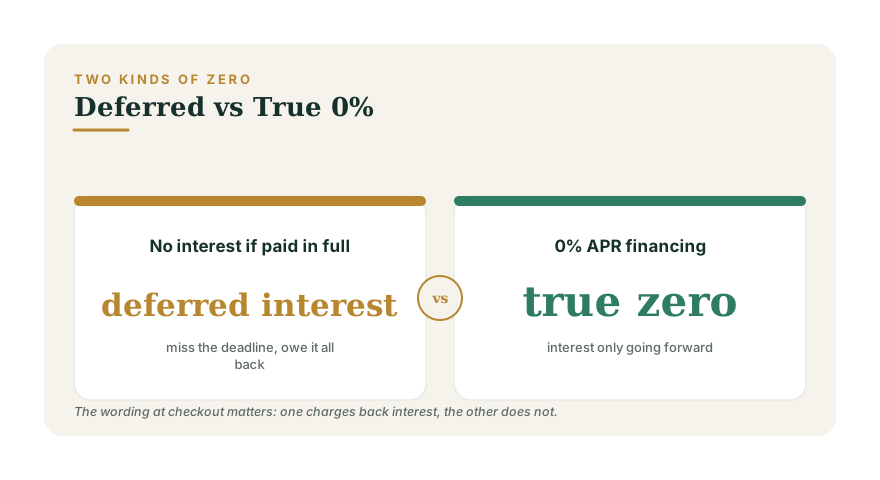
The trap hides behind the words "no interest if paid in full." This is deferred interest, and it is not the same as a true 0% offer. With deferred interest, interest is quietly accruing the entire time at the card's regular (high) rate. If you pay the whole balance off before the promotional deadline, that accrued interest is waived. But if you are even a few dollars short on the deadline — or one day late — the lender charges you all the interest retroactively, calculated from the original purchase date.
That means a $2,000 purchase you have paid down to $100 can suddenly hit you with interest on the full $2,000 for the entire period. Missing the deadline does not cost you interest on the small remaining balance; it costs you interest on everything, going back to day one. Compare that with a true 0% APR offer, where you would owe interest only on the leftover balance going forward — a much gentler outcome. The general mechanics of how this differs from normal card interest are in How Credit Cards Actually Work.
Why store-card APRs run so high
Store and retail-financing cards routinely carry APRs well above standard credit cards — sometimes near 30%. The reasons are structural: these cards are easy to get approved for, often opened impulsively at checkout, and the issuer is betting that a meaningful share of customers will carry a balance or trip the deferred-interest deadline. That high rate is the whole business model. If you ever carry a balance on one, it is among the most expensive debt you can hold.
The other costs that erode the discount
- A hard inquiry. Opening the card triggers a credit check that can ding your score slightly.
- A new account and low limit. Store cards often have small limits, which can spike your utilization — covered in How to Use a Credit Card Responsibly — and a brand-new account lowers your average account age.
- Temptation to spend more. A new credit line at a store you love is an invitation to keep buying.
- One-time vs ongoing. That headline 20% discount usually applies only to the first purchase, while the high APR and the account stay with you.
When the discount is worth it
It is not always a bad deal. The math can favor you if all of these are true:
- You were already going to make the purchase, and the discount is meaningful (a real 15% to 25% off, not 5%).
- You can pay the balance in full immediately or well before any deferred-interest deadline.
- You will not be tempted into extra spending by the new credit line.
- The small, temporary credit-score effects do not matter for anything you are about to apply for (like a mortgage in the next few months).
In that case, taking 20% off a planned purchase you pay off that same week is simply a discount, and you can close or ignore the card afterward.
When to walk away
Decline the offer if you are not certain you can clear a deferred-interest balance before the deadline, if the discount is small, or if you are financing something you cannot otherwise afford. "No payments for 24 months" is not affordability; it is a delay with a trap attached. For a big purchase you genuinely need to finance, a true 0% offer or a planned balance transfer with a real payoff schedule is far safer than deferred-interest retail financing.
The bottom line
Read the exact wording before you sign. "0% APR" and "no interest if paid in full" are not the same promise. If you can pay in full and the discount is real, a store offer can save you money once. If there is any chance you will carry the balance past the deadline, the deferred interest and sky-high APR will likely cost you more than the discount ever saved. Before any financed purchase, sanity-check the monthly payment and total cost with the Debt Payoff Calculator.