A credit card looks like a debit card, but it works in the opposite direction. A debit card spends money you already have; a credit card spends the bank's money and sends you a bill. Every purchase is a tiny short-term loan. The whole game of using one well is understanding when that loan is free and when it quietly turns expensive.
Once you can read the rhythm of a billing cycle, the card stops being mysterious. Here is how the pieces fit together.
The billing cycle
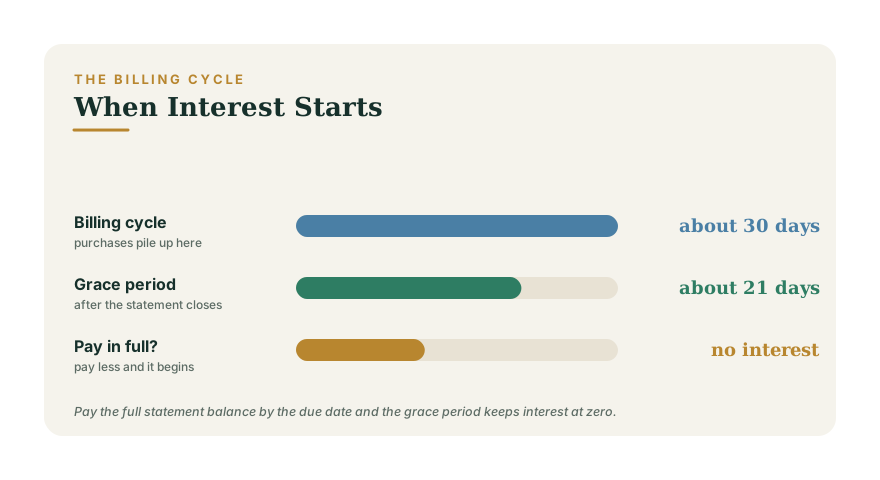
Your card runs on a billing cycle of roughly 30 days. Every purchase you make during that window gets added up. When the cycle ends, the card "closes the statement" — it takes a snapshot of everything you owe and prints it as your statement balance. Then a new cycle begins and the meter starts over.
This is why your bill does not appear the instant you buy something. Purchases sit on the account until the cycle closes, and only then do they land on a statement with a due date.
Statement balance vs current balance
These two numbers confuse almost every beginner. The statement balance is what you owed at the moment the cycle closed — it is the number you are actually billed for. The current balance is what you owe right now, including any new purchases made since the statement closed.
To avoid interest, you only need to pay the statement balance in full by the due date. The newer purchases that pushed your current balance higher belong to the next cycle and are not due yet. Paying the statement balance — not the larger current balance — is enough.
The grace period: your free loan
Between the day your statement closes and your due date, there is a window of around 21 days called the grace period. If you pay the entire statement balance by the due date, the card charges you no interest at all on purchases. The bank essentially lent you money for several weeks for free.
This is the single most important rule of credit cards: pay the full statement balance every month and the card is free to use. Carry a balance even once and you can lose the grace period until you are fully paid off again, meaning new purchases may start accruing interest immediately. The mechanics of who actually profits from this are laid out in Who Actually Pays Credit Card Interest.
How interest is charged
If you do not pay in full, interest kicks in. Cards quote an APR (annual percentage rate), but the math runs daily. The card divides the APR by 365 to get a daily rate, then applies it to your average daily balance each day. Because yesterday's interest can be added to the balance that tomorrow's interest is calculated on, the cost compounds against you. With typical card APRs often north of 20%, a balance left to sit grows fast.
The minimum payment trap
Each statement lists a minimum payment — often around 2% of the balance or a small flat dollar amount. Paying it keeps your account in good standing and avoids a late fee, but it is the most expensive way to use a card. Most of a minimum payment can go toward interest, so the balance barely moves. A few thousand dollars paid at the minimum can take many years and cost more in interest than the original purchases.
The minimum is a floor, not a target. If you ever cannot pay in full, pay as much above the minimum as you can, and make clearing the balance the priority — the playbook is in How to Use a Credit Card Responsibly.
Cash advances and other fine print
A few features have no grace period at all. A cash advance — pulling cash from the card — typically starts charging interest immediately at an even higher rate, plus a fee. Balance transfers and certain transactions can work the same way. As a rule, treat a credit card as a tool for purchases you can pay off, not as a source of cash.
Putting it together
The honest summary: a credit card is a free, convenient, credit-building tool if you pay the statement balance in full every month, and a costly form of debt the moment you do not. Used the first way, it can also help you build a credit history — see How to Build Credit From Scratch. To see how a balance would grow at a given APR and how fast you could clear it, run the numbers through the Debt Payoff Calculator before you ever need it.