A revocable living trust is one of the most useful — and most misunderstood — tools in estate planning. People often think of it as something only the wealthy need. In reality, its main job is mundane and valuable: it lets your assets pass to your heirs without going through probate, the public, sometimes slow and costly court process for settling an estate.
But a living trust comes with a catch that trips up an astonishing number of people, including those who paid a lawyer to draft one. Set up incorrectly, it does nothing at all. Here is how it works and how to do it right.
What a revocable living trust actually is
A living trust is a legal container you create while you are alive. You move assets into it, and you keep complete control: as the trustee, you manage everything exactly as you did before — buy, sell, spend, change your mind. "Revocable" means you can alter or cancel it anytime. You also name a successor trustee who steps in when you die or become incapacitated, and the trust spells out who gets what.
Because the assets are technically owned by the trust rather than by you personally, they do not go through probate when you die. The successor trustee simply distributes them according to your instructions — privately, and usually far faster than a court process. For the full case for and against, see Wills vs Living Trusts.
Why avoiding probate matters
Probate is the court-supervised process of validating a will, paying debts, and distributing what is left. Depending on your state, it can take months to over a year, cost a meaningful percentage of the estate in fees, and — because it is a public record — expose your finances and beneficiaries to anyone curious enough to look. A funded living trust sidesteps all of that. The deeper mechanics, and other ways to dodge probate, are in How Probate Works and How to Avoid It.
The step-by-step setup
- 1. Decide if you need one. Trusts shine if you own real estate, want privacy, have a blended family, or live in a state with slow, expensive probate.
- 2. Draft the trust document. Name yourself as trustee, name a successor trustee you trust, and lay out who inherits what. You can use a reputable attorney or, for simpler situations, a quality online service.
- 3. Sign it properly. Trusts have signing and notarization requirements that vary by state. Follow them exactly, or the document may not hold up.
- 4. Fund the trust. This is the step everyone forgets — and the whole point. More below.
- 5. Write a pour-over will. A short companion will that sweeps any assets you forgot to retitle into the trust at death. It is a safety net, not a substitute for funding.
Funding the trust: the step people forget
Here is the most important sentence in this article: an unfunded trust is worthless. Drafting and signing the document does nothing on its own. You have to actually move your assets into the trust — a process called funding — by changing the legal ownership of each one.
That means re-titling your home deed into the trust's name, retitling bank and brokerage accounts, and updating ownership on other major assets. People pay for a beautiful trust, file it in a drawer, never retitle a single account, and their family ends up in probate anyway — exactly what they spent the money to avoid. Some assets, like retirement accounts and life insurance, generally pass by beneficiary designation instead and should not be retitled into the trust; you simply keep those designations current. Funding is tedious, but it is the entire job.
Trust vs a simple will: the cost question
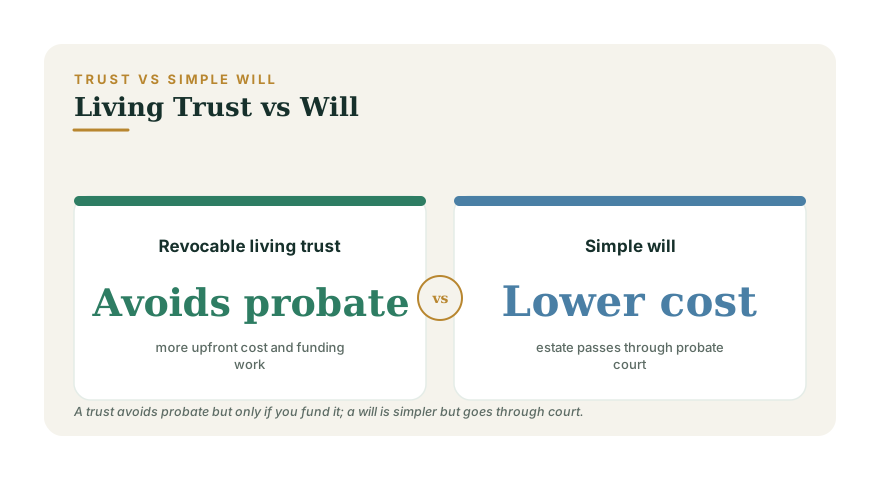
A living trust costs more upfront than a basic will — both in attorney fees and in the work of funding it. A simple will is cheaper and easier, but the estate it governs still goes through probate. The trade is real: pay more now to save your heirs probate later, or pay less now and let them handle the court process.
For a young person with few assets and simple wishes, a will plus careful beneficiary designations is often plenty. For a homeowner, someone valuing privacy, or anyone with a complicated family — see Estate Planning for Blended Families — a trust frequently earns its cost.
The bottom line
A revocable living trust is a powerful way to spare your family probate, keep your affairs private, and provide for a smooth transition if you become incapacitated. But it only works if you finish the job: draft it, sign it correctly, and — above all — fund it. To see whether a trust belongs in your plan, start with the Estate Readiness assessment.