If you have no credit history or a damaged one, you can hit a frustrating wall: lenders want to see a track record before they will extend credit, but you cannot build a track record without credit. A secured credit card is the standard tool for breaking that loop. It is one of the most reliable on-ramps for building or rebuilding credit.
How the security deposit works
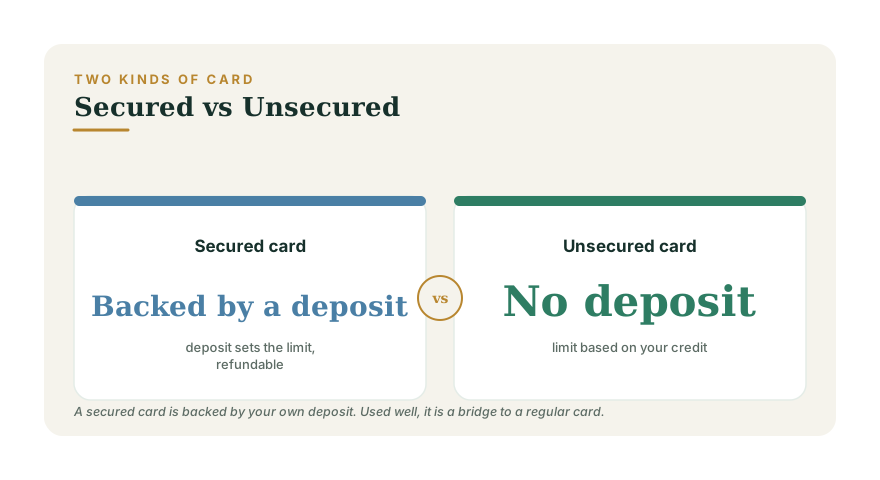
A secured card looks and works like a normal credit card, with one difference: you put down a refundable cash deposit when you open it, and that deposit becomes your credit limit. Put down $300, and you get a card with a $300 limit. The deposit is collateral — it sits with the issuer and protects them if you stop paying, which is why they are willing to approve people with thin or poor credit.
Two things people often misunderstand: the deposit is not spent when you use the card. You still pay your bill each month like any credit card; the deposit just sits in reserve. And the deposit is refundable — you get it back when you close the account in good standing or graduate to an unsecured card.
Why it builds credit
A secured card reports to the credit bureaus exactly like a regular credit card. Every on-time payment becomes positive payment history — the single biggest factor in your score, as explained in How Credit Scores Are Calculated. After several months of consistent, on-time use, a new credit file starts to form or a damaged one starts to heal. It is the same engine described in How to Build Credit From Scratch, just with training wheels.
Using it responsibly
A secured card only helps if you use it the right way. The rules are simple:
- Pay on time, every time. Set autopay for at least the minimum so you never miss. On-time payments are the entire point.
- Keep utilization low. With a small limit, it is easy to look maxed out. Spending $250 on a $300 card reports as 83% utilization, which hurts. Keep balances under 30%, and ideally under 10% — on a $300 card, that means staying under about $30 at the time it reports.
- Pay in full. Carrying a balance does not build credit any faster; it just costs you interest. Use the card for one small recurring expense and pay the statement in full.
- Avoid fees. Choose a card with no or low annual fee and that reports to all three bureaus. Skip anything that looks like a credit-repair gimmick.
The same utilization discipline applies to any card you hold — you can model it with the Utilization Optimizer.
Graduating to an unsecured card
The goal is not to keep the secured card forever — it is to outgrow it. After roughly six to twelve months of on-time payments and low utilization, several paths open up. Many issuers will graduate you automatically, converting your secured card to an unsecured one and refunding your deposit. If yours does not, your improved score now qualifies you to apply for a regular unsecured card; once approved, you can close the secured card and get your deposit back.
One subtlety: closing your secured card after it has served its purpose can slightly shorten your credit history and remove its limit. If the secured card has no annual fee and the issuer lets you keep it after graduating, there is often no harm in leaving it open.
The bottom line
A secured card is a deposit-backed bridge, not a destination. Used with on-time payments and low utilization for six to twelve months, it quietly builds the exact history lenders want to see, then hands your deposit back. Pair it with the broader plan in How to Improve Your Credit Score, Step by Step, and track your progress with the Credit Score Simulator as your number climbs.