One of the first practical hurdles after arriving in the United States is getting paid, paying rent, and storing money safely — and all of that runs through a bank account. The encouraging news is that opening one is usually far easier than newcomers expect. You do not need a US credit history, you do not need to have lived here for years, and at many banks you do not even need a Social Security number yet.
The reason is simple: a checking or savings account is not a loan. The bank is holding your money, not lending you theirs, so it does not need to assess your creditworthiness. What it does need is to confirm who you are, which is why the process centers on identity documents rather than credit checks.
SSN or ITIN: which one do you need?
A Social Security number (SSN) is issued to people authorized to work in the US — including most work-visa holders, permanent residents, and many students with on-campus jobs. If you have one, use it; it is the smoothest path and the one most banks expect.
If you are not eligible for an SSN, you can usually apply for an Individual Taxpayer Identification Number (ITIN) from the IRS. An ITIN is a tax-processing number for people who have US tax obligations but cannot get an SSN. Many banks accept an ITIN in place of an SSN to open an account, and a growing number of newcomer-focused banks accept neither, relying instead on a passport and a US address.
The documents banks actually ask for
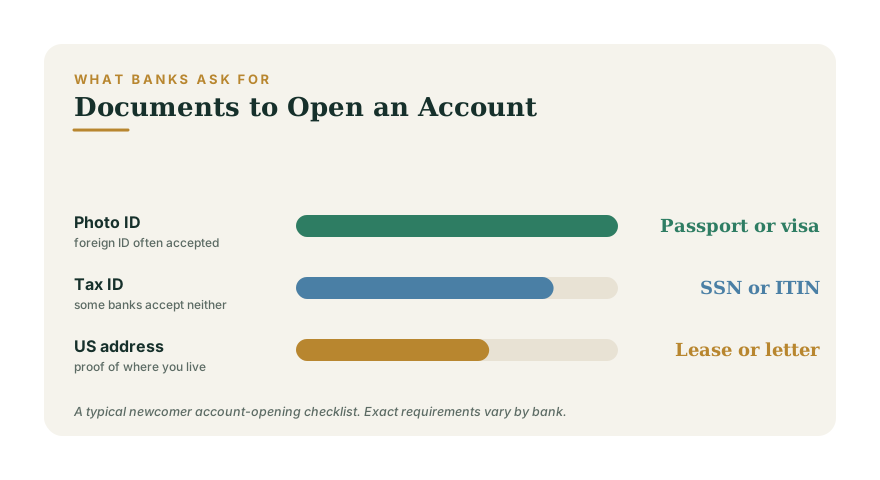
Requirements vary, but most banks ask for some combination of the following:
- A primary photo ID — typically your passport, and often your visa. A foreign passport is widely accepted as primary identification.
- A tax identification number — your SSN or ITIN, where required.
- Proof of a US address — a lease, a utility bill, or sometimes a letter from your employer or school.
- A secondary ID — occasionally a foreign driver's license or a second document.
Call ahead or check the bank's website, because the exact list differs. If one bank turns you away for lacking an SSN, another down the street may not require it.
Why you do not need credit to open an account
This trips up many newcomers who assume the US runs entirely on credit scores. For a standard checking or savings account, the bank is not extending you credit, so your lack of a US credit file is irrelevant. Credit only becomes a factor when you apply for a credit product — a card, a loan, a mortgage. Building that history is a separate, later project; our guide to building credit as a newcomer walks through how to start from zero, often using a secured card tied to the very account you just opened.
Newcomer-friendly banks and accounts
Some large national banks have dedicated programs for new arrivals and accept foreign documentation, including passports and sometimes no SSN at all. A wave of newer digital banks and fintech apps also markets directly to immigrants and international students, often opening accounts with just a passport and a phone. When you compare options, weigh the same things any US resident should: monthly maintenance fees, minimum-balance rules, ATM access, and whether the account pays meaningful interest. The fundamentals of choosing between a checking and savings account are the same for everyone — see opening your first bank account for the basics.
Checking, savings, and avoiding fees
Open a checking account for everyday money — your paycheck lands here and bills come out of it — and a savings account for money that waits, such as an emergency cushion. Many newcomers are surprised by how much US banks can charge in fees, so favor accounts with no monthly maintenance fee or ones that waive it with a direct deposit, and opt out of overdraft coverage so a payment is simply declined rather than triggering a steep charge.
Think ahead to taxes
Opening an account is also the moment to start thinking about your US tax situation, because interest you earn and, eventually, investment income are reportable. Your tax status as a non-citizen shapes a great deal of your financial life here; our overview of US taxes as a non-citizen explains the resident-versus-nonresident distinction that drives it all.
Getting started
Pick a bank, gather your passport and any tax ID, confirm the document list, and open both a checking and a savings account in one sitting. From there, you can map out the rest of your financial setup — credit, retirement, and taxes — with the Immigrant Financial Readiness assessment, which highlights the specific steps that matter most in your first months in the US.