A bank account is the first piece of financial infrastructure most people set up, and almost everything else — getting paid, paying bills, saving, building credit — runs through it. The good news is that the basics are simple once you see what each piece is for.
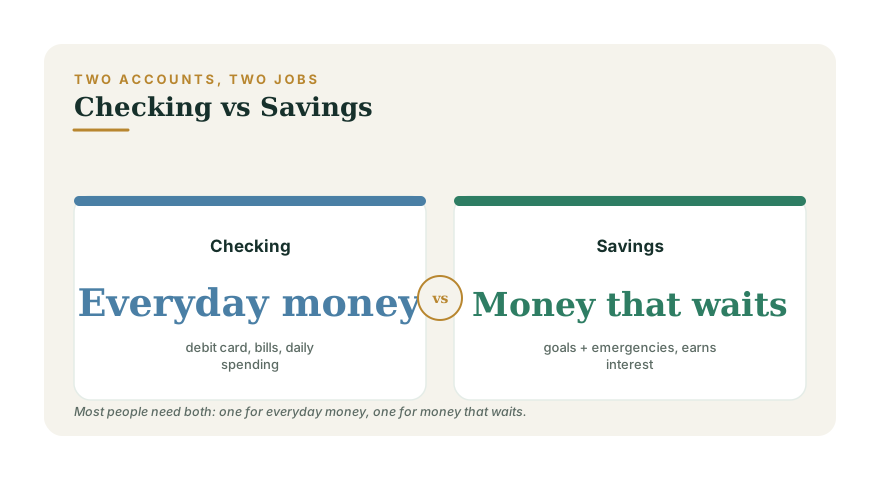
Checking vs savings: two accounts, two jobs
A checking account is your everyday money. Your paycheck lands here, your bills come out of here, and it is the account your debit card spends from. It is built for frequent movement, so it usually pays little or no interest.
A savings account is for money that waits — an emergency cushion, or a goal like a laptop or a trip. It earns interest, and keeping it separate from checking creates a small, useful speed bump so you do not spend it by accident. A common setup is to have both at the same bank and move money between them automatically.
How a debit card actually works
A debit card spends money you already have in your checking account in real time. This is the key difference from a credit card, which borrows money you pay back later. With debit, there is no bill and no interest — when the account is empty, the card stops working.
Watch out for overdraft: if a bank lets a payment go through when your balance is too low, it can charge a steep fee. You can usually turn overdraft coverage off so transactions are simply declined instead, which for most beginners is the safer choice. Set a low-balance alert in your banking app so you are never surprised.
The fees worth dodging
Banking should be close to free. The fees that quietly add up — monthly maintenance, overdraft, and out-of-network ATM charges — are almost always avoidable. Pick an account with no monthly fee (or one that waives it with a direct deposit), opt out of overdraft, and stick to in-network ATMs. The full list and how to escape each one is in The Bank Fees Quietly Draining Your Checking Account.
Online banks vs traditional banks
Big traditional banks have branches everywhere but often pay almost nothing on savings and charge more fees. Online banks have no branches, but they tend to charge fewer fees and pay much higher interest on savings. Many people keep checking at a convenient bank and savings at a high-interest online bank — more on that in High-Yield Savings, CDs, and How to Build a CD Ladder.
How to open one
Opening an account takes about fifteen minutes online or in a branch. You will generally need a government ID, your Social Security or tax ID number, and some basic personal details. If you are under 18, you will open a custodial or teen account jointly with a parent or guardian; many banks and apps offer teen accounts with built-in parental controls — spending limits, category blocks, and visibility — which are a great way to practice with real money safely.
Put it to work
Once the account is open, automate the boring parts: have your pay deposited directly, and set a small automatic transfer to savings on payday so saving happens before you can spend it. Then build the spending side around it with a simple plan — start with How to Build a Budget That Actually Works.