A nonresident alien — in tax terms, someone who is not a US citizen and does not meet the residency tests — can still open a US brokerage account and invest in American stocks, funds, and bonds. Many large brokers welcome international clients. But the tax treatment of a nonresident alien is genuinely different from that of a resident, and the differences are counterintuitive enough that they trip up even sophisticated investors. Three rules matter most: how dividends are taxed, how capital gains are taxed, and a quiet estate-tax trap that can cost an unprepared family dearly.
Getting access: opening a brokerage account
The first hurdle is simply access. Some US brokers will not open accounts for people living abroad, while others specialize in international clients. You will need to complete a Form W-8BEN, which certifies your foreign status and lets you claim any treaty benefits. This form is what tells the broker how to handle withholding on your account. Keep it current — it generally expires and must be refreshed every few years. If you are unfamiliar with how brokerage accounts work at all, start with What Is a Brokerage Account.
Dividends: withheld at the source
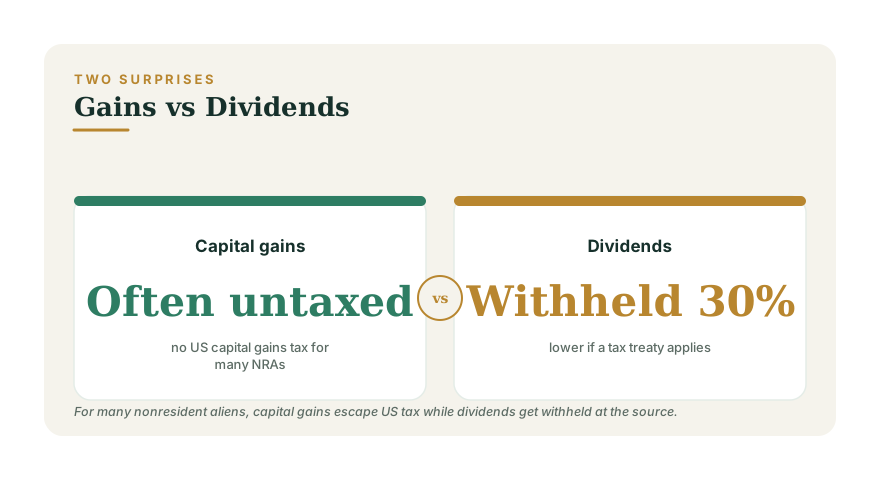
This is the rule that surprises people. When a US company or fund pays you a dividend, the IRS requires the payer to withhold a flat 30 percent before the money ever reaches you. There is no annual return to file to settle up — the withholding is the tax. The 30 percent is a default, and it can be reduced, sometimes dramatically, if your country of residence has a tax treaty with the United States. Many treaties cut the dividend rate to 15 percent or even lower. Filing a valid W-8BEN that names your treaty country is how you claim the lower rate; skip it and you pay the full 30 percent. We explain the treaty mechanics in Tax Treaties and Foreign Income, Explained.
Capital gains: often no US tax at all
Here is the pleasant surprise that mirrors the dividend pain. For most nonresident aliens, capital gains on US stocks are not subject to US tax. If you buy shares, hold them, and sell at a profit, the United States generally does not tax that gain — provided you are not present in the country for a substantial part of the year and the gain is not connected to a US trade or business. This is a meaningful structural advantage: a growth-focused investor who reinvests rather than chasing dividends can build wealth in US markets with little or no US income tax along the way. Be aware, though, that your home country very likely taxes those same gains, so this is a US-side rule, not a tax holiday.
The estate-tax trap most people never hear about
This is the rule that can genuinely hurt an unprepared family. The US estate tax applies to a nonresident alien's US-situated assets, which includes US stocks, and the exemption for nonresident aliens is shockingly small — a tiny fraction of the generous exemption that citizens and residents enjoy. That means if a nonresident alien dies holding a large portfolio of US stocks, a substantial slice above that low threshold can be exposed to US estate tax at high rates. Many international investors have no idea this exists. Mitigation strategies exist — some investors hold US-market exposure through non-US-domiciled funds, or use treaty provisions, or hold assets in ways that change their situs — but they require deliberate planning, ideally with a cross-border tax professional, well before it is needed.
What this all means in practice
For a nonresident alien, the tax-smart picture often looks like this: favor growth and total-return investing over high-dividend strategies, since gains escape US tax while dividends get withheld; make sure your W-8BEN is on file and claims your treaty rate; and take the estate-tax exposure seriously rather than discovering it the hard way. None of this should scare you away from US markets — it should simply shape how you hold them.
Plan it deliberately
Cross-border investing rewards people who learn the rules before they invest, not after. Pair this article with Tax Treaties and Foreign Income, Explained to understand how your home country's treaty changes the math, and use the Immigrant Financial Readiness assessment to check whether your cross-border setup has any obvious gaps. Because estate exposure in particular is unforgiving, this is one area where a one-time conversation with a cross-border specialist pays for itself many times over.