Estate planning sounds like something for the rich and the retired. For young families it is closer to the opposite: the less money you have saved, the more your children depend on a plan that puts the right people and the right dollars in place if something happens to you. The good news is that the starter version is short, affordable, and mostly a one-afternoon project.
The goal is not to die with a perfect legal structure. It is to make sure that, on the worst possible day, a court is not guessing about who raises your kids and a grieving partner is not locked out of accounts they need.
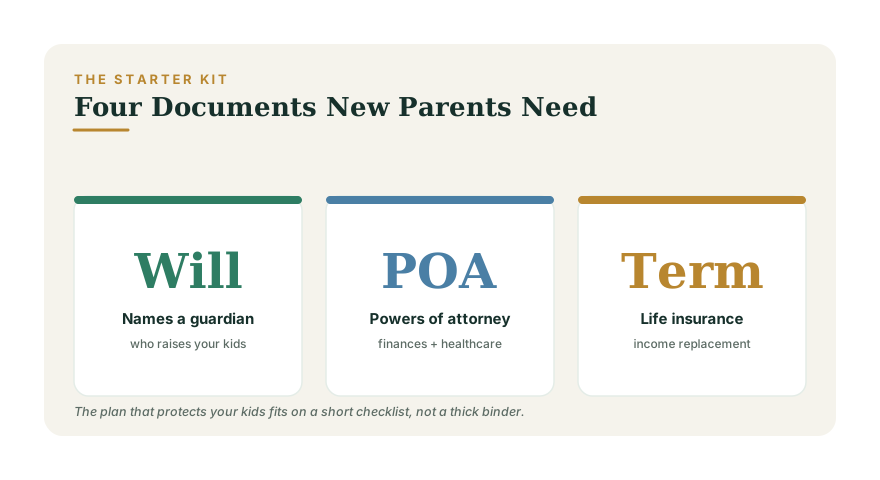
The four documents every parent needs
For most young families, a complete starter plan is four pieces:
- A will — its single most important job for a parent is to name a guardian for minor children. It also says who inherits your assets. Without one, a court decides both.
- A financial power of attorney — lets a person you trust manage money and pay bills if you are incapacitated.
- A healthcare directive (and healthcare proxy) — states your medical wishes and names who makes decisions if you cannot.
- Up-to-date beneficiary designations — on retirement accounts and life insurance. These are not in your will, and they win when they conflict with it.
That is the whole foundation. A short overview of how these pieces fit together lives in Estate Planning Basics Everyone Needs.
Naming a guardian is the real reason to do this
If both parents die before a child turns 18, someone has to raise that child. If you have not named a guardian in a will, a judge will pick one — possibly after relatives disagree, possibly choosing someone you would never have chosen. Naming a guardian yourself is the most important single act in a young family's estate plan, and it is worth doing even if you put everything else off.
Choose deliberately, name a backup, and pair the choice with money so the guardian is not raising your kids on their own budget. The full process — and why the person who raises your child should not necessarily manage the money — is covered in Naming a Guardian for Your Children.
Term life insurance: the financial half of the plan
Documents decide who. Life insurance decides with what money. If your family depends on your income, term life insurance replaces it so your kids' lives — housing, food, childcare, college — do not collapse with your paycheck.
Buy term, not whole life. Term is cheap, simple, and covers exactly the years your kids depend on you. A common starting point is roughly 10 to 12 times your income, plus enough to clear the mortgage and fund future college, over a term that lasts until the youngest child is independent. The sizing math is laid out in Term Life Insurance: How Much Do You Actually Need, and you can run your own number with the Insurance Needs Calculator. Skip the permanent-life sales pitch — for almost every young family, term plus investing wins.
Beneficiaries: the part people get wrong
Your 401(k), IRA, and life insurance pass by beneficiary designation, completely outside your will. If your beneficiary form still names a parent or an ex, that is who gets the money — your will cannot override it. Update every form after marriage and after each child, and name a backup (contingent) beneficiary too. Naming a minor child directly is a common trap; the money gets tied up in court instead of reaching them cleanly.
The afternoon plan
Pick a guardian and a backup. Get a simple will and powers of attorney drawn up — an attorney or a reputable online service both work for straightforward situations. Buy a term policy sized to your family. Then review every beneficiary form and fix the stale ones. Most families can finish this in a single focused session.
Estate planning for a young family is not about wealth; it is about not leaving your kids' future to a coin flip. When you are ready to put the pieces in place, the Estate Readiness assessment walks you through what you have and what is still missing.