A vacation is supposed to leave you rested, not anxious. Yet a huge share of trips get charged to a credit card and then dragged out over the months that follow, quietly turning a one-week escape into a half-year of payments. The difference between those two experiences is not how much you spent — it is whether you funded the trip before you left or after you got back.
The good news: a vacation is one of the easiest goals to plan for, because it has a known date and a known price range. That makes it a textbook case for a sinking fund.
Build a vacation sinking fund
A sinking fund is money you set aside a little at a time for a known future expense, so that when the bill arrives the cash is already there. It is the opposite of reaching for a credit card and hoping to catch up later. The mechanics are simple: pick a target, divide by the number of months until the trip, and automate that amount into a separate savings bucket on payday.
Say you want to take a $2,400 trip ten months from now. That is $240 a month — a number you can plan around instead of a surprise you absorb all at once. Keeping the money in its own labeled account (most banks let you open several) means you can watch "Vacation: $1,440 / $2,400" climb, which is far more motivating than one anonymous balance. The general approach is covered in Sinking Funds: How to Stop Letting Big Expenses Wreck Your Budget.
Set a realistic total before you set the monthly amount
Most vacation overspending happens because people budget for the flight and the hotel and forget everything else. A realistic total includes the parts that quietly add up:
- Transportation — flights or gas, plus airport parking, rental car, rideshares, and local transit.
- Lodging — including resort fees, cleaning fees, and taxes that do not show in the headline nightly rate.
- Food — usually underestimated; eating out three times a day adds up fast.
- Activities and entry fees — tours, tickets, gear rentals.
- A buffer — add 10 to 15 percent for the souvenirs, the upgrade, and the thing you did not see coming.
Build the number from those pieces, then save toward that figure — not toward the optimistic version you would like it to be. An honest total is what keeps the credit card in your pocket on day six.
Travel-cost strategies that stretch the fund
Saving the money is half the job; the other half is making the trip cost less so your fund goes further. A few reliable levers:
- Be flexible on dates. Shoulder season — the weeks just before or after peak — often cuts flight and lodging prices sharply for nearly the same weather.
- Book the expensive pieces early. Flights and popular lodging tend to climb as the date nears.
- Set price alerts and watch fares for a few weeks rather than booking the first number you see.
- Use rewards you already earned rather than chasing new ones — and be honest about whether a points strategy is actually saving you money. The math is laid out in The Real Math Behind Credit Card Rewards.
The credit-card hangover, and how to skip it
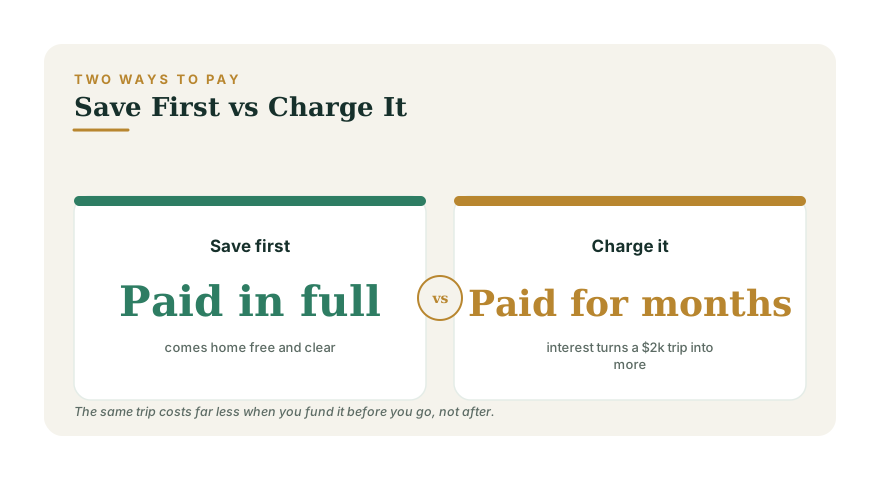
When a trip is charged and paid off slowly, interest compounds on top of the original cost, so the souvenir you bought in week one keeps charging you rent for months. A $2,400 trip carried on a card at a typical rate can quietly cost hundreds more by the time it is gone — money spent on nothing. Paying for the trip from a fund you built in advance removes that tax entirely. If you are already carrying a balance from a past trip, dig out first with How to Pay Off Credit Card Debt before you fund the next one.
Make it automatic and watch it grow
The whole system works best when you do not have to think about it: pick the total, divide by the months, automate the transfer, and let the fund fill. A vacation you saved for in advance is one you can fully enjoy, because the bill is already paid. Set your target and map the monthly amount with the Budget Analyzer, and treat the trip as one of the short-term goals in your wider plan.