You take your car in for service and visit the doctor for a checkup, but most people never give their finances the same once-a-year inspection. That is a shame, because a financial checkup is where small, cheap fixes happen before they become large, expensive problems — an outdated beneficiary, an under-insured house, a savings rate that has quietly slipped, a portfolio that drifted off course. Block out an afternoon once a year, run this checklist, and you will catch most of these while they are still easy to correct.
1. Update your net worth
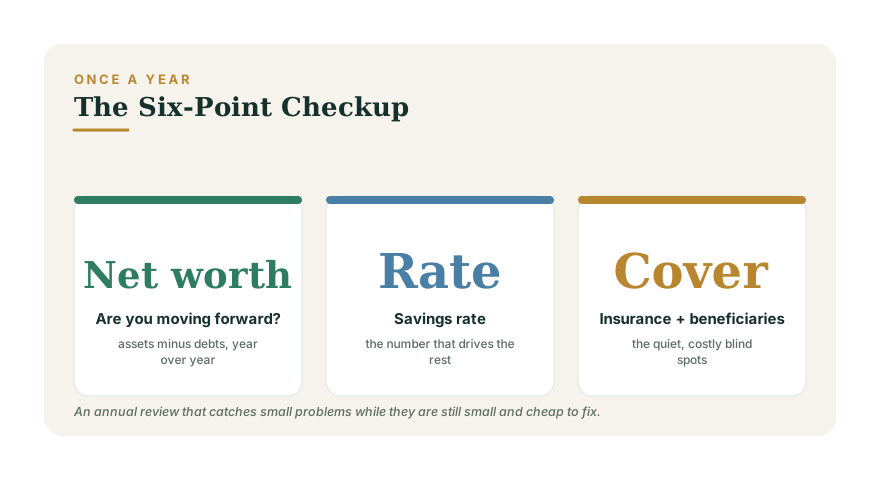
Start with the single number that captures everything: net worth — what you own minus what you owe. List your assets (cash, investments, home, retirement accounts) and subtract your debts (mortgage, loans, credit cards). You are not chasing a target so much as a direction: is the number higher than last year? Net worth is the scoreboard that quietly reflects every other habit, because debt shrinking and savings growing both push it the same way. Track it the same way each year so the comparison is honest — the how-to is in how to track your net worth.
2. Check your savings rate
Your savings rate — the share of income you save and invest — is the most powerful lever in your finances, more than any investment pick. Add up what you put toward retirement, savings, and debt principal over the year, divide by your income, and compare it to last year and to your goal. If you got a raise but your savings rate did not move, lifestyle creep absorbed it. This is the number to defend and gradually increase. A practical habit is to nudge it up by one percentage point each year — small enough that you barely feel it, large enough that it transforms your timeline over a decade.
3. Review your insurance coverage
Insurance is the part of a checkup people skip, and it is where the expensive surprises live. Walk through each policy and ask whether the coverage still matches your life:
- Life insurance — if anyone depends on your income, is the coverage still enough after a new child, mortgage, or income change?
- Health, auto, and home — are deductibles and limits still appropriate, and is your home insured for what it would actually cost to rebuild today?
- Disability insurance — your ability to earn is your biggest asset; is it protected?
- Umbrella — as your net worth grows, a cheap umbrella policy may be worth adding.
You are looking for both gaps (under-insured) and waste (paying for coverage you no longer need).
4. Verify your beneficiaries
This takes ten minutes and is one of the most overlooked tasks in all of personal finance. The beneficiary named on your 401(k), IRA, and life insurance overrides your will — so an ex-spouse listed years ago can inherit your retirement account no matter what your will says. After any marriage, divorce, birth, or death, log in and confirm every beneficiary is current. The full reason this matters so much is in why beneficiary designations override your will.
5. Rebalance your investment allocation
Over a year, strong-performing assets grow to take up more of your portfolio than you intended, quietly raising your risk. Compare your current mix of stocks and bonds to your target. If it has drifted meaningfully — a common rule of thumb is five percentage points or more — rebalance back toward your plan by directing new contributions or making trades. While you are here, glance at the fees you are paying; high expense ratios are a silent drag. The mechanics are in rebalancing your portfolio, and your target mix should reflect your age and timeline.
6. Revisit your goals and plan
Finally, step back from the spreadsheets and ask the human question: are your goals still the right ones? A year brings new jobs, new family members, new priorities. Update the targets and dates on each goal, retire the ones that no longer matter, and add the ones that do. Then check whether your retirement savings are on pace for the life you actually want, not the one you sketched years ago.
Make it a yearly habit
The power of a checkup comes from repetition. Put the same date on your calendar every year — many people use New Year, tax season, or a birthday — and run the same six points. Each pass takes less time than the last, and the compounding effect of catching problems early is enormous. The Annual Financial Checkup assessment walks you through these steps in order, the Net Worth Tracker keeps your scoreboard current, and the Financial Wellness assessment gives you a quick read on whether everything is still in sync.