You filed your taxes, exhaled, and then noticed something was off — a 1099 that arrived late, a deduction you forgot, a filing status you should have changed. The fix is an amended return, and it is a normal, expected part of the system. The IRS provides a specific form for exactly this. The two things worth knowing up front: not every error requires an amendment, and there is a clock on getting money back.
When you should amend — and when you shouldn't
Amend when a change affects your actual tax: you left off income, missed a deduction or credit you qualified for, used the wrong filing status, or claimed the wrong number of dependents. Do not rush to amend for a simple math error — the IRS corrects arithmetic automatically and will send a notice. Likewise, if the IRS already contacted you about the very thing you would fix, respond to that notice rather than filing a separate amendment; see How to Handle an IRS Notice or Letter. Amend for substantive changes you discovered yourself.
The form: 1040-X
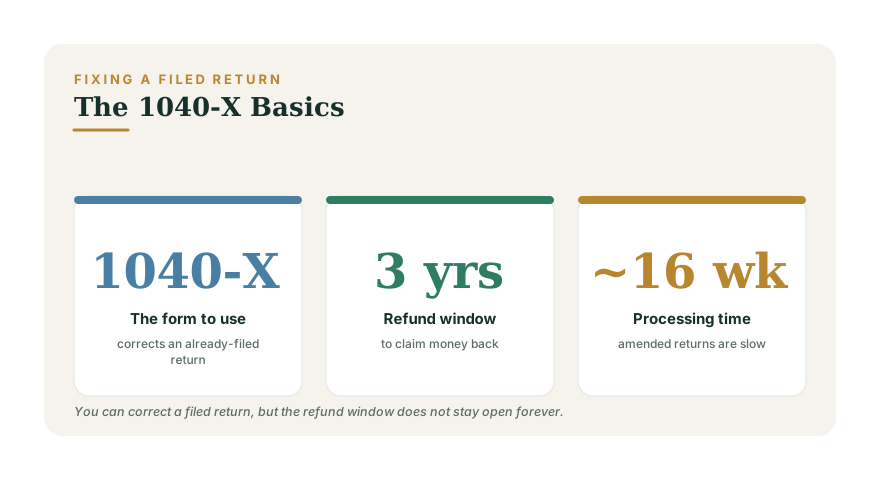
Individuals amend with Form 1040-X. It is unusual in that it does not redo the whole return; instead it shows three columns — the original figures, the net change, and the corrected figures — plus an explanation of why. You attach any forms or schedules that changed. If you owe more tax as a result, pay it as soon as you can to limit interest. If the correction means a refund, the 1040-X is how you claim it. Many tax software programs can prepare a 1040-X from your original return, and the IRS now accepts many amended returns filed electronically.
The three-year refund window — don't miss it
This is the deadline that matters most. To claim a refund from an amendment, you generally must file the 1040-X within three years of the original filing deadline (or two years from when you paid the tax, whichever is later). Miss that window and the money is gone for good — the IRS keeps it. So if you discover you overpaid in a prior year, do not sit on it. By contrast, if your amendment means you owe more, there is no statute protecting you; pay it and move on. The asymmetry is the point: the clock runs against you when you are owed money.
Common reasons people amend
- A late or corrected 1099 or W-2 arrived after you filed.
- A missed deduction or credit — education credits, retirement contributions, or write-offs you overlooked. Several are listed in Tax Deductions You're Probably Missing.
- Wrong filing status — for example, qualifying for head of household but filing single.
- Forgotten income — side-gig earnings or investment gains you didn't report, often the same slip-ups in Common Tax Filing Mistakes.
- Dependent changes — adding or removing a dependent you got wrong.
How long it takes
Patience is required. Amended returns are processed by hand and historically take around 16 weeks, and often longer during busy periods. The IRS offers a "Where's My Amended Return?" online tracker so you can watch its status. Do not panic if it sits in "received" for weeks — that is normal. If you owe and amended to pay, your payment still posts promptly even if processing the return lags.
A few practical tips
- Amend one year per form. If you are fixing multiple years, file a separate 1040-X for each.
- Keep your original return. You need its figures for the "original amount" column.
- Wait for the original to process before amending, so the two do not collide.
- Don't over-amend. Tiny, immaterial errors usually are not worth the effort and the months of waiting.
The takeaway
Amending is the routine way to make a filed return right — fix substantive errors, claim refunds within the three-year window, and expect a slow turnaround. To reduce how often you need it, tighten up your process and check your work against the Tax Health assessment before you file each year.