One of the most common surprises in retirement is discovering that Social Security benefits can be taxed — and that, for many people, a large share of them is. The rules are quirky and decades old, but they follow a clear pattern, and once you understand it, you can plan around it to keep more of your benefit.
It depends on your other income
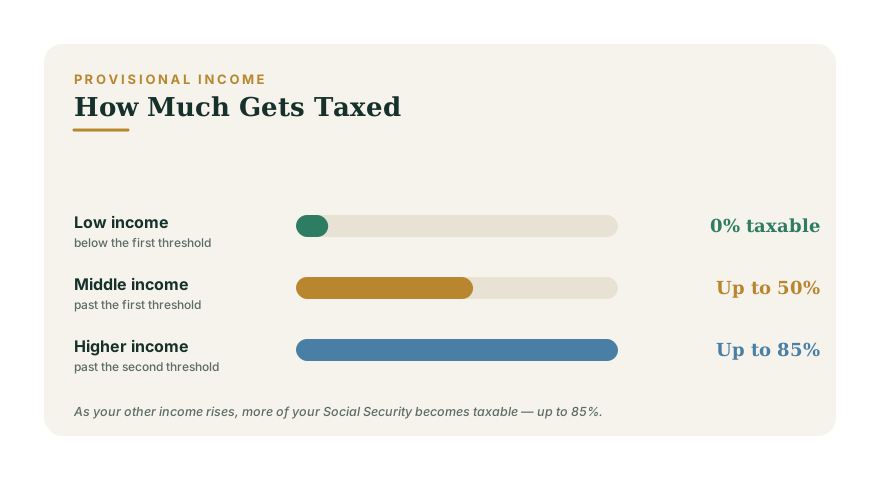
Whether your Social Security is taxed has little to do with the benefit itself and almost everything to do with how much other income you have. The more you draw from pensions, retirement-account withdrawals, part-time work, interest, and dividends, the more of your Social Security becomes taxable. At lower income levels, none of it is taxed at all.
Provisional income: the formula that decides
The key figure is called provisional income (sometimes "combined income"). It is roughly:
- Your adjusted gross income (excluding Social Security), plus
- Any tax-exempt interest (such as from municipal bonds), plus
- Half of your annual Social Security benefit.
That total is compared against two thresholds. Note the wrinkle that catches people off guard: even tax-free muni-bond interest counts here, so it can still push more of your Social Security into taxation.
The two thresholds and the 85% ceiling
There are two income lines, and they determine how much of your benefit is taxable:
- Below the first threshold: none of your Social Security is taxable.
- Between the first and second thresholds: up to 50% of your benefit may be taxable.
- Above the second threshold: up to 85% of your benefit may be taxable.
A crucial point: these percentages are not tax rates. They describe how much of the benefit gets included in your taxable income, where it is then taxed at your ordinary rate. So "85% taxable" does not mean you lose 85% of your check — it means at most 85% of the benefit is added to the income you pay tax on. And no matter how high your income, at least 15% of your Social Security always remains tax-free.
One frustrating detail worth knowing: unlike tax brackets, these thresholds are not adjusted for inflation. They have stayed essentially fixed for decades, so over time more and more retirees cross them. This is why benefits that escaped tax for earlier generations now routinely get taxed.
How to manage the bite
Because the tax depends on your other income, you have real levers to pull. The goal is to keep provisional income from drifting past the thresholds in a given year. A few strategies:
- Build a Roth bucket. Qualified Roth withdrawals do not count toward provisional income. Drawing from a Roth instead of a traditional account can keep you under a threshold — one more reason to value the Roth flexibility discussed in Roth 401(k) vs Traditional 401(k).
- Do Roth conversions early. In low-income years — say, between retiring and starting benefits — converting some traditional money to Roth can reduce future required withdrawals that would otherwise inflate provisional income later.
- Manage withdrawal timing. Lumpy income — a big IRA withdrawal, a large capital gain — can spike provisional income in one year and tax more of your benefit. Spreading withdrawals smoothly across years can help, an idea central to creating a retirement paycheck.
- Coordinate with when you claim. The age you start benefits interacts with all of this; weigh it alongside when to claim Social Security.
Don't forget state taxes
The thresholds above are federal. States handle Social Security differently — the large majority do not tax it at all, while a handful do, often with their own income exemptions. Where you live in retirement can meaningfully change your after-tax income, so it is worth checking your state's rules before assuming the federal picture is the whole story.
The takeaway
Social Security taxation is not something that simply happens to you — it is a function of choices you can shape: which accounts you draw from, when you convert, and how smoothly you spread income across years. Building a Roth bucket and planning withdrawals deliberately can keep more of your benefit in your pocket. Estimate how your income mix affects your benefit with the Social Security optimizer, model your full drawdown with the Retirement Planner, and check that the pieces fit with the Retirement Readiness assessment.