Whether you own or rent, the question "how much coverage do I need?" trips up most people because the intuitive answers are wrong. Your home's market value is not the right number, and "enough, probably" is not a plan. A good policy is built from three separate pieces, each sized to a specific real-world figure. Get those numbers right and you are neither dangerously underinsured nor wasting money on coverage you will never use.
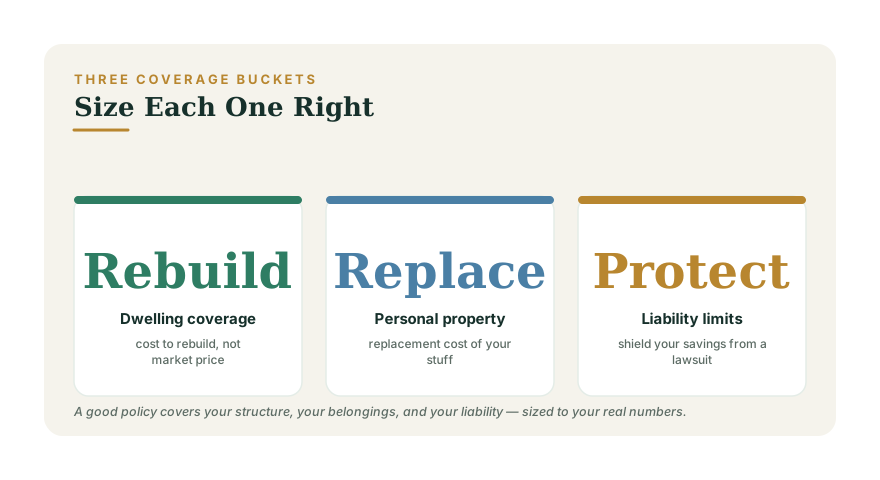
Dwelling coverage is rebuild cost, not market value
If you own your home, dwelling coverage pays to rebuild the structure after a covered loss. The number that matters is the cost to rebuild — materials and labor — not what you paid or what the home would sell for. These can differ enormously: in many markets the land is a big share of the price, and land does not burn down. A home that would sell for far more than its rebuild cost needs dwelling coverage based on construction cost, while a home in a hot market might cost more to rebuild than to buy.
Aim to insure the full rebuild cost, and look for extended or guaranteed replacement cost, which adds a cushion if construction prices spike after a widespread disaster. Beware of being underinsured: many policies impose a penalty if you insure for less than about 80% of rebuild cost, leaving you short even on partial losses. (Renters skip this bucket entirely — your landlord insures the building, not your belongings.)
Personal property: replacement cost of your belongings
This is the bucket renters care about most and homeowners underestimate. Personal property coverage pays to replace your belongings — furniture, electronics, clothing, kitchen gear, everything. Most people dramatically lowball how much they own until they imagine replacing all of it at once. Walk through each room mentally and the total climbs fast.
Insist on replacement cost coverage rather than actual cash value. Replacement cost pays what it costs to buy new today; actual cash value subtracts years of depreciation, so a five-year-old laptop pays out a fraction of a new one. The small premium difference is almost always worth it. Note that high-value items — jewelry, art, instruments, collectibles — often have sub-limits and may need a separate rider or scheduled coverage to be fully protected.
Liability limits protect your savings
The most underappreciated bucket is liability coverage, which protects you if someone is injured on your property or you accidentally cause damage and get sued. A guest who slips, a dog bite, a kid's friend hurt at your house — these can produce claims far larger than any physical damage. Liability limits are what stand between such a claim and your savings.
Carry meaningful limits, not the bare minimum. And if you have significant assets to protect, consider an umbrella policy that adds a large layer of liability coverage on top of your home and auto policies for a relatively small premium. Liability is also the connective tissue to protecting your family financially overall, which is the same instinct behind insuring the value of unpaid household labor.
The home inventory habit
Everything above gets easier with one habit: a home inventory. After a fire or theft, trying to remember everything you owned — from memory, while stressed — is how people end up underpaid. A current inventory turns a painful guessing game into a simple list to submit.
- Walk through each room with your phone and video everything, narrating as you go.
- Photograph receipts, serial numbers, and model numbers for big-ticket items.
- Note rough purchase dates and values.
- Store the inventory in the cloud or somewhere off-site, so it survives the same disaster you are insuring against.
Update it once a year and after any major purchase. This inventory is also exactly what makes filing a claim fast and fair — it is the documentation an adjuster needs.
Don't forget what is excluded
Standard home and renters policies do not cover floods or earthquakes; those require separate policies. If you are in a flood-prone or seismic area, that gap can be the most important coverage decision you make.
Confirm your numbers
Coverage you guessed at is coverage you cannot trust. Total up your real rebuild cost, the replacement value of your belongings, and the liability you want to protect, then check them against your current policy with the insurance calculator so a loss never turns into an unwelcome surprise.