Auto insurance premiums can feel arbitrary, but they are not. Insurers price your policy by feeding dozens of data points into rating models that estimate how likely you are to file a claim and how expensive that claim would be. Understanding what those factors are tells you which levers you can actually pull — and which ones you are simply paying for.
The factors that drive your rate
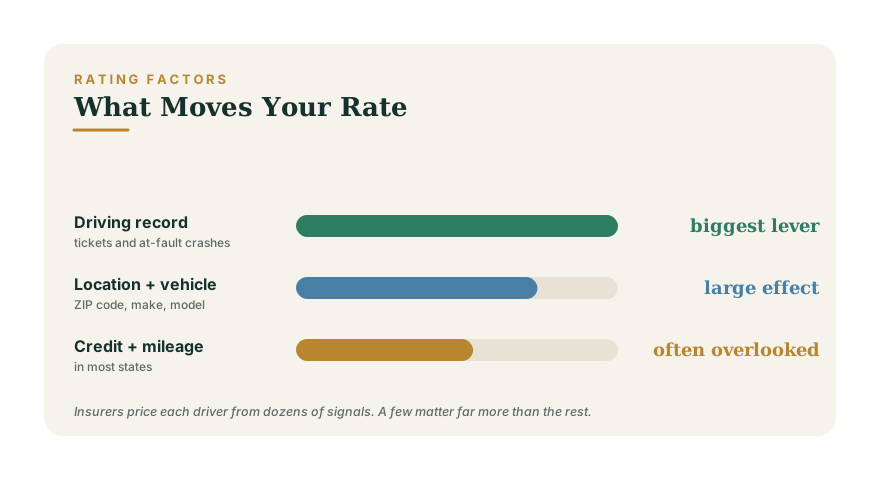
Most of the difference between two drivers' premiums comes down to a handful of factors:
- Driving record. This is usually the biggest lever. At-fault accidents, speeding tickets, and DUIs raise rates sharply and stay on your record for years. A clean record is the single most valuable thing you can maintain.
- Location. Your ZIP code reflects local accident rates, theft, vandalism, repair costs, and how litigious the area is. Moving across town can change your premium even if nothing else does.
- Vehicle. The make, model, and year matter. Cars that are expensive to repair, attractive to thieves, or have powerful engines cost more to insure. A modest, safe, common car is cheaper.
- Credit-based insurance score. In most states, insurers use a credit-based score because it statistically correlates with claim frequency. Better credit often means a meaningfully lower premium — one more reason to keep your overall finances tidy.
- Annual mileage. The less you drive, the lower your exposure. Low-mileage and pay-per-mile programs can save money for people who barely commute.
- Age and experience. Young and newly licensed drivers pay the most; rates generally drop as you build years of experience.
What you can change, and what you cannot
Some of these are fixed in the short term — your age, your driving history. But several are genuinely within your control. You choose what car you buy and how much you drive. You decide whether to work on your claims history by skipping small, premium-raising claims. And in most states, improving your credit over time will quietly lower your rate.
How to lower your premium
Beyond the structural factors, there are concrete moves:
- Raise your deductible. A higher deductible lowers your premium — just keep that amount in your emergency fund so you can actually pay it after a loss.
- Claim every discount. Safe-driver, good-student, low-mileage, defensive-driving course, automatic payment, paperless, and telematics (usage-based) discounts add up. Ask your insurer to list every discount you might qualify for.
- Right-size your coverage. On an old car worth little, collision and comprehensive coverage may cost more than the car is worth — review whether to drop them. But never skimp on liability limits, which protect you from the lawsuits that can wipe out your savings. The coverage types are broken down in auto insurance coverage explained.
- Bundle carefully. Combining auto and home or renters with one insurer often earns a discount — but confirm the bundled total actually beats two separate policies.
Why you should shop every couple of years
The most overlooked savings opportunity is simply shopping around. Insurers reprice constantly and weight the rating factors differently, so the company that was cheapest for you three years ago may now be among the most expensive. Loyalty is rarely rewarded; some insurers quietly raise rates on customers who never leave.
Every two years or so — and after any major life change like a move, a new car, or a teen driver joining the policy — get quotes from several insurers using identical coverage limits so the comparison is fair. The savings from a single afternoon of shopping can run into hundreds of dollars a year, money far better spent elsewhere in your plan.
Put the savings to work
An auto premium is a recurring cost you can shrink with a little attention, and the savings compound when you redirect them. Once you have trimmed your rate, fold the difference into your broader budget and goals over at the planning hub rather than letting it quietly disappear.